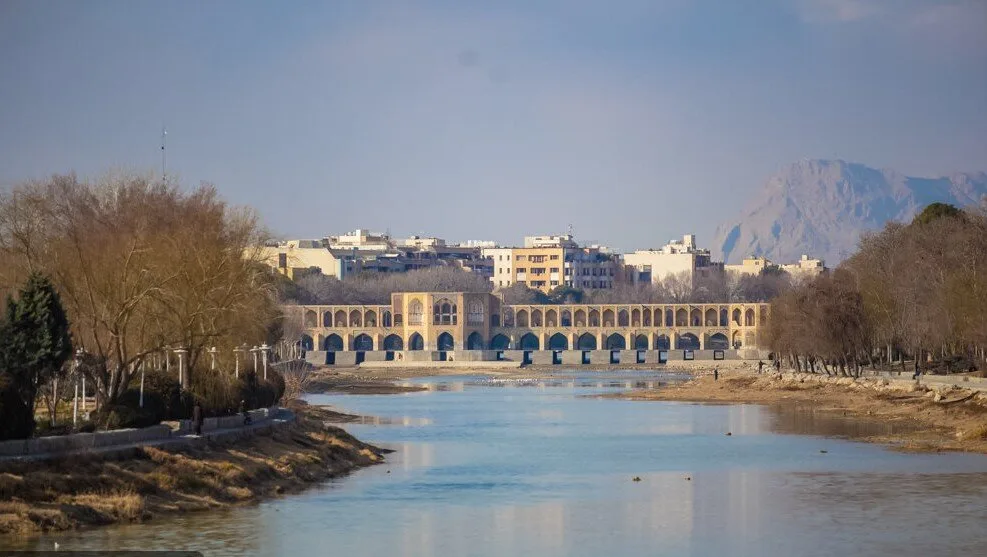
Zayandeh Rud flows from the heart of the Half World. A river intertwined with the lives of Isfahan's people, the memory of historical bridges, and the identity of this city. However, this river, on its long journey from the Zagros Mountains to the Gavkhouni Wetland at the easternmost point of Isfahan, is under pressure from extensive extractions and mismanagement. The water flow in this river has not been permanent for about 20 years. Fish die in the stagnant waters, and Gavkhouni remains waiting for water. But what has happened to Zayandeh Rud, and where does the water run low on its way to the wetland?
Critical Condition of Gavkhouni Wetland
Hosseini Akbari, Deputy of Natural Environment at the Isfahan Department of Environmental Protection, speaks about the troubles of Zayandeh Rud: "More than 95 percent of Gavkhouni's water dependency relies on Zayandeh Rud and the water released from the dam and other water flows along the way." Therefore, the water entry routes to the wetland and the flow status along the route must be carefully examined.
Read more: The Death of 451,000 People Due to Super El Niño in the Next 6 Months
Akbari explains that the study plan for the water corridors from Zayandeh Rud to Gavkhouni identifies the water flow paths and stopping points to determine how much water ultimately reaches the wetland. The Gavkhouni Wetland is located about 400 kilometers from the sources of Zayandeh Rud, and examining the water path to this wetland is crucial for understanding water resource conditions and assessing its environmental water rights.
Crises Resulting from Water Scarcity
Akbari emphasizes the consequences of reduced flow in Zayandeh Rud: "The water flow was cut off downstream after 94 days, starting from September 6, causing a large number of fish to die or get trapped in the remaining stagnant waters." The mass death of fish is a consequence of the opening and closing of the water flow.
Considering the forecast of rainfall in November, the paths of rivers and waterways leading to Zayandeh Rud are being organized so that in the event of flooding, runoff can be directed towards the river and Gavkhouni Wetland.
Read more: Mashhad and Damavand, the Most Polluted Cities in Iran Recently · Destruction of Eight Illegal Reserves in Hoor al-Azim Wetland by the Khuzestan Environmental Protection Unit