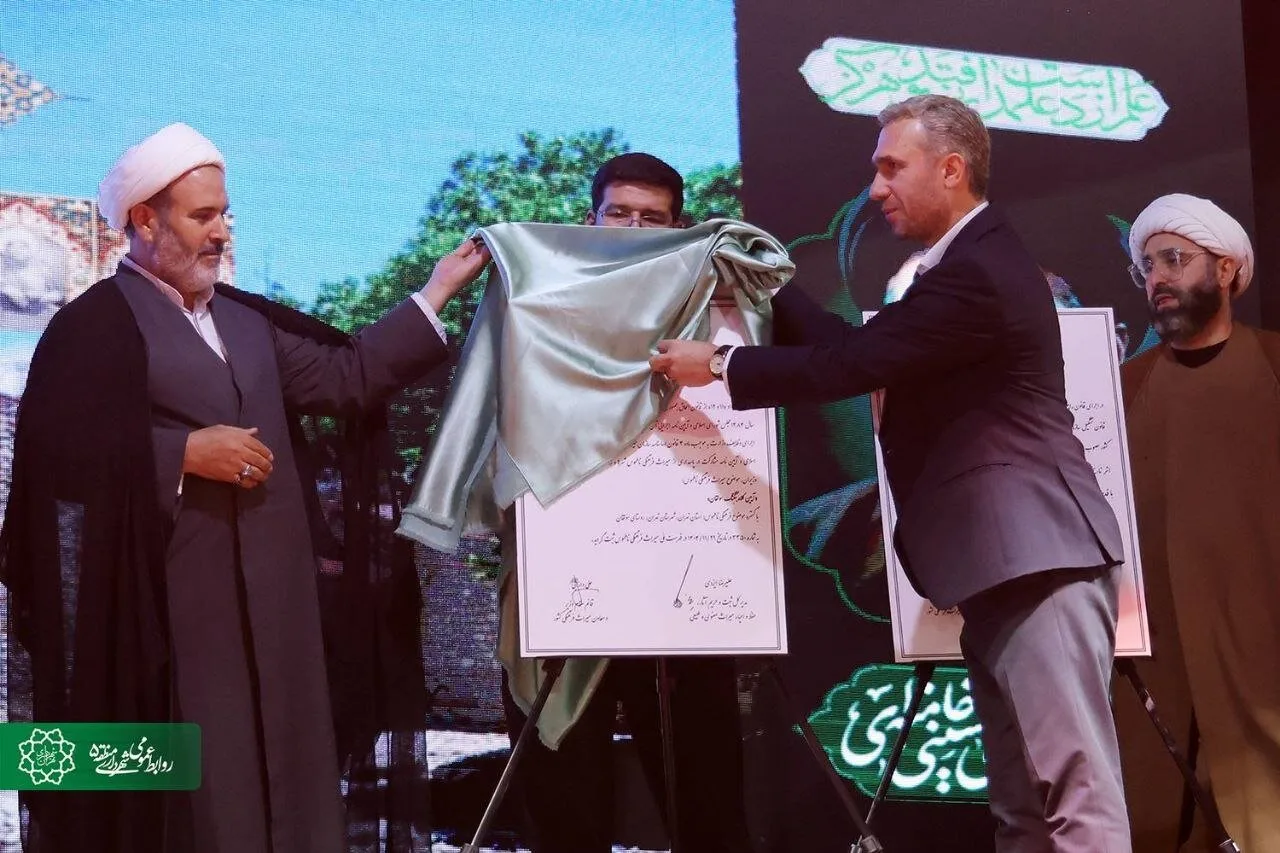
Noor Hosseiniyeh in the Darqazi neighborhood and the traditional 'Kolāh Bangalak' ceremony are two important cultural heritages that were recently unveiled in Sadeghiyeh Square in Tehran and added to the national heritage list of the country. This ceremony was held to commemorate the historical and cultural identity of the region and to honor the memory of Ayatollah Haj Molla Ali Kani.
The Significance of Mehr Month in Tehran's Culture and Tourism
Mohammad Reza Pouryafar, the mayor of District 5, stated at the ceremony that Mehr month holds importance in Tehran's tourism and cultural calendar: "Mehr month marks a new season of activities in the tourism sector. This month begins the tourism week and then leads to National Kon Day and Tehran's cultural week." He added that the memory and name of Haj Molla Ali Kani should be honored and a part of the valuable heritage of this region should be introduced to the citizens.
Read more: Arabic Rolled Ice Cream; How to Make a Delicious Dessert with a Chewy Texture
Protecting Historical and Cultural Identity
The mayor of District 5 continued: "These two works, Noor Hosseiniyeh and the traditional 'Kolāh Bangalak' ceremony, have been registered nationally to protect the historical memory of the city as part of the historical identity of this area. Our goal is not only to preserve this valuable heritage but also to introduce it to future generations and leave it as a legacy."
Pouryafar emphasized the role of urban management in preserving cultural heritage and stated that alongside construction and service activities, attention to historical and cultural identity is one of the important issues of urban management. He added that introducing these capacities can strengthen citizens' sense of belonging and increase their understanding of the region's history.
At this ceremony, Hojjatoleslam Haj Sheikh Hossein Mohibi, the Friday prayer leader of Kon, Kamran Maleki, the district governor of Kon, Mohammad Rahimi, the commander of the Quds Basij Resistance Zone, Amir Ghasemi, the head of Tehran's tourism department, and a number of urban managers, local officials, and dignitaries were present. Their presence itself indicates the importance of this event for the local and cultural community of Tehran.
In conclusion, Pouryafar emphasized the necessity of cooperation among local officials, dignitaries, cultural activists, and citizens in the path of protecting and introducing historical and cultural heritage, stating that this collaboration can help better preserve and promote cultural heritage.
Read more: Reza Salehi Amiri: 70 percent of foreign tourists in Iran are Iraqi · Karaj Dam does not address Tehran's water concerns with increased water storage