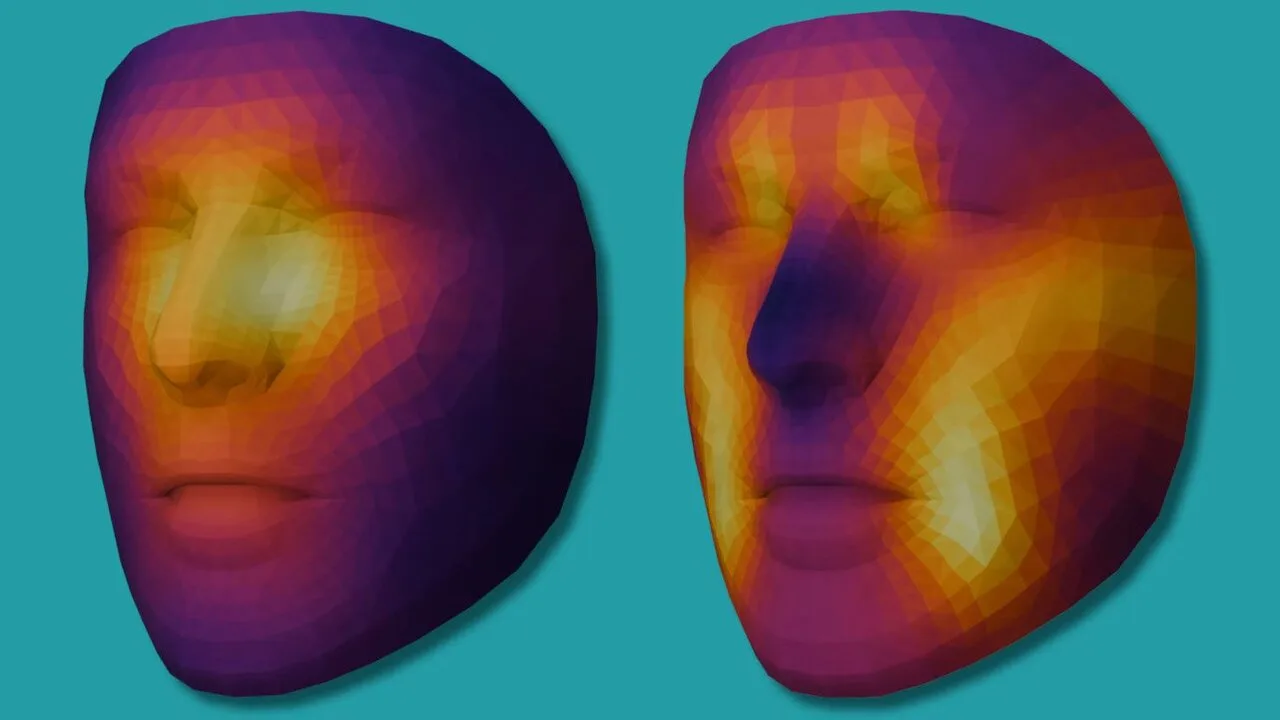
The AI tool 'FaceSurvival' has recently been introduced, capable of estimating the survival rate of cancer patients by analyzing facial features. This tool, trained on millions of healthy faces and 35,000 images of cancer patients, particularly utilizes the area under the eyes and around the nose for assessment.
The Role of AI in Health Prediction
Researchers are working to use this tool to help doctors recommend suitable treatments for their patients. This tool has been tested especially for various types of cancers, including those that have spread to the bones or brain of the patient. Most of the cancer patients studied were in their 50s and 60s, while some were children and others were in their 90s.
Read more: Mohammad Esmail Motlaq: Addressing food insecurity in Arvand and Zahedan is on the agenda
Dr. Raymond Mack, a senior researcher at Brigham and Women's Hospital in Boston, states that with the aging population, doctors need more accurate methods to estimate physical reserves and frailty. The goal of developing this tool is to assist in personalized treatment decisions rather than replacing the physician's judgment.
Challenges and Future of Predictive Tools
This tool is still in the development stages and requires more data and images for a more accurate assessment, especially from different ethnic and racial groups. The research team also invites the public to participate in this study by uploading their facial photos to receive a personalized estimate of their 'biological age.'
Professor Miroslav Bober, a video processing and machine learning expert at the University of Surrey in the UK, emphasizes the importance of further research in this area, stating: 'This is a promising proof of concept, but it is not yet ready for clinical use.'
Alongside 'FaceSurvival,' another tool called 'FaceAge' is also under development, which can predict individuals' biological age. This tool particularly focuses on skin condition and signs of aging. Dr. Mack believes that despite differences in head positioning and lighting, this tool provides consistent results and can assist doctors in evaluating cosmetic surgeries.
Ultimately, researchers emphasize that progress in this field requires more collaborations and deeper analyses. They are looking for ways to improve the accuracy and reliability of these tools to help patients engage with their health status more informedly.
Read more: David Gaff: Predicting heart health risks with an ECG during sleep has become possible · Iranian AI elites gathered at Sirjan Industrial University