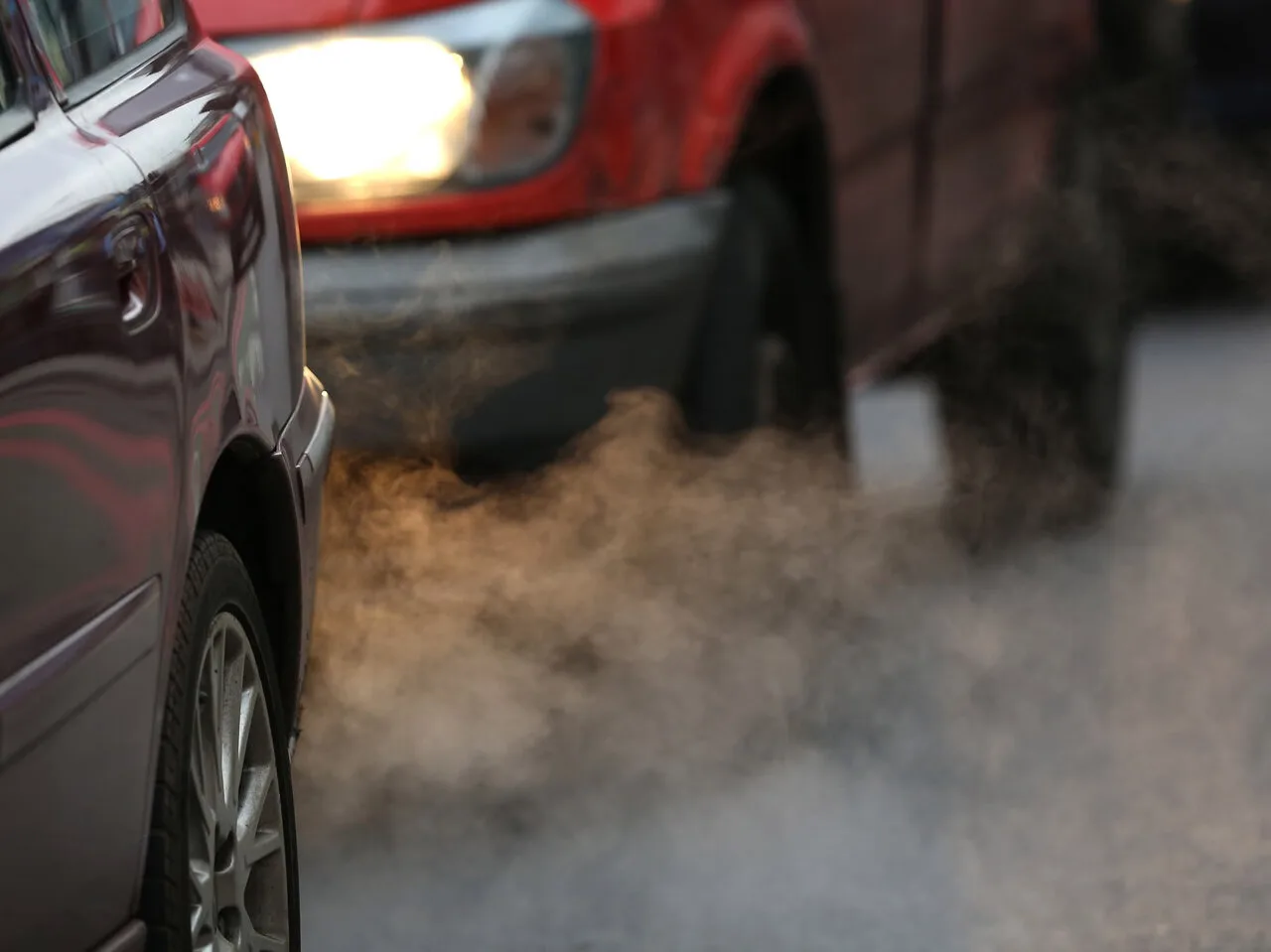
Researchers from Tehran University of Medical Sciences, Sharif University of Technology, and Amirkabir University have identified various sources of airborne particulate matter by sampling from the Niayesh Tunnel in Tehran in a new study. This research, the results of which were published in the journal Environmental Pollution, aims to estimate the contribution of each pollution source.
Classification of Pollutant Particles
In this study, vehicle-related particulate matter is categorized into two main groups: exhaust particles, which are emitted from fuel combustion processes and engine operation along with related systems, and non-exhaust particles, which arise from tire and brake wear, road surface erosion, and the resuspension of settled dust along the route.
Read more: Cutting down healthy Hyrcanian trees under a controversial pretext
In many air pollution control programs, the primary focus has been on reducing vehicle exhaust emissions. However, even if engine technology and exhaust filters reduce particle emissions, non-exhaust sources can still generate significant pollution.
Results and Implications
Measurements in this study were conducted over two seasons at the entrance and exit of the Niayesh Tunnel, one of the busiest tunnels in Tehran. Researchers used high-volume air samplers and low-cost PMS5003 sensors to measure particles. The chemical composition of the particles, including certain metals, was also analyzed.
The results indicated that the dominant source depends on the particle size. The two indices PM2.5 and PM10 are used as the main criteria for measuring particulate air pollution. Particles smaller than 2.5 micrometers can penetrate deeper into the respiratory system, while the PM10 group includes larger particles that can settle in the upper respiratory tract.
The findings suggest that policies aimed at reducing air pollution from vehicle traffic should not solely focus on the vehicle engine and exhaust. Controlling road dust, properly maintaining road surfaces, reducing brake and tire wear, and managing traffic flow can also play a significant role in reducing suspended particles.
However, this study was conducted in a tunnel under specific temporal and spatial conditions, and its results cannot be generalized to all areas of Tehran or other cities.
Read more: Water struggle in Chitgar Park and efforts to revive green space in Tehran · End of 23-year occupation of Fahimi Market lands in Tehran