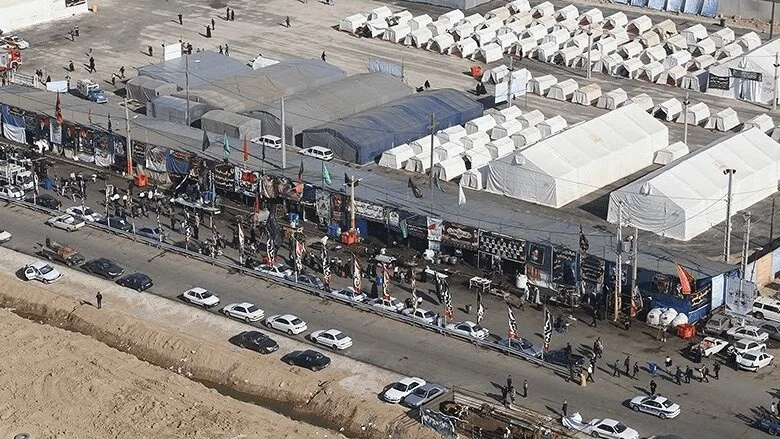
Haider al-Abadi, the Minister of Interior of Iraq, in his recent statements about the status of the country's border crossings announced that the closure of the Shib border crossing was due to technical and logistical problems, and the government is working to resolve these issues. This crossing, known as Chazabeh on the Iranian side, is considered one of the key routes for land trade between Iran and Iraq.
Latest status of border exchanges
Al-Abadi emphasized in an interview with Dijlah TV of Iraq that no decision has been made to close new border crossings, and several other border crossings continue to facilitate trade exchanges between the two countries. The Iraqi government decided to close the Shib crossing until further notice starting from October 20, and this decision was implemented from October 21.
Read more: Gold and silver prices fall; Tai Wang: The situation is chaotic
According to al-Abadi, the official reason for the closure of this crossing is the lack of sufficient technical, technological, and logistical preparedness for its continued operation, and the government is in the process of completing the necessary infrastructure and control systems. These statements come at a time when land crossings play a significant role in meeting market needs and maintaining economic exchanges between Iran and Iraq.
Consequences of the closure of Shib for the local economy
The closure of the Shib crossing has had negative impacts on the local economy of Maysan and the economic actors in this region. Local officials in Maysan have announced that about 4,000 people directly or indirectly rely on this crossing for their livelihoods, and its closure has caused significant losses to drivers, truck owners, loading and unloading workers, customs brokers, and traders.
Recent reports indicate an increase in the prices of agricultural products and foodstuffs in Maysan. Although part of the cargo can be transferred to alternative routes such as Shalamcheh and Zarbatiah, this relocation incurs higher costs and distances for economic actors.
Given the volume of trade between the two countries, the importance of this issue becomes more apparent. According to statistics from the Iran-Iraq Joint Chamber of Commerce, the value of trade between the two countries last year was about $12 billion, of which more than $10.2 billion was Iran's exports to Iraq. Statistics also indicate that the volume of trade in 2024 will reach about $12.5 billion.
The closure of the Shib crossing alone does not halt the multi-billion dollar trade between Iran and Iraq, but its negative consequences on the local economy of Maysan are undeniable and shift the trade burden to other crossings. Meanwhile, the Iraqi government is also seeking to increase non-oil revenues and diversify its income sources, which is mentioned in the 2027 budget bill as 19% of non-oil revenues.
Read more: Reza Alfatnasb announced the removal of restrictions on the operating hours of online gold sales platforms · The U.S. midterm elections and the fate of the Iran war