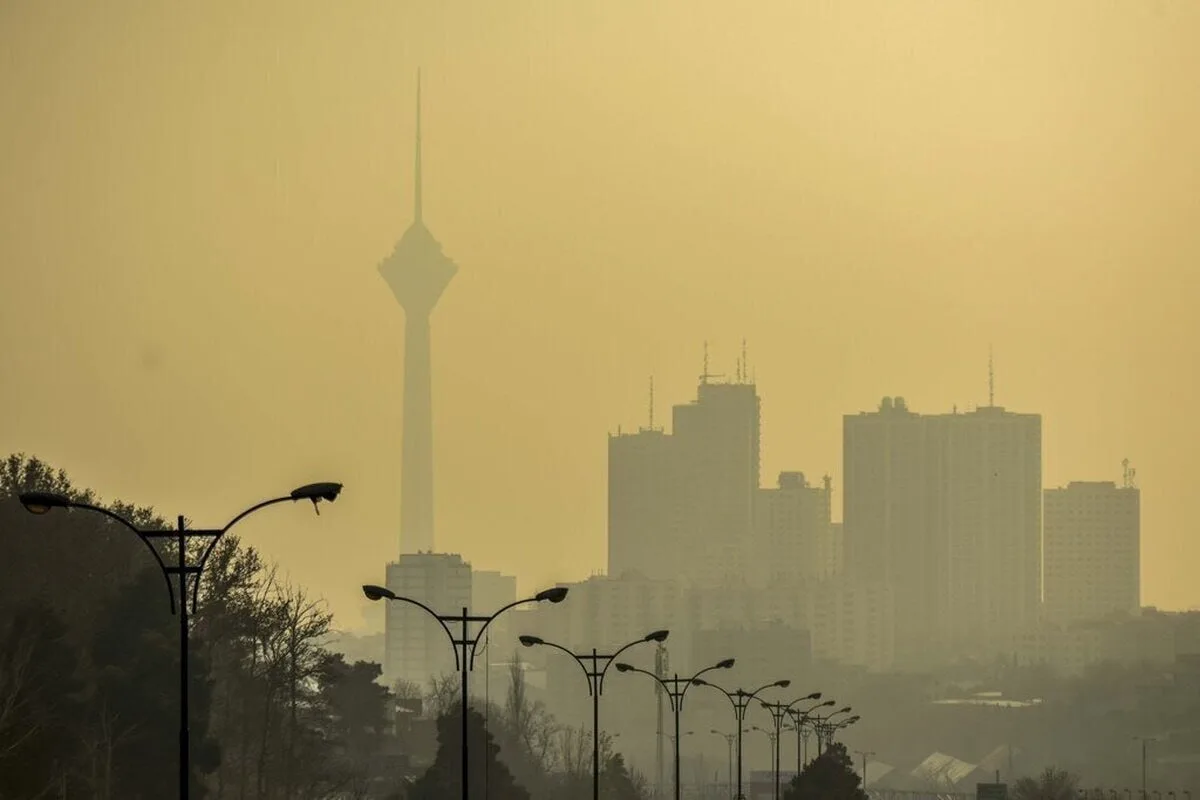
Fatemeh Karimi, CEO of Tehran Air Quality Control Company, announced that the share of stationary sources in the production of suspended particles has reached about 60% while presenting the results of the third pollution emission inventory in Tehran. This statistic indicates fundamental changes in our understanding of the factors affecting air pollution in the capital.
Impact of Mobile and Stationary Sources on Air Pollution
Karimi further detailed the mobile sources, stating that these sources alone account for about 40 to 41% of the production of suspended particles. Among these mobile sources, personal vehicles play the highest role with a share of 42%. This ratio indicates that the movement of individual vehicles constitutes a major portion of mobile pollution, and managing fuel consumption and developing public transportation can help reduce this pollution.
Read more: Water Struggle in Chitgar Park and Efforts to Revive Tehran's Green Space
Challenges in the Motorcycle Fleet
The CEO of Tehran Air Quality Control Company also referred to the status of motorcycles, stating that the share of these vehicles from the total mobile sources is estimated to be about 13%. Despite actions such as replacing carburetor systems with fuel injection, the aging fleet and their high mileage in urban services highlight the ongoing need for electrification of these vehicles.
Karimi continued that although mobile sources produce the highest volume of carbon monoxide, examining the behavior of suspended particles (PM2.5 and PM10) as the main indicators of air pollution requires special attention.
The Role of Fixed Sources in Tehran's Air Pollution
The CEO of Tehran Air Quality Control Company clarified that currently about 60% of suspended particles are generated from stationary sources and newly calculated hotspots. Among these sources, agricultural activities account for about 20% and sand and gravel mines produce approximately 396 tons of suspended particles annually. Additionally, illegal waste burning in the outskirts of the city constitutes about 1% of this pollution.
Challenges of Power Plants in Capital Air Pollution
Karimi concluded by addressing the role of power plants in the capital's air pollution, stating that these plants are directly responsible for producing about 13% of suspended particles. However, the main concern lies with sulfur oxides. With a drop in gas pressure during the cold seasons and the use of liquid fuels, the share of power plants in sulfur oxide emissions increases to over 62%, necessitating immediate attention and corrective actions.
Read more: Mohammad Javad Khosravi: The Removal of Polluted Trees in Chitgar is Not Related to the Municipality · Tehran Students Won in the 1405 University Entrance Exam