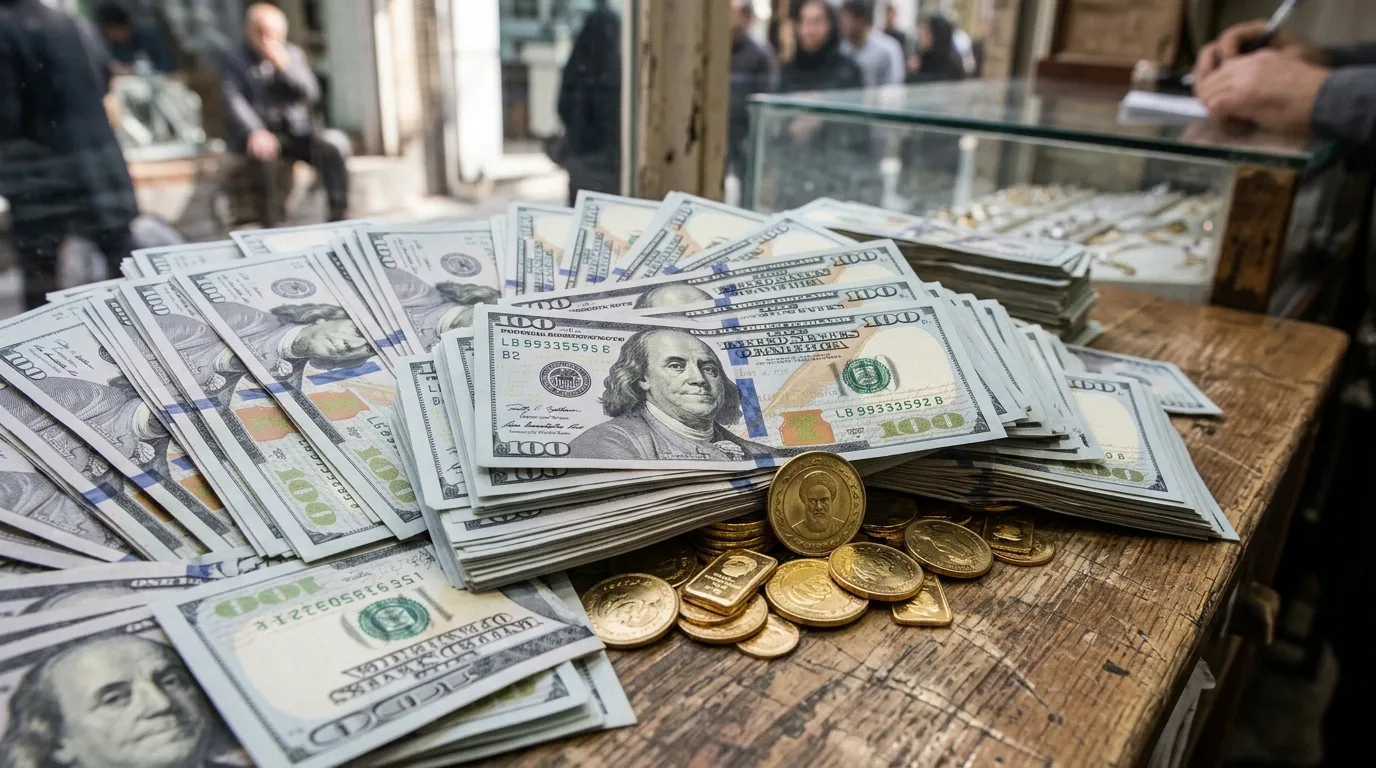
Over the years, Iran has witnessed significant changes in its currency market due to various economic and political developments. Among these, the dollar and euro are recognized as the two main and most traded currencies, but in reality, the Iranian currency market is not limited to these two bills. The UAE dirham, Turkish lira, Chinese yuan, and British pound are currencies that are of interest in the Iranian market for various reasons.
The Role of Currencies Other Than Dollar and Euro in the Iranian Market
The Iranian currency market has become more diverse, especially in recent years, with several other currencies joining the ranks of the most traded currencies. The UAE dirham is recognized as the most important option after the dollar and euro. The geographical proximity of the UAE and the significance of Dubai as a commercial hub have made the dirham not only a travel currency. This currency is somewhat tied to Iran's trade routes with the Gulf markets and exports to other countries.
Read more: The upward trend in car prices continues; Peugeot 207 automatic records price increase
After the dirham, the Turkish lira holds a special place due to the high volume of border trade and exchanges between the two countries. The British pound is also seen in the Iranian currency market due to demand related to travel and study in the UK. Finally, the Chinese yuan is recognized as an important currency in Iran's foreign trade due to deep trade connections between Iran and China.
The Position of Various Currencies in Trade and Travel
An analysis of the Iranian currency market shows that currencies other than the dollar and euro are directly related to the economic and trade needs of the country. For example, the UAE dirham holds significant importance in Iran's foreign trade statistics. In the first 10 months of the year 1404, the UAE accounted for the largest share of imports with approximately $14.8 billion.
The Turkish lira is also important in the Iranian market due to close connections and high volumes of exchanges. In the first 10 months of the year 1404, Turkey ranked among the main import sources to Iran with approximately $7.9 billion in imports. Meanwhile, the Chinese yuan also plays a significant role in Iran's economic interactions with $11 billion in non-oil exports and $13.4 billion in imports.
Overall, currencies such as the Iraqi dinar also have high demand in the Iranian market due to pilgrimage travels and specific needs at certain times of the year. These currencies become particularly popular when pilgrimage travels increase.
In conclusion, while the dollar and euro are recognized as the two main currencies in the Iranian market, other currencies also play a fundamental role in the country's economy due to their specific applications in trade and travel. Understanding these currencies and their uses can help economic actors and travelers make better decisions in currency buying and selling.
Read more: South Pars returns to production with new planning · 5 Toman increase in Afghan price in today's market