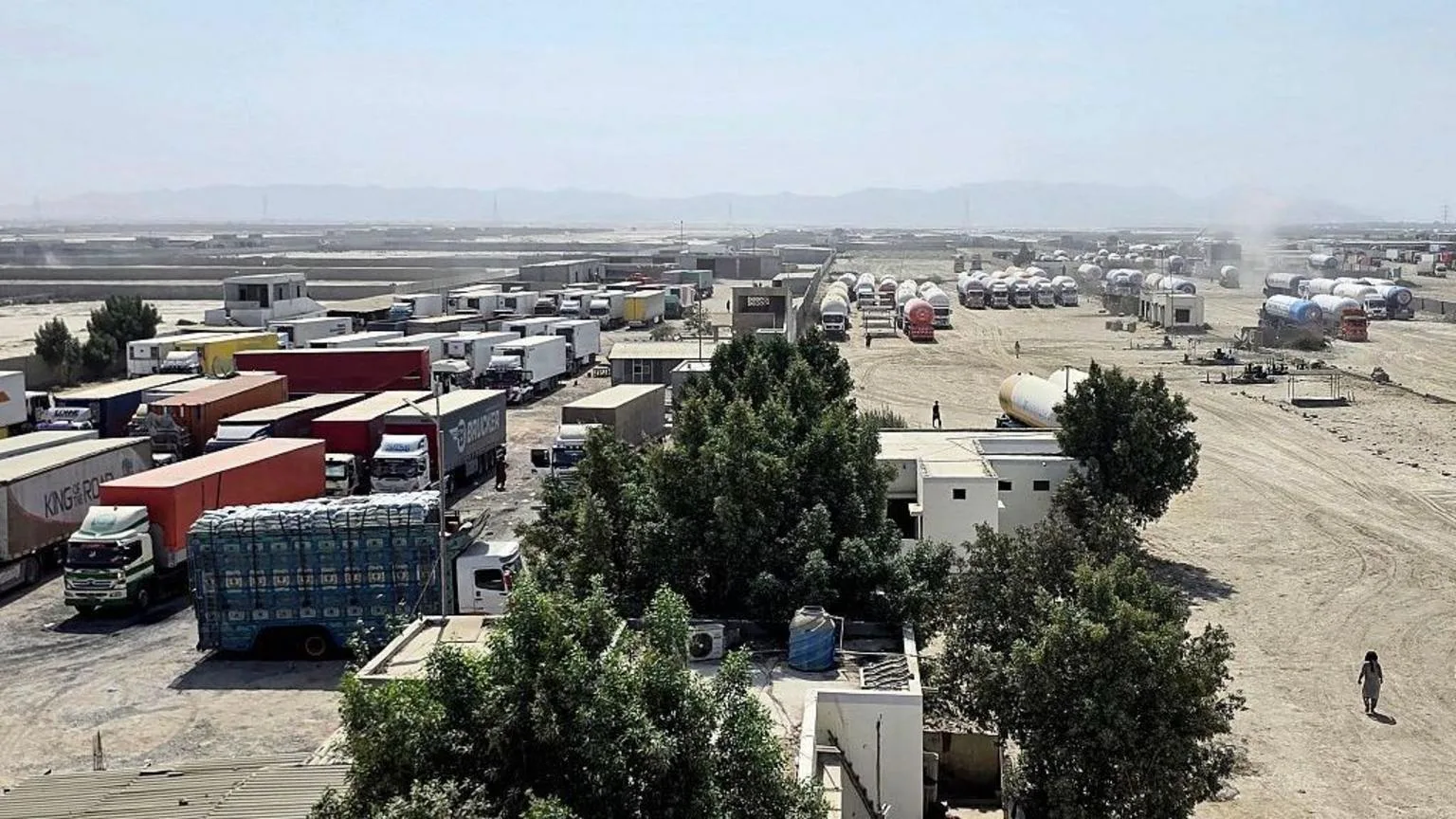
The halt of commercial traffic at the Iran-Pakistan border has put the fate of thousands of trucks and shipments at risk. As war and maritime restrictions have disrupted Iran's traditional trade routes, the Pakistan border has become one of the most important pathways for transferring goods to Iran. However, the week-long halt of commercial traffic at the two main crossings between the two countries has also disrupted this route, leaving hundreds of trucks and shipments stranded on both sides of the border.
Limited Reopening of Crossings
Now, with the reopening of one of these crossings, some exchanges have resumed, but trade restrictions continue. Since October 17, Pakistan has halted commercial traffic at the Gabd-Rimdan and Taftan-Mirjaveh crossings; a decision that contradicts Islamabad's previous policies. Reports indicate that the Gabd-Rimdan crossing has reopened since Saturday, and the traffic of trucks carrying goods, including liquefied gas and foodstuffs, has resumed.
Read more: Increase in Car Prices in Aban 1405 and Record Breaking of Domestic Products
Economic and Social Consequences
The closure of these crossings has raised questions about the future of land routes for supplying goods to Iran, in addition to disrupting trade between the two countries. While Iranian and Pakistani officials cite technical, security, and administrative reasons for this action, some observers assess it within the framework of broader pressures on Iran's economy. Business activists have also pointed to banking obstacles that have increased trade difficulties.
On both sides of the border, Iran's Sistan and Baluchestan province and Pakistan's Balochistan province are located. With the closure of the borders, these areas are among the first to feel the consequences of this decision. Pakistan imports about 7,000 tons of liquefied gas from Iran daily, and with the interruption of this flow, the price of liquefied gas cylinders has sharply increased.
On the Iranian side, residents of Sistan and Baluchestan, who are heavily dependent on border trade, are vulnerable to these restrictions. Border trade and local markets form part of the region's economy, and each resident relies on Pakistani goods to meet their daily needs.
Read more: Saving Gas Consumption as a Way to Support Production and Employment in Winter · Crisis Management Organization and Its Responsibilities in Flooding