The Kurdistan Region of Iraq is currently facing one of its most complex political crises. Bafel Talabani, the leader of the Patriotic Union of Kurdistan, announced in an unprecedented video message that his party is leaving the government. This decision came after the formation of a new parliament session without the presence of representatives from the Patriotic Union and its allies, which Talabani described as "defeated" and illegitimate.
Crises Following Political Developments
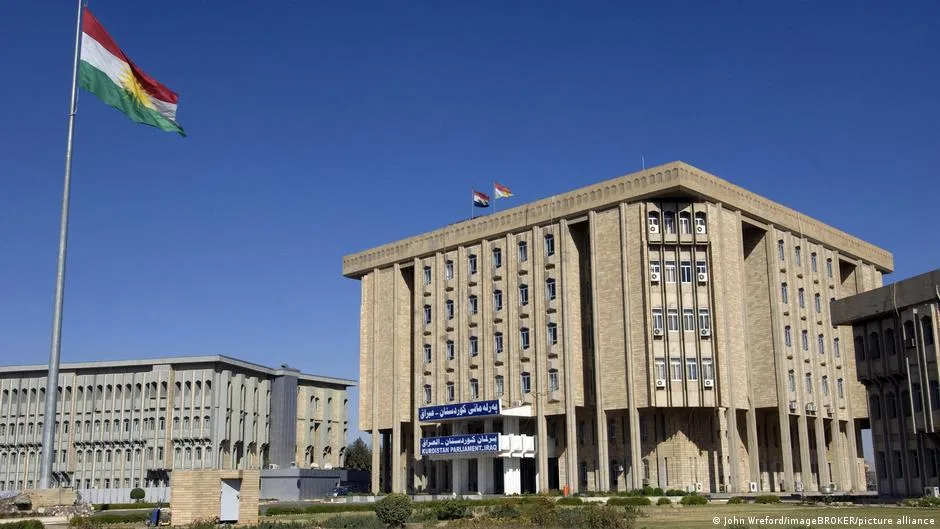
Recent developments, especially the parliament session on Wednesday, November 5, sparked this decision. The Kurdistan Democratic Party managed to hold the first parliamentary session with the support of minority representatives and some defectors from the Patriotic Union. In this session, Vala Farid was elected as the Speaker of Parliament. The Democratic Party, relying on its 39 seats, stated that the reason for holding this session was to improve the legislative process and not to hold it hostage to lengthy negotiations for forming a government. However, the Patriotic Union, with 23 seats, views this move as an attempt to impose unilateral will and disregard the principle of partnership.
Read more: The Impact of War and the US Congressional Elections on the Fate of the Islamic Republic of Iran
Historical Roots and Political Consequences
To understand the roots of the current deadlock, one must look at the realities of power distribution in the Kurdistan Region. Hiwa Mahmoud Osman, a journalist and advisor to Jalal Talabani, emphasizes that these struggles are more about hegemony and control of resources than ideology. Kamal Chomani, a researcher on Iraqi issues, explains that the Kurdistan Democratic Party seeks to take control of the presidency of the region and key ministries, while the Patriotic Union does not want to be sidelined and demands control of the Ministry of Interior and half of the cabinet.
This crisis has reopened old historical wounds. Since the civil war in the 1990s, the Kurdistan Region has never had a unified structure. Chomani refers to the historical conflict known as "Jalali and Malayi," tracing the roots of these disputes back to 1964. He also mentions the emergence of a new generation within the Patriotic Union that seeks to govern the region based on the "principle of partnership."
While Erbil and Sulaymaniyah are on a collision course, analysts believe that this crisis is rooted more in internal issues. Even Hiwa Mahmoud Osman emphasizes that the Islamic Republic of Iran is merely a spectator to this crisis and does not care how the region is governed as long as its interests are preserved.
Ultimately, if the Patriotic Union concludes that continuing participation in the current structure only leads to a reduction of its influence, the possibility of returning to a model of administrative and political duality, even without an official declaration of separation, will not be unexpected. This scenario could lead to the formation of two separate political entities in the Kurdistan Region.
Read more: A Strange Pattern in Reincarnation: Unexpected Death and the Birth of a Child · 2026 Elections in Occupied Territories; Voting Amid Internal and External Crises