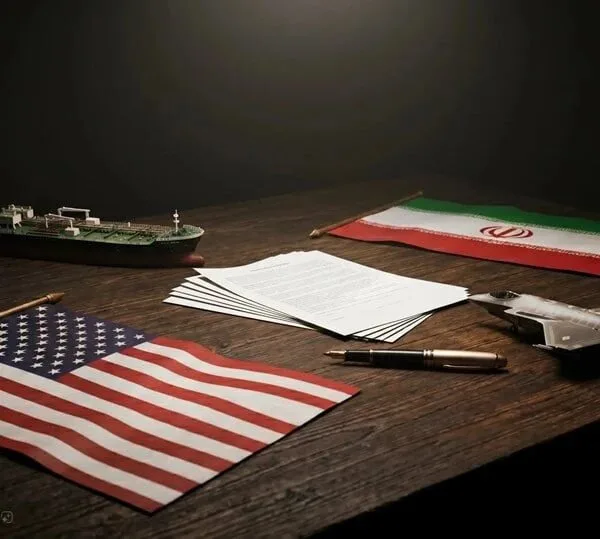
Mehdi Kharsand, a U.S. foreign policy expert, has examined the relationship between the Israeli Knesset elections and the U.S. Congress on November 5 and 12 in relation to the war against Iran. He emphasizes that since the beginning of last year, the U.S. and the Zionist regime have pursued a scenario for the overthrow of the Islamic Republic of Iran, but the battlefield developments of the war and its economic consequences changed the equations, turning this war into an issue in U.S. domestic politics and the congressional elections.
The U.S. and Israel's Scenario for Overthrowing the Islamic Republic
Since the beginning of last year, the Americans, along with the Zionist regime, have implemented a scenario for the overthrow of the Islamic Republic of Iran. Subsequently, the discussion of the disintegration of five border provinces of Iran was added to this scenario. In their view, this action could be presented as a foreign policy achievement for the Republicans and used in the U.S. midterm elections to maintain the Republicans' position in Congress. Such a scenario could also impact their position in the next presidential election.
Read more: Iraqi Resistance Declares that U.S. Withdrawal Does Not Mean the End of Washington's Influence
Changing Equations in Favor of the Islamic Republic of Iran
As time progressed, the management of the war space by the Islamic Republic of Iran and the changing battlefield equations transformed the conditions. The Islamic Republic of Iran, using its power tools, including control over the Strait of Hormuz, was able to change the equations in its favor. Additionally, the Zionist regime concluded after the 40-day war that it could not achieve its goal of eliminating the Islamic Republic of Iran through military means.
By closing the Strait of Hormuz and not delivering over 400 kilograms of 60% uranium, Iran adopted a policy of nuclear ambiguity, which had widespread consequences for global security and energy equations. The increase in oil prices to $115 and the breaking of records at the onset of the Russia-Ukraine war placed significant pressure on U.S. domestic politics. These developments gain more importance on the eve of the U.S. congressional elections, as the economic consequences of the war could influence public opinion's assessment of the U.S. government's performance.
The Authority of the Islamic Republic and Its Influence on Regional Equations
The Islamic Republic of Iran has demonstrated its authority to the world, showing that this authority is not limited to the military field but can strengthen the resistance axis using other tools. Smart management of the Bab-el-Mandeb Strait could serve as an exclusive tool for the resistance axis, increasing its influence on regional equations.
Ultimately, the Americans, who believed they could dismantle the Islamic Republic of Iran and disintegrate Greater Iran, now find themselves mired in internal political quagmire. This situation reflects the power of the Islamic Republic of Iran and its ability to influence security equations, both internationally and in U.S. domestic politics.
Read more: The Suspension of Iranian Flights to Iraq: A Test for Baghdad's Sovereignty · Mevlüt Çavuşoğlu: Military Intervention Against Iran is Not a Solution