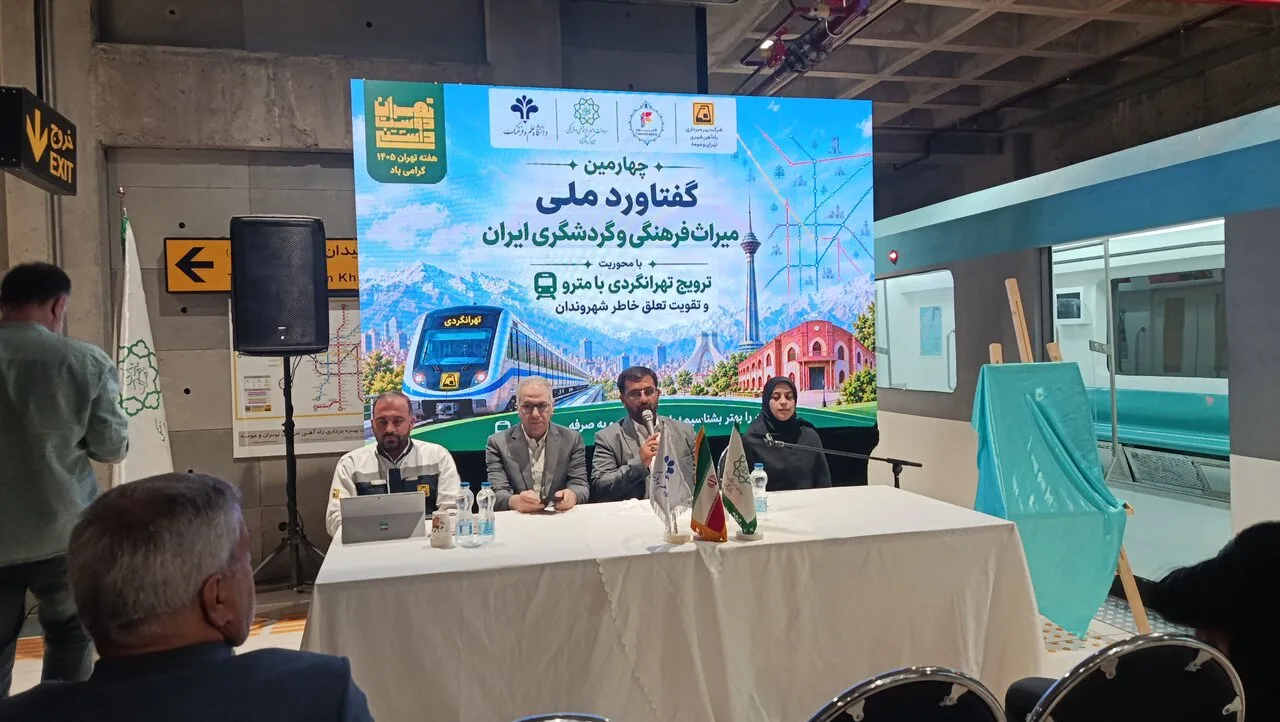
Amir Qasemi, head of the Tehran Municipality Tourism Headquarters, announced the equipping of 24 metro stations with a tourism map. This plan, aimed at enhancing the travel experience of citizens and tourists, is the result of two years of follow-up and expert studies initiated in response to citizens' requests regarding the tourism potential of the metro.
Efforts to Develop Urban Tourism
Qasemi, referring to the collaboration of a group of young volunteers active in urban planning, architecture, and tourism, stated that the design of the Tehran Metro tourism map aims to introduce tourism attractions through metro stations. In the first phase, 40 metro stations have been targeted for this plan, and tourism signs have been installed in 24 stations.
Read more: Neda Qasemi Caught Attention in the Rehearsal of the Play 'Like Water for Chocolate'
This project was unveiled about a month ago, and tourism maps are being distributed among citizens through the staff of the 22 districts of Tehran Municipality. Qasemi emphasized that public feedback on the metro tourism map is being collected and analyzed to assess the level of interest and how these maps are being used.
Engagement with the Community and Increasing Social Vitality
The head of the Tehran Municipality Tourism Headquarters also highlighted the importance of developing tourism guide tools in the public transportation network, stating: "A significant portion of the activities of tourism guides has so far been conducted in the city through walking tours. Therefore, it was necessary to consider the tourism potential of the underground city as well."
Qasemi noted that holding dialogue-centered tourism meetings focused on "Exploring Tehran by Metro" could facilitate the exchange of experiences and knowledge between tourism guides and citizens. He also emphasized that tourism can create simple and accessible opportunities for recreation and understanding the city, thereby fostering greater citizen participation in social and cultural activities.
Saeed Hashemi, head of the Faculty of Tourism, also emphasized the necessity of utilizing Tehran's historical and cultural capacities for urban tourism development, stating: "Tehran, with its cultural diversity and dense historical layers, has extensive tourism potential that requires specialized planning and collaboration between universities and urban management."
Hashemi also referred to the experiences of various countries in transforming metro stations into cultural and artistic spaces, saying: "If each station is accompanied by a different narrative and experience, the metro network can become part of Tehran's tourism route."
The head of the Faculty of Tourism concluded by emphasizing that realizing Tehran's tourism potential necessitates ongoing collaboration between universities, the municipality, and stakeholders in this field. The combination of tourism maps with effective storytelling and cultural programs can transform the metro into a platform for urban tourism experiences.
Read more: The series 'Yal' featuring Navid Mohammadzadeh and Pardis Ahmadieh was screened · Programs for Tehran's Tourism and Cultural Week Focused on Neighborhood-Centric Activities