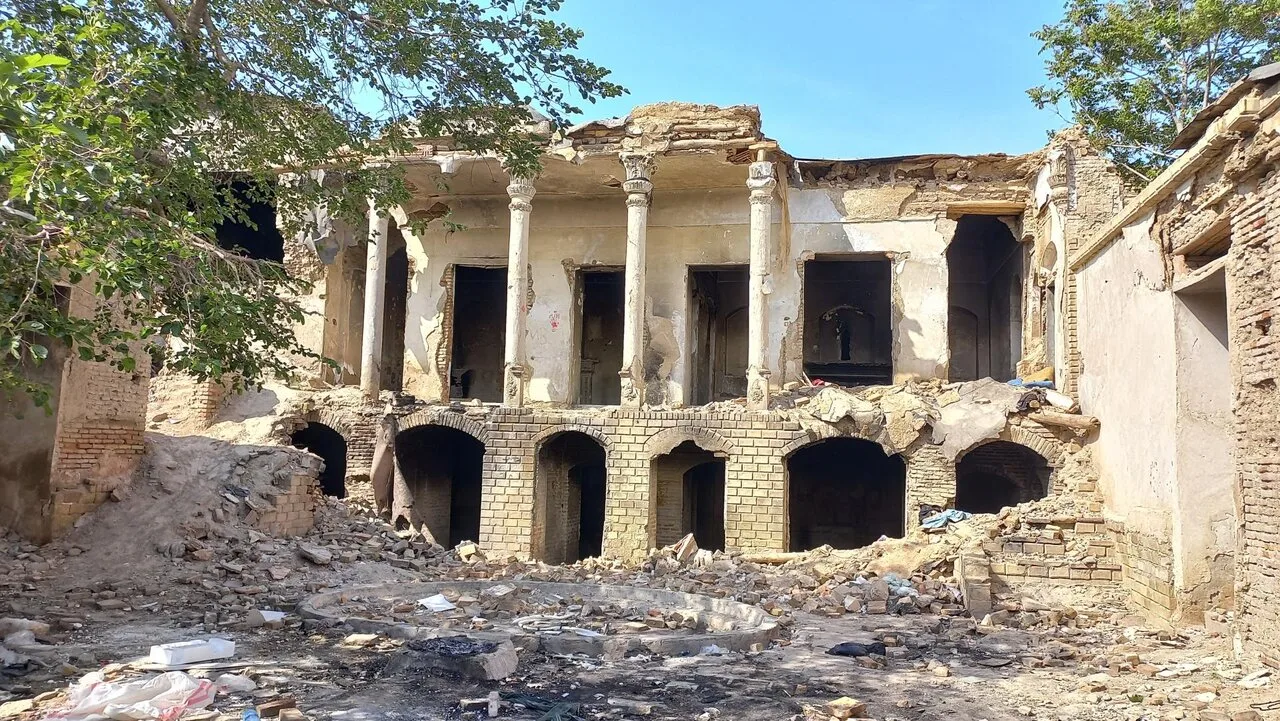
The historical Amin-Lashkar building, one of the valuable structures in District 12 of Tehran, is on the verge of restoration and revival. Seyyed Mohammad Nazem Razavi, CEO of the Cultural Spaces Development Company of Tehran Municipality, announced the allocation of 200 billion tomans for this project and emphasized its importance in preserving urban identity and improving the quality of life for residents.
Current Status and Protective Measures
Following the official handover of the Amin-Lashkar building, the Cultural Spaces Development Company quickly responded to the damages inflicted on this structure by initiating studies and designing a restoration plan. Nazem Razavi stated that after damage occurred in parts of the building, protective and emergency measures, including debris removal and securing the structure, were implemented. These actions were carried out under the supervision of cultural heritage experts and demonstrate a serious commitment to preserving this historical site.
Read more: Ziaei: Theater Should Be a Bridge Connecting Generations
The CEO of the Cultural Spaces Development Company explained that the restoration plan has been revised, stating: "Considering the current conditions, we have tried to present a plan that not only aligns with the existing situation but is also feasible for implementation." He also referred to the legal restrictions for starting restoration without the approval of the cultural heritage department and mentioned that all plans and maps must first be reviewed and approved by this entity.
Emphasis on the Necessity of Restoration
Nazem Razavi emphasized that the Amin-Lashkar building is registered in the national heritage list, noting: "Tehran Municipality cannot independently carry out restoration operations without the approval of the Ministry of Cultural Heritage." This highlights the necessity of adhering to protective and technical regulations in the restoration of registered national buildings. He added: "A representative from the Tehran Cultural Heritage Directorate has been overseeing the activities from the beginning."
He also pointed out the time-consuming nature of the review, approval, and notification process for the restoration plan, stating: "This process requires going through expert and administrative stages, and we are aware of this matter." With the finalization of this process, it is now possible to expedite the execution of operations, and the project has entered the operational phase.
Goal and Vision for Restoration
Nazem Razavi, referring to the financial resources needed for this project, said: "For the restoration and revival of this historical project, approximately 200 billion tomans have been allocated, which will be gradually injected according to liquidity conditions and operational needs." He hopes that, considering the existing limitations, the execution of the Amin-Lashkar project will progress at a suitable pace and estimates that the restoration of this building will be completed within about two years.
He further mentioned the social issues surrounding this building, stating: "The area surrounding this building faces some social problems, which have impacted the quality of life for residents." Nazem Razavi emphasized that since the handover of the building, with the establishment of the Tehran Municipality Protection Unit, efforts have been made not only to preserve the structure but also to enhance security in the area.
The CEO of the Cultural Spaces Development Company concluded by stating: "We believe that completing the restoration and revival of the Amin-Lashkar building can help organize the historical space of the neighborhood, create social hubs, enhance security, and improve the quality of life for citizens, transforming this building once again into an active part of urban life in Pamenar."
Read more: Rainfall Created a New Aspect of Medina Munawwarah · Hadi Haqbin Announced the Renovation of Golabdareh as a Tourist Destination