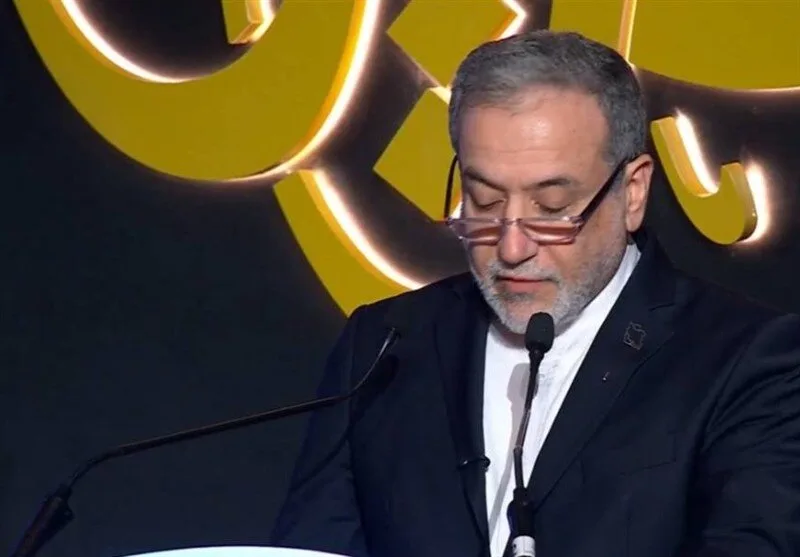
Seyed Abbas Araghchi, Iran's Foreign Minister, has addressed the challenges of energy security in a note and announced that Iran has prepared a seven-day plan to reopen the Strait of Hormuz if military threats are lifted. According to him, energy security and food security are currently among the most important global challenges that are directly affected by the violent actions of the United States.
Consequences of Military Threats
Araghchi referred to statistics from the International Energy Agency and stated that by 2025, more than 112 billion cubic meters of liquefied natural gas will pass through the Strait of Hormuz. This amount is equivalent to nearly one-fifth of global gas trade. He emphasized that recent military threats from the U.S. and Israel have led to the closure of the Strait of Hormuz and disruption of gas supply globally, especially in Asia.
Read more: Abdolmahtab Mohammadi: The impeachment of Zakhani is not on the agenda of the Tehran City Council
The Iranian Foreign Minister pointed to the sharp increase in gas prices in Europe and the low levels of reserves, concluding that any disruption and conflict in this region will have consequences beyond Iran's geographical borders. He added that this situation harms the energy security and economic interests of producers and consumers worldwide.
The Necessity of Dialogue and Cooperation
Araghchi noted the rising inflation and fuel prices in European and American countries and emphasized the need to strengthen dialogues and diversify supply routes. He announced that President Mardakian will discuss with his counterparts from 11 gas-producing countries in Moscow this week.
According to the Global Gas Outlook 2055 document prepared by the Gas Exporting Countries Forum, it is predicted that 86% of global gas production will come from fields that are currently not producing. Araghchi pointed out that Iran, with its vast natural gas reserves, is one of the countries that can play a significant role in meeting this demand.
He also highlighted the importance of strategic cooperation between Iran and Russia in the energy sector, stating that the development of energy relations between the two countries can help strengthen energy security and increase export capacities. Investment by Russian companies in the development of Iran's oil and gas fields and technology transfer are also among the most important areas of cooperation between the two countries.
Despite the abundant capacities, Araghchi mentioned the existing challenges in achieving extensive cooperation and stated that military aggression and the need for heavy investment in infrastructure are obstacles ahead. However, he believes that through bilateral and multilateral cooperation, a suitable ground can be provided for advancing dialogue and cooperation in the field of energy security.
Iran, as one of the important countries in energy supply, has presented a seven-day plan to reopen the Strait of Hormuz to ensure sustainable shipping security and strengthen stability in the global energy market. Araghchi emphasized that the political will and cooperation of all relevant parties are essential to achieve this goal.
Read more: Penalties for expulsion and fines for foreign nationals entering Iran illegally have been determined · General Yadollah Javani: Internet cables in the Strait of Hormuz will be targeted in potential attacks