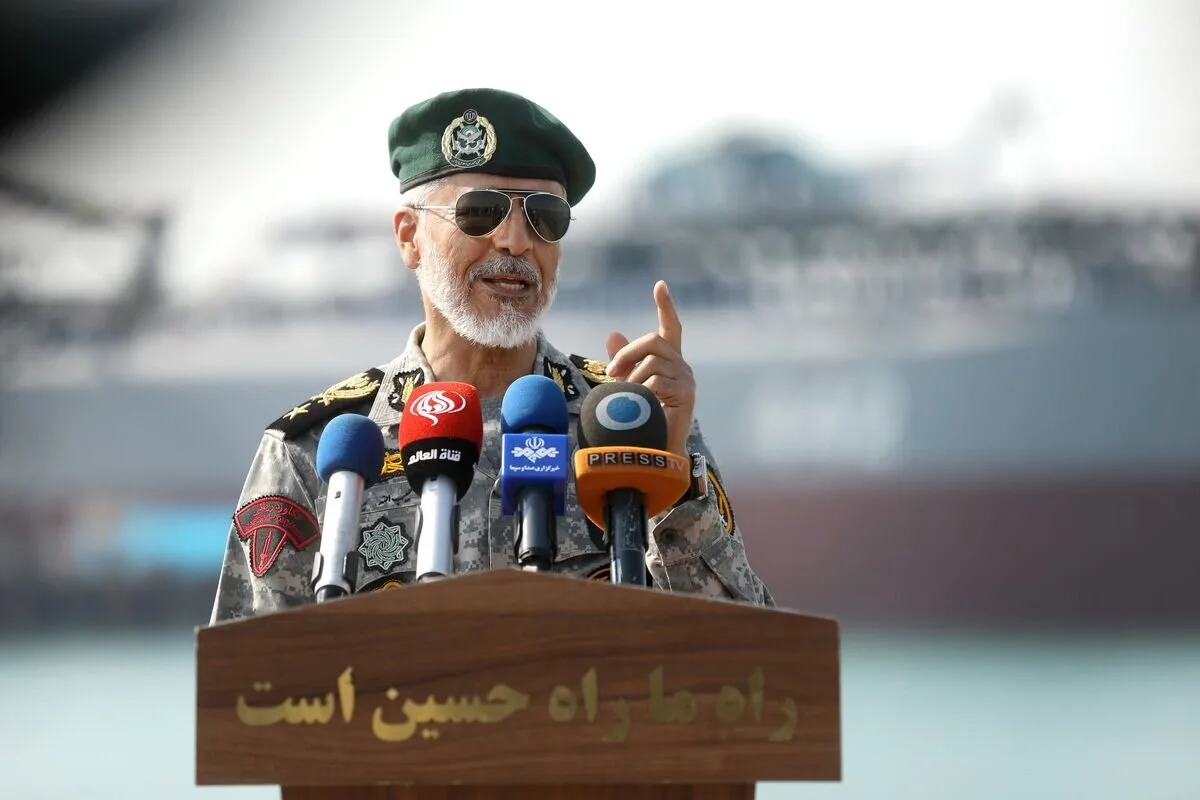
Admiral Habibollah Sayyari, Chief of Staff and Deputy Coordinator of the Army, on Thursday, October 15, during a ceremony honoring Army nurses, referred to the situation in the Strait of Hormuz and reported on the current conditions in this area. He firmly stated that the Strait of Hormuz is closed and if it were open, gasoline prices in the United States would not have risen.
Analysis of the Situation in the Strait of Hormuz
Sayyari added: "The Strait of Hormuz is currently under the complete control of the Iranian armed forces. To the west of this strait, the Navy of the Islamic Revolutionary Guard Corps is stationed, and to the east, the Army of the Islamic Republic of Iran is present with strength." He also emphasized that these forces have 100% oversight and control over the area, and if any vessel is to pass, it must be coordinated.
Read more: Mojtaba Abdollahi: The connection between elites and industry requires more empathy and cooperation
Consequences of the Closure of the Strait of Hormuz
The Deputy Coordinator of the Army further noted that the closure of the Strait of Hormuz has significant economic consequences. He said: "As long as countries are seeking to secure gasoline and diesel, it indicates that the Strait of Hormuz is closed, and the reason is quite clear." According to him, the current situation indicates the inability to transit oil through this strait, which in turn affects fuel prices in other countries.
These statements come at a time when tensions in the Persian Gulf continue, and oversight of the Strait of Hormuz, as one of the most important oil transit routes in the world, is of special significance. This strait is considered a strategic point not only for Iran but also for other countries.
Admiral Sayyari concluded by saying: "If any passage occurs, it must be coordinated, otherwise, you can see in the news what happens." These statements reflect Iran's determination and will to maintain security and control over the Strait of Hormuz and prevent any threats.
Read more: Women farmers make up half of Iran's agricultural workforce · Al-Mashat: Attacks on Saudi Arabia are to reclaim Yemen's national resources