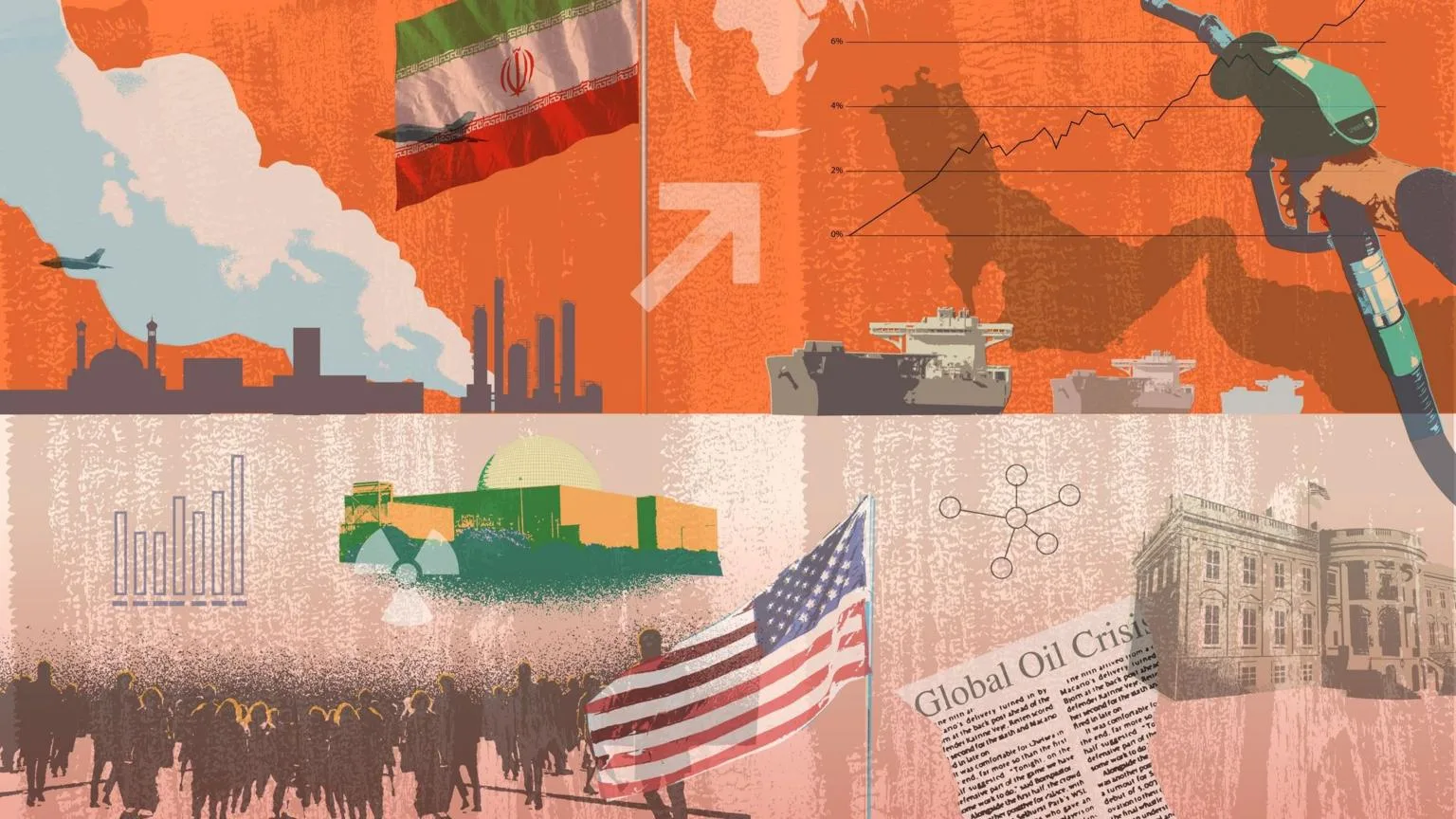
Oil pollution in the Persian Gulf has significantly increased due to ongoing wars and military conflicts. Researchers from the University of South Florida have announced that the extent of oil spills in this region in March 2026 has increased by about four times compared to the same period last year, based on satellite images.
Causes of Increased Oil Pollution
This research, the preliminary results of which have recently been published, shows that a large portion of this pollution is due to oil leaks from tankers that have become stranded in the region following the closure of the Strait of Hormuz during the war. Thick oil patches have been identified around the ships stranded in the Strait of Hormuz and near oil infrastructure.
Read more: Autumn Rain and Snow in 5 Provinces; Flood Risk Looms
Brian Barnes, a professor at the University of South Florida and one of the authors of this study, says: "The extent of oil pollution was very vast. We knew changes would occur, but we did not expect such a volume." He also points out that the continuation of military conflicts has made the cleanup of these pollutants difficult and has put sensitive coastal ecosystems, including the mangrove forests near the Strait of Hormuz, at risk.
Environmental and Political Consequences
The environmental consequences of these conflicts are aspects that are often overlooked in discussions related to the Iran war. Barnes emphasizes that advancements in remote sensing technologies now allow for the tracking of the impacts of military conflicts on the marine environment even in wartime conditions.
Meanwhile, American media have also speculated about the possibility of resuming military attacks on Iran. According to some American officials, the President of the United States, Donald Trump, is considering two options: escalating economic pressure or planning new military attacks aimed at overthrowing the Iranian government.
Reports indicate that Trump is considering resuming military operations after the congressional midterm elections on November 3. However, at the same time, some analysts point out that despite heavy pressures, there are no signs of the Islamic Republic's readiness to surrender.
Ultimately, the expansion of conflicts in the region could have more serious consequences. If new attacks fail to compel Iran to accept U.S. demands, the likelihood of escalating conflicts and Tehran's reduced willingness to compromise increases.
Read more: Mohammad Javad Khosravi and the Plans to Save the Trees of Chitgar Forest Park · Drying of Chitgar Trees and a Serious Threat to Tehran's Forest Parks