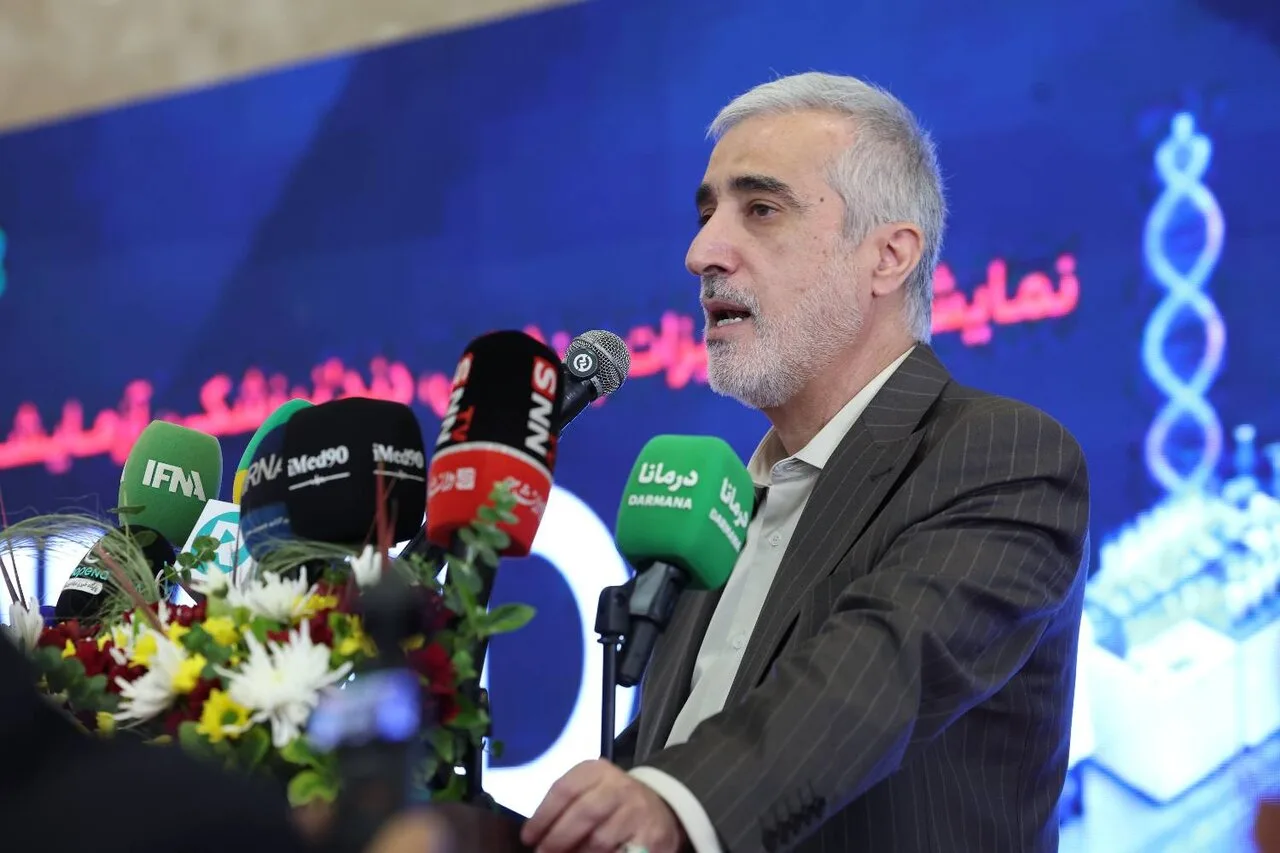
Mehdi Pir-Salehi, Deputy Minister of Health and Head of the Food and Drug Organization, at the opening ceremony of the medical, dental, laboratory equipment, and pharmaceutical supplies exhibition that started today at the International Exhibition of Shahr-e Aftab, expressed gratitude to the producers and importers in this field, stating: The medical equipment industry of the country has played an important role in meeting the needs of the health system under difficult economic conditions and extensive sanctions.
Symbol of Resilience and Innovation
Pir-Salehi stated that the medical equipment exhibition is not just a place for presenting statistics and industrial achievements, adding: This exhibition should be considered a symbol of resilience and innovation of the medical equipment industry in Iran. During this event, more than 17 new products that have been produced for the first time in the country will be unveiled and displayed.
Read more: Dr. Ahmad Najatian: The country is facing a shortage of more than 100,000 nurses
The Head of the Food and Drug Organization, referring to the performance of the medical equipment industry during the 12-day war and intensified sanctions, stated: Since the time of the war, the country has faced more limitations, including maritime and aerial blockades, but the medical equipment industry has made every effort to ensure that no hospital faces a shortage of equipment. No surgical operation should be canceled due to a lack of equipment, and patients should not be deprived of receiving medical services.
Financial Challenges and Need for Support
He emphasized: The continuity of this industry's activities under such conditions demonstrates the capabilities of domestic producers and suppliers; entities that have prioritized meeting the needs of the health system despite economic pressures. Pir-Salehi identified one of the main problems of the medical equipment industry as the accumulated claims from the government and the private sector, stating: Hospitals are facing significant debts to medical equipment companies due to heavy claims from insurance organizations.
He also referred to the Ministry of Health's efforts to address these claims, adding: In most meetings of the Minister of Health with government officials, the Organization for Planning and Budget, and the Central Bank, the issue of securing financial resources for insurance organizations and settling their debts is raised. The goal is for the Health Insurance Organization and the Social Security Organization to be able to receive their claims from the government to facilitate the process of hospitals paying their debts to medical equipment companies.
The Head of the Food and Drug Organization, referring to the use of Gham bonds for financing the medical equipment industry, said: The resolution related to these bonds has been more directed towards financing essential goods and some other items. However, the Food and Drug Organization has corresponded with the Central Bank and received promises to facilitate the use of this financial tool in the field of drugs and medical equipment.
Pir-Salehi, in another part of his speech, referred to the topic of production without a factory, stating: One of the honors of the Food and Drug Organization and the health system is that nearly 25 years ago, before the topic of production without a factory was raised in many other industries, this method was used in the field of drugs, medical equipment, and supplements. This method allows companies without independent factories to utilize the unused capacity of active production units.
He emphasized the Food and Drug Organization's support for the development of this production method, stating: We welcome the expansion of production without a factory and will strive to create more opportunities for the production of knowledge-based products needed by the country using existing capacities.
Pir-Salehi concluded by emphasizing the necessity of cooperation among various agencies to support the medical equipment industry, stating: This industry is a shared domain among several entities and ministries. The Food and Drug Organization is responsible for oversight and regulation, while the Ministry of Industry, Mine, and Trade plays a role in various sectors.
Read more: The direct relationship between burns and poverty; 95% of those who burn are poor · Lettuce and cucumber are among the forbidden foods in the freezer