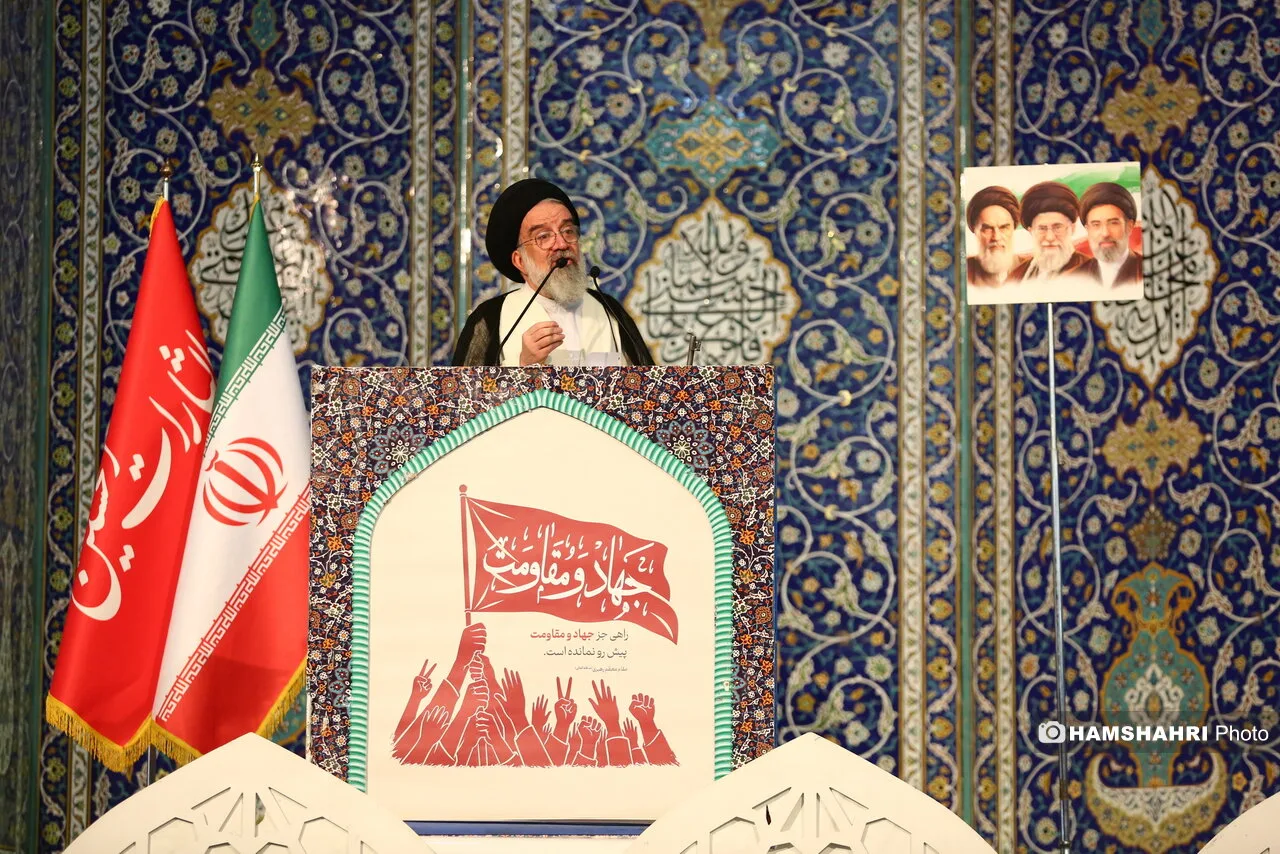
Ayatollah Seyyed Ahmad Khatami, the interim Friday prayer leader of Tehran, in his sermon on October 3, 2026, referred to the numerous battles led by the Prophet Muhammad (PBUH) during his time in Medina, stating that the Prophet successfully led 80 battles over a period of 10 years in Medina. He emphasized that two main factors contributed to these battles: God's blessings and the support of the believers. The key question is how the Prophet Muhammad (PBUH) kept the people constantly prepared for war and resistance.
Five factors for keeping the people prepared
Ayatollah Khatami outlined five factors for keeping the people ready against the enemy: first, cultural development; second, strengthening of belief foundations; third, fostering hope; fourth, intimidating the enemy; and fifth, a decisive confrontation with the enemy's psychological warfare. He stated that anything that becomes part of culture will endure, and jihad was also presented as a culture in the conduct of the Prophet Muhammad (PBUH).
Read more: Masoud Pezeshkian: We will resist until the last moment
Ayatollah Khatami also pointed out important aspects regarding the strengthening of belief foundations, stating that the Prophet Muhammad (PBUH) was never without prayer in any battle, and these prayers act as the backbone of resistance. He recalled the story of the Battle of the Trench and explained how fostering hope among believers leads to great victories.
The role of armed forces and military power
The interim Friday prayer leader of Tehran emphasized intimidating the enemy through the strengthening of armed forces, asserting that the Islamic Republic will never be distracted from missile production during the ceasefire. He stated that the missiles of the Islamic Republic have been able to stop Israeli criminals, and the country's naval, air, and ground forces are actively on standby.
Ayatollah Khatami further emphasized the need to stand firmly against the enemy's psychological warfare and the rumors that are spread in this regard. He also referred to the Day of Judgment and its reality, stating that the punishment of criminals will ultimately be delivered by God.
The interim Friday prayer leader of Tehran also commemorated Hazrat Masoumeh (SA) and the passing of Grand Ayatollah Seyyed Mousa Shabiri Zanjani, considering the roles of these figures significant in the history of Islam and Shia. He concluded by referencing the President's speech at the United Nations, describing it as a logical and courageous address that conveyed Iran's message to the world.
Read more: 31 new double-decker buses enter Tehran's public transport fleet · Pezeshkian: We seek to advance the agreement with America and are not looking for war