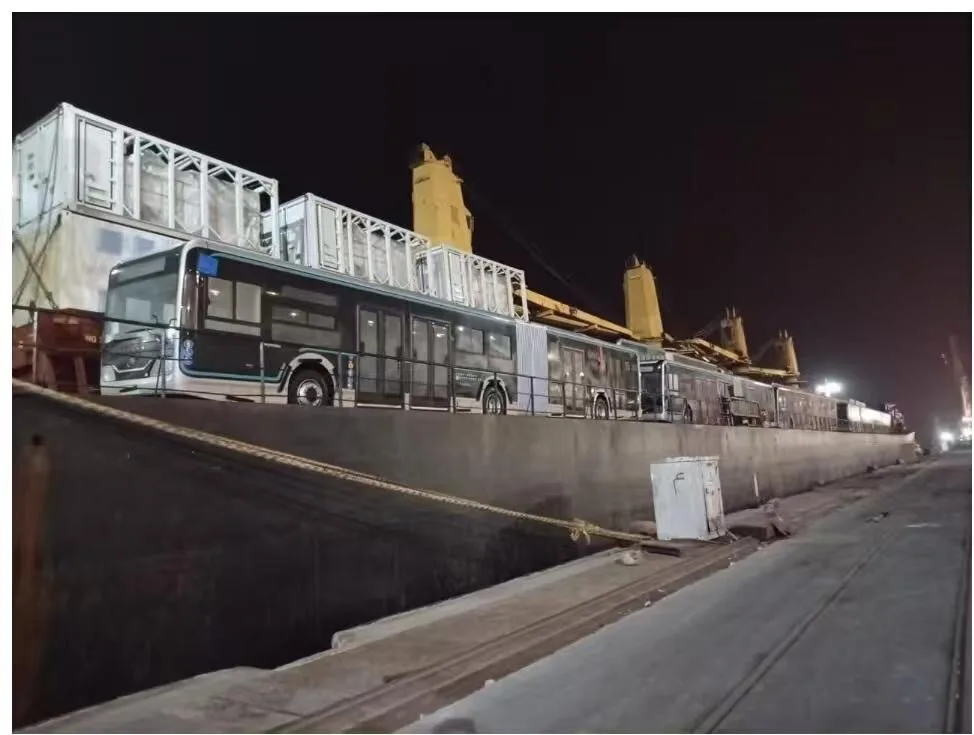
The arrival of 31 new double-decker buses to Tehran's public transport fleet is considered an important step towards controlling traffic in the capital. Abdol-Motahar Mohammadi Khani, the spokesperson for Tehran Municipality, announced the urban management measures to organize traffic ahead of the 1405 school year and emphasized that 100 new imported double-decker buses are planned for this purpose.
Accelerating the Clearance Process for Buses
Mohammadi Khani pointed out that 31 buses from this fleet have arrived at the port, adding: “The Mayor of Tehran personally visited Shahid Rajaei Customs on Wednesday, October 1st, to expedite the clearance and transfer of these buses to Tehran.” This action could have a significant impact on easing traffic ahead of the reopening of schools and universities.
Read more: Traffic measures for the 40,000 motorcyclists 'Sacrificing for Iran' exercise announced
According to Mohammadi Khani, 32 other buses were damaged during their transfer to the country, with 17 buses completely destroyed. Meanwhile, 34 other buses are being transported by land to the country and are currently stopped in one of the neighboring countries. Mohammadi Khani expressed hope that with government follow-ups and diplomatic negotiations, arrangements would be made for the addition of these buses to Tehran's bus fleet.
Development of Traffic Infrastructure
Furthermore, the spokesperson for Tehran Municipality announced the opening of the first phase of the north-to-west branch of the Yadegar Imam Highway and emphasized that this project could significantly reduce a major traffic bottleneck for residents of southwestern Tehran. Additionally, the second phase of this highway is being executed rapidly and will be operational within the next two months.
Mohammadi Khani, referring to the continuation of free public transport ahead of the month of Mehr, considered this action an important step to encourage students not to use personal vehicles and added: “Statistical surveys indicate that over 80% of people are satisfied with the free mass transit.” These free metro services and rapid buses also contribute to increasing citizen satisfaction.
The Necessity of Coordinating Urban Planning with the Rail Network
Mohammadi Khani pointed to one of the serious traffic problems in the capital and said: “The lack of coordination between urban planning and the rail network is one of the main reasons for traffic.” He emphasized that merely providing financial incentives to increase the use of public transport is not enough, and conditions must be created so that citizens can access the nearest metro station within less than 15 minutes of walking.
He also mentioned the entry of over four million passenger cars from suburban cities into Tehran during working hours and said: “Without completing and connecting rail routes to the population centers around Tehran, it is impossible to manage this volume of vehicle traffic.”
In conclusion, Mohammadi Khani referred to the TOD (Transit-Oriented Development) document and the establishment of the Tehran, Alborz, and surrounding rail network as important measures for traffic management and expressed hope that with the government's cooperation, the path to solving the capital's traffic problems would be smoother.
Read more: Ali Akbar Salehi: Iran's Strategic Independence in the Face of Crises · 4% reduction in Tehran traffic in Mehr 1404 with an increase in public transport fleet