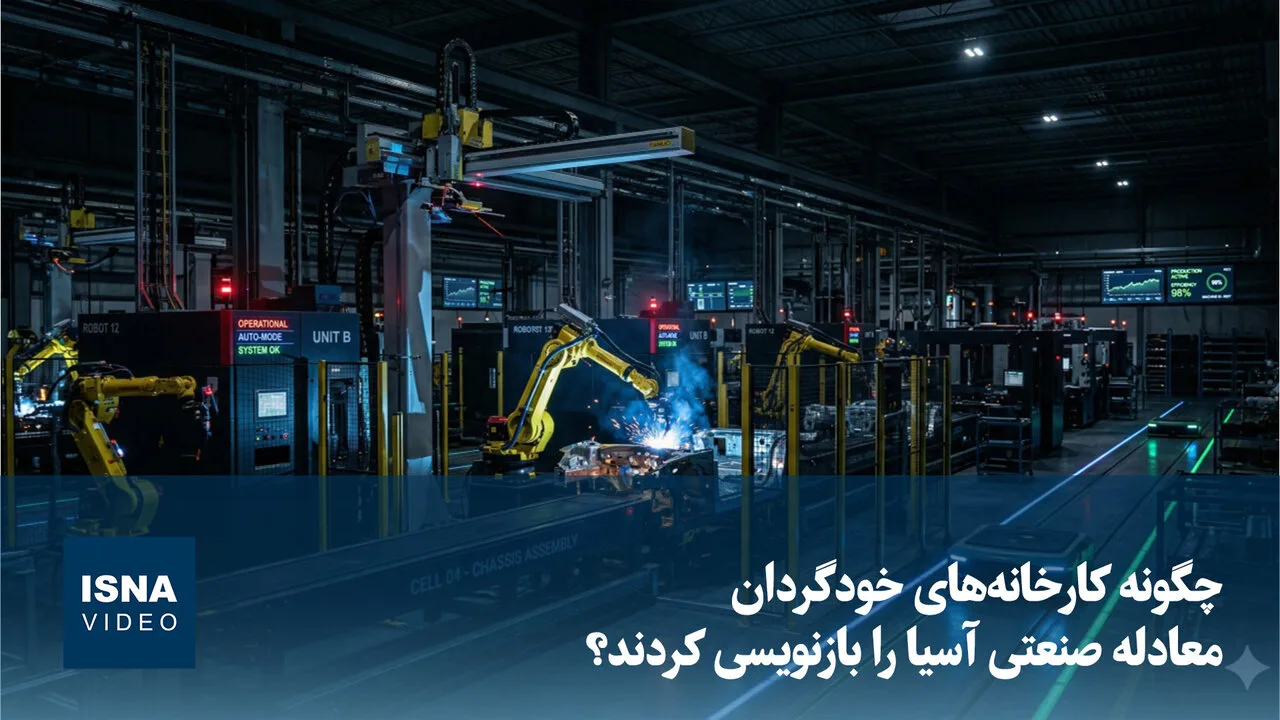
Autonomous factories, utilizing modern technologies and artificial intelligence, have brought about a deep transformation in the industry of East Asia. These factories, known as "dark factories," have become a milestone in the economic doctrine of the past four decades, going beyond a simple mechanical advancement. These changes are not only beneficial for producers but also signify a fundamental shift in how we think about industry and production on the Asian continent.
Introduction to Autonomous Factories
Autonomous factories refer to a set of systems and technologies that perform production processes automatically without human intervention. These types of factories have managed to optimize production processes, reduce costs, and increase product quality by utilizing sensors, advanced software, and communication networks. In fact, these factories have been able to reduce the need for human labor, which is why many analysts refer to it as an industrial revolution.
Read more: Basant and He Lifeng extended the economic ceasefire agreement for another two months
Economic and Social Impacts
The emergence of autonomous factories in East Asia has not only impacted the economy of the region but has also led to social changes. With the reduced need for human workers on production lines, many traditional jobs are at risk of extinction. Instead, these factories require software specialists, engineers, and IT technicians. These changes have not only increased the skill levels required in the job market but have also created new challenges in employment and education.
On the other hand, autonomous factories, by utilizing advanced technologies, can help reduce environmental impacts and energy consumption. By optimizing production processes and minimizing waste, these factories are striving to achieve a more sustainable model of production. For this reason, many countries are investing in these types of technologies to take advantage of their benefits.
Challenges and Future of Autonomous Factories
Despite the significant advantages of autonomous factories, there are also challenges along the way. One of the biggest challenges is concerns regarding cybersecurity. As dependence on technology increases, the risks from cyberattacks and system vulnerabilities also rise. Therefore, the need for stronger security infrastructures is felt more than ever.
The future of autonomous factories depends on their ability to adapt to market needs and technological changes. With ongoing advancements in artificial intelligence and automation, these factories are expected to continuously improve and contribute to the ongoing industrial transformations in Asia. Thus, autonomous factories have not only rewritten the industrial equation of Asia but are also recognized as symbols of future changes in the world of production and industry.
Read more: The decrease in the dollar price in the free market with hopes for Abbas Araghchi's negotiations · Seyed Farzad Talaksh: The price of each carton of eggs has been determined, and the price differences will disappear