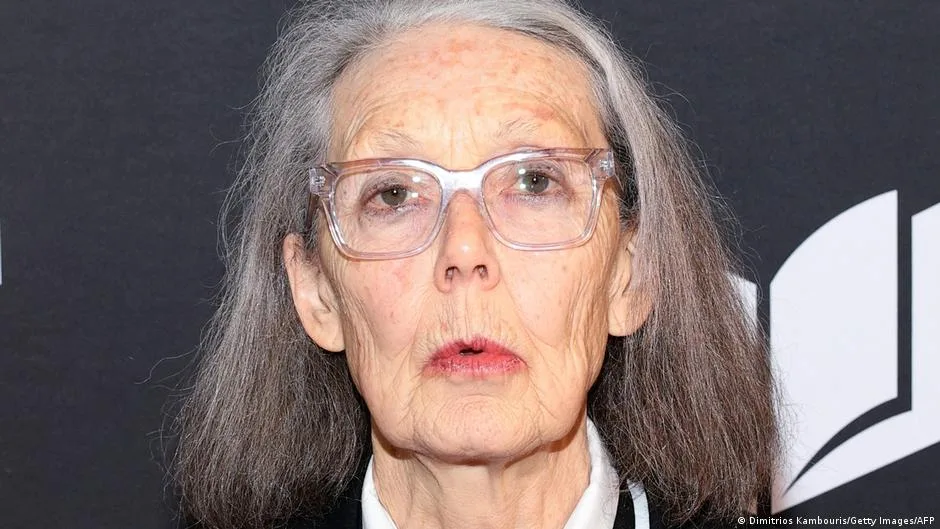
Anne Carson, a Canadian poet and essayist whose works traverse poetry, prose, translation, mythology, and philosophy, has won the 2026 Nobel Prize in Literature. The Swedish Academy praised Carson in its announcement of this year's winner for her "daring and innovative body of work"; works that, according to the Academy, have created new forms for contemporary literature in a "playful dialogue with the classical tradition."
Life and Works of Anne Carson
Anne Carson, born in 1950 in Toronto, is a figure whose literary work is hard to categorize into a specific genre. She is a poet, an essayist, a translator, and a scholar of classical literature. Carson has repeatedly returned to the literature and myths of ancient Greece in her works, but has reinterpreted this tradition in modern and sometimes entirely experimental forms. Her first book, "Eros the Bittersweet," was published in 1986; a work that linked literary criticism with an exploration of the concepts of desire and love in the Greek tradition.
Read more: Dream House in Randwick, Sweden for 30,950 Euros
Her most well-known work, "The Red Doc," was published in 1998. This book is a verse novel inspired by fragments from Aeschylus, the ancient Greek poet, transforming the weeping myth of the red-winged monster slain by Heracles into a modern story about adolescence, love, loneliness, and emotional failure.
Reaction to Receiving the Nobel Prize
Ingrid Carlberg, the permanent secretary of the Swedish Academy, said she had informed Carson of the news by phone before the public announcement. She said: "Carson had the opportunity to tell me that she is currently in Iceland listening to the sound of the wind. She was surprised but very happy. You could tell from her voice." Anne Carson is 76 years old and will receive the Nobel Prize, medal, and diploma at an official ceremony in December in Stockholm.
Anders Olsson, the chair of the Nobel Committee for Literature, praised the way Carson has distanced herself from lyrical poetry and contributed to the formation of new forms in contemporary literature. He said this type of writing leads to works that are "playful and ironic," moving not only between classical and modern poetry but also among various genres and artistic forms.
Important works by Anne Carson include "The Glass Essay," "The Red Doc: A Novel in Verse," "Nox," "Float," and "The Beauty of Husband: A Fictional Essay in 29 Tangos." "The Beauty of Husband" won the prestigious T.S. Eliot Prize for Carson in 2001, making her the first woman to receive this award. She has also won Guggenheim and MacArthur Fellowships.
Connection to Classical Literature
Carson's books often deviate from conventional forms. "Men in the Hours of Leisure" is a combination of verse essays, poetry, memoir writings, and prose about artists and historical figures, winning the first Griffin Poetry Prize in 2001. "Nox" is also a prime example of her experimental approach; a book published in the form of an accordion box that reproduces a notebook Carson created after her brother's death.
In addition to writing, Carson has been a professor of classical literature for over 30 years, teaching at universities such as McGill, Michigan, New York, and Princeton. She has also translated works of ancient Greek literature, and a significant part of her literary credibility comes from this connection between the classical world and contemporary literary experience.
Some of Carson's works have also been introduced or translated into Persian. "The Red Doc" is known in Persian under titles like "Red Autobiography" or "Autobiography in Red." "The Beauty of Husband" has also been translated into Persian as "The Beauty of Husband: An Experimental Concept in 29 Tangos." Parts of "Eros the Bittersweet" and her poems and short essays have also been published in literary magazines and translated collections in Persian.
The Nobel Prize in Literature has been awarded 118 times since 1901. In recent years, writers such as Annie Ernaux, Bob Dylan, Abdulrazak Gurnah, Louise Glück, Peter Handke, and Olga Tokarczuk have received this prize. Last year, the prize was awarded to László Krasznahorkai, a Hungarian writer known for his dystopian and avant-garde writings.
Read more: The Failure of 'The Digger' and Its Consequences for Tom Cruise · The City Theater Transformed into a Station of Poetry and Empathy