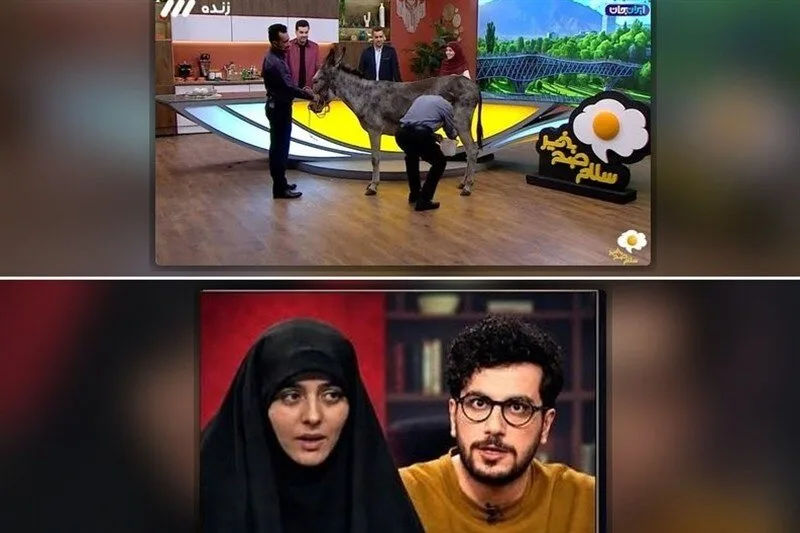
Zeynab Abotalebi and the donkey milk have formed an unexpected bond; these two names have simultaneously come to the forefront of Iranian media. In a program hosted by Amir Hossein Ghiasi, jokes about Zeynab Abotalebi have turned into engaging topics, while the presence of the donkey milk on television has become a controversial subject. Now the question arises whether these new methods in program production can help attract viewers or if this is just a trick for visibility.
Tractor, Horse, and Donkey Milk; A Competition for Attention
Television is striving to remain in the competitive media world by using anything that can attract viewers' attention. The entry of donkey milk onto the television screen as a tool for attracting attention is a sign of this effort. This phenomenon shows that television is moving away from focusing on scientific and educational content towards producing controversial and entertaining material. Does this approach lead the media towards creativity or does it merely result in the production of momentary surprises?
Read more: Lita Badamjan; The Autumn Flavor that Captivates Every Iranian's Heart
Amir Hossein Ghiasi's Jokes and Their Consequences
In his program, Amir Hossein Ghiasi specifically refers to Zeynab Abotalebi and her remarks about individuals dissatisfied with their circumstances, turning this topic into a subject for jokes. These jokes arise while the core issue of whether this host will stay or leave is not definitively clear and can easily stir up controversies. In this context, the social responsibility of comedians should be given more attention; as these types of jokes can easily lead to the spread of misinformation and negative impacts.
Many critics believe that in today's media world, attention to controversial and unconventional actions is prioritized over deep and analytical content. This trend may gradually lead to a decline in the quality of television programs and distance the audience from real content. Has television reached a point where it must resort to producing controversies and baseless jokes to attract viewers?
It should also be noted that the presence of an animal or an unexpected event in a television program can be appealing, but if this topic becomes the main focus of the program, what does the audience learn from it? Will they only remember an image of a donkey milk or a tractor, or does it also carry educational content?
Ultimately, this issue returns to the challenges that today's media face. Should television seek attention at any cost, or should it place greater importance on the content and quality of its programs? These questions remain unanswered and will impact the future of Iranian media.
Read more: Milking Donkey in a Live Television Program Became Controversial · Ahmad Reza Kazemi Talks About the Man with Three Thousand Faces and the Challenges of Writing