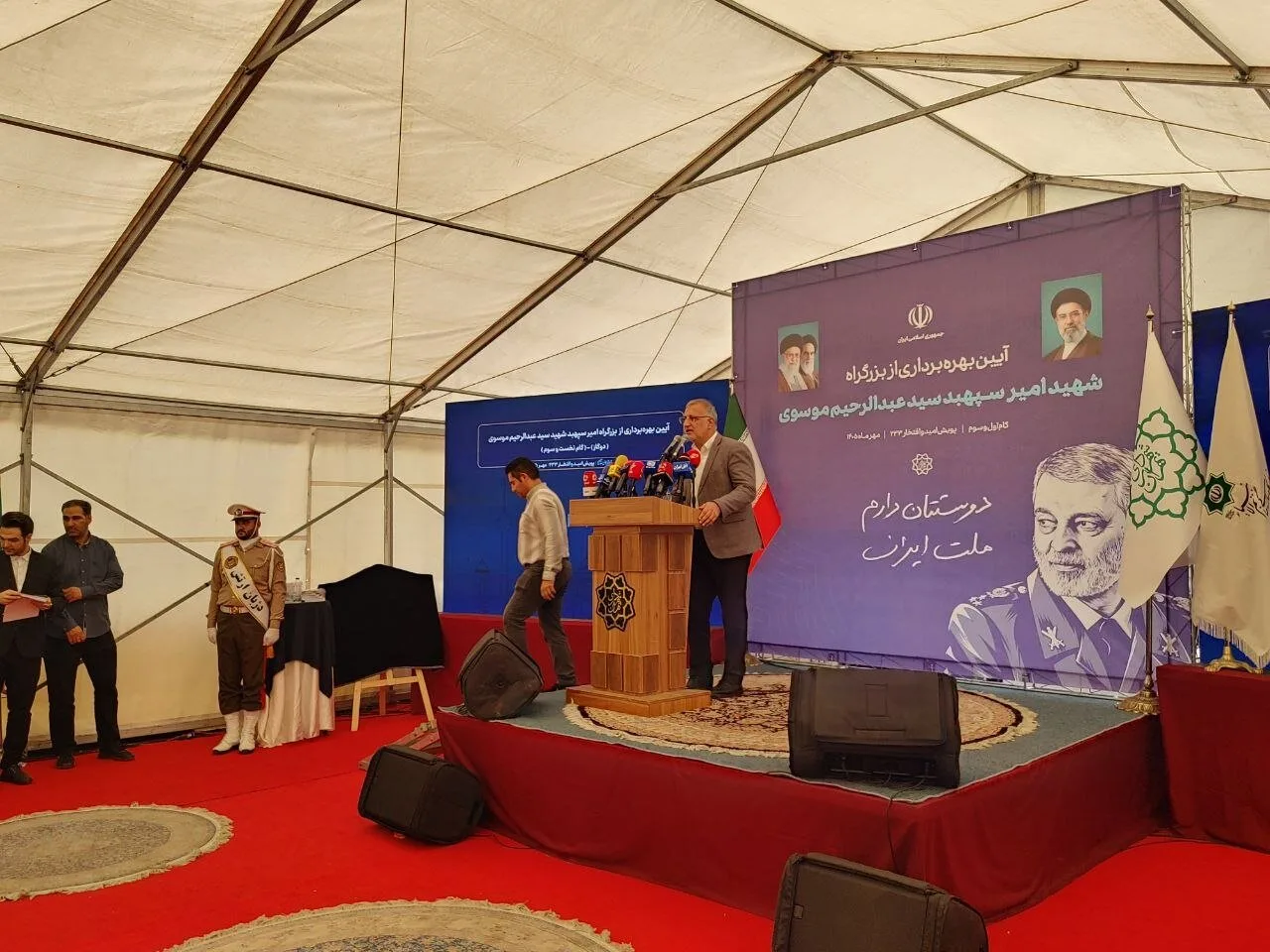
Alireza Zakani, the mayor of Tehran, at the inauguration ceremony of Shahid Sepahbod Amir Mousavi Highway (Dougaz), referring to the personality traits of Martyr Sepahbod Mousavi and his role in the cooperation between urban management and the army, stated: What enables effective efforts and leaps for the country is the combination of ethics, commitment, and devotion to religion and the nation, along with the utilization of all power tools.
Ethical Characteristics of Martyr Mousavi
Zakani stated that there was a special clarity, purity, and innocence in the being of Martyr Mousavi, saying: Ethics, honesty, and precision were ingrained in this martyr, and these characteristics made people fond of him, feel close to him, and not sense any distance between themselves and him.
Read more: 7,000 children of municipal employees participating in summer programs of joy and excellence
He added, referring to the cooperation between urban management and the army during his tenure: During this period, we made the largest agreements with the army, and Martyr Mousavi was the flag bearer of these agreements. He followed up on issues with trust and precision and always emphasized the reflection of the reports of these collaborations to ensure the satisfaction and happiness of the martyr leader of the revolution, as many issues had been left unresolved for years.
Management with Respect and Precision
Zakani continued by recounting a memory of Martyr Mousavi's management style: This martyr's actions were characterized by strength, power, and precision, accompanied by respect for the other party; even if he intended to punish someone, he would do so with respect.
He explained: In one of the projects that faced problems during execution, one of the relevant officials, despite repeated warnings, was not executing the order. I brought up the issue in a meeting with Martyr Mousavi and said that someone under your command is not executing the order, and what should we do.
Zakani added: He initially sent a gift to that person and conveyed my greetings. After that, he reduced his rank and explained that the gift was out of affection and respect for him, and the rank reduction was due to not executing the order. This behavior showed that even punishment could be accompanied by respect; in such a way that the individual realizes their mistake and others can learn from it.
He emphasized that Martyr Mousavi had special diligence and seriousness in pursuing agreements and responsibilities, saying: In all the agreements we had with this martyr, he would review the topics point by point and follow up on their implementation. Ethics, piety, and transparency in his being were so prominent that no duality was felt between his personality and actions.
The mayor of Tehran, referring to his last joint meeting with Martyr Mousavi and several martyr commanders in the 12-day war, stated: In one of the meetings held at the Garden Museum, General Bagheri, General Salami, Martyr Mousavi, and several other dear ones who later became martyrs were present. In the next meeting, these dear ones had become martyrs, and their memory was honored.
Zakani continued: At the end of the meeting, I jokingly approached Martyr Mousavi, and he, as always, responded with a warm smile and friendliness. His emphasis was that our determination to destroy our enemies, America and the Zionist regime, is resolute.
Zakani stated that the effects and characteristics of this martyr are still visible in the performance of the ideological army of Iran, saying: Today, our ideological army stands proudly in its place, following the great martyrs such as Martyr Sayyad, Martyr Mousavi, and other leaders of this path.
He added: Our enemies intended to invade, but they faced the steel wall of the army and the IRGC. They wanted to break the resilience of the people, but they encountered a wave of service, and they intended to hinder the progress and prosperity of the country, but the construction and activity did not stop.
The mayor of Tehran, referring to the activities of various entities in the path of the country's construction, from the private sector to other service organizations, stated: Today, the enemy faces a clear message from these actions; a message that neither the service movement will stop nor the path of construction and prosperity of the country will cease.
Keeping the Memory of Martyrs Alive
Zakani, referring to the importance of naming projects after martyrs, said: Our martyr, the Mujahid Imam, said that keeping the memory of martyrs alive is no less than the essence of martyrdom. The martyr is alive and present, and we keep the memory and name of the martyrs alive to expand their culture in society and based on the truth that martyrdom does not suffer defeat.
He continued: We turn to the names and memories of these martyrs; not because they need us, but because we need them to always be present in our memories, to emulate them, to build ourselves based on their behavioral model, and to be active in the field.
The mayor of Tehran emphasized that martyrs should be considered lasting and effective role models in today's life, saying: Our message to the enemy is that we proudly continue the path of martyrs and consider them effective in our present. From our perspective, the martyr is still present, and we can utilize his existence and conduct for effective actions. This is our belief, and we are also relying on the intercession of the martyrs.
He added: The martyr's message to the enemy is despair. Alongside that, the services provided for the people and the actions related to construction and prosperity show that even in the midst of war, we do not cease our work and efforts. These efforts gain more importance in the light of national cohesion and unity and obedience to the leader and Imam of the community.
Zakani mentioned the deep affection for the leadership and obedience as other prominent characteristics of Martyr Mousavi and stated: One of the important features of this martyr was his deep affection for our Mujahid leader and Imam and his obedience to him. Additionally, the remarks made by his dear son regarding the statements of the Mujahid Imam about this martyr reflect the significance of this connection and special attachment.
He referred to the link between obedience to the Commander-in-Chief and self-sacrifice for the people, continuing: This mutual relationship and affection, alongside self-sacrifice for the people, are prominent features of this path. This topic reminds us of the culture of Ashura and the self-sacrifice of the martyrs of Karbala for Imam Hussain (peace be upon him); a path that we also proudly follow.
The mayor of Tehran, in another part of his speech, referred to the progress of the highway project in the west of the capital, saying: Segments one and three of this route have been inaugurated, and regarding segment two, the technical and construction friends have considered changes that are commendable. With these changes, the amount of necessary land release has decreased to about one-fifth to one-sixth of the previous amount to enable the project to be executed more quickly.
He added, referring to the follow-up on the timeline for the implementation of this section of the project: I have inquired about the time required for the operationalization of segment two, and we hope that with the necessary land releases, this section will also be put into execution.
Zakani expressed gratitude to General Abed, Mr. Rostami, and other stakeholders.
Read more: Pezeshkian: Development of regional cooperation was the focus of discussions during the trip to Armenia · Tehran City Council appreciates Davood Ghodrzi and the achievements of urban services