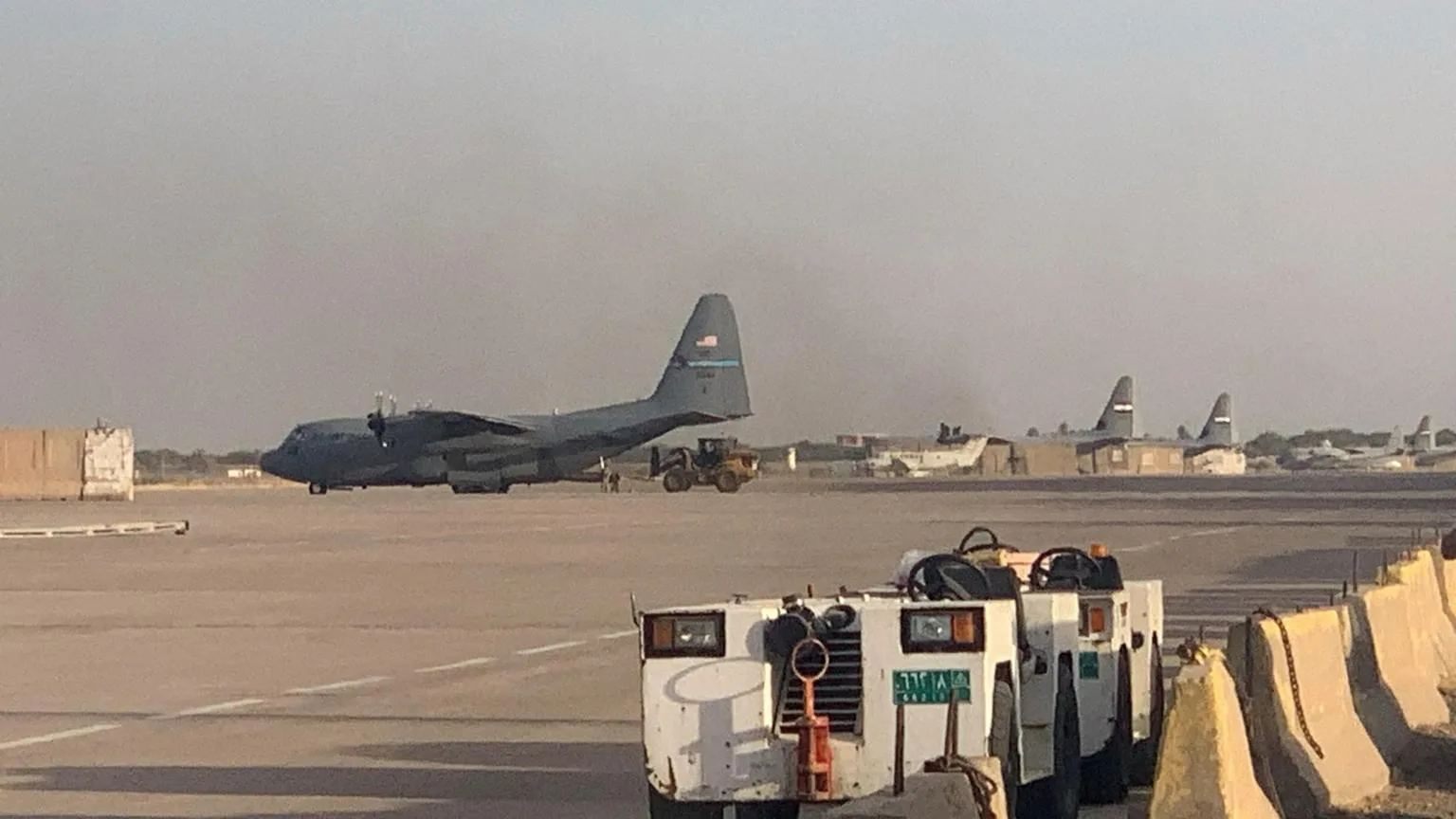
American forces left their last bases in Iraq on Wednesday; this historic withdrawal ends 23 years of U.S. military presence in the country and raises concerns about Iraq's security and the rise of Iran-backed Shia groups.
Withdrawal Agreement and Its Consequences
This withdrawal is based on an agreement signed in 2024 during Joe Biden's presidency. The Donald Trump administration implemented this agreement while the U.S. remains engaged in its fight against Iran. Tehran and its allies consider this withdrawal a victory for themselves.
Read more: Hakan Fidan's visit to the UAE after meeting Netanyahu
At this time, the Revolutionary Guard has also urged American voters not to support Donald Trump's allies in the congressional elections. The withdrawal of American forces occurs 23 years after the invasion of Iraq and the overthrow of Saddam Hussein, an invasion that led to the occupation and instability of Iraq.
History of U.S. Military Presence in Iraq
The U.S. military presence in Iraq began after the 2003 invasion and continued for two decades. During this time, a new government centered around Shia parties was formed in Baghdad, and the U.S. was engaged for years with insurgents loyal to Saddam Hussein and later with terrorist groups such as al-Qaeda. Sectarian warfare also devastated large parts of Iraq.
American forces withdrew from Iraq at the end of 2011, but returned in 2014 as ISIS advanced to assist Iraqi forces in combating this threat. The war against ISIS, which lasted from 2014 to 2017, ended with the defeat of the self-proclaimed caliphate of this group in Iraq, but ISIS cells remain active in parts of Iraq.
Concerns and Support for the Withdrawal of Forces
Some Iraqi analysts have warned that the complete withdrawal of American forces may lead to a security vacuum. Jassim Al-Bahadli, an Iraqi analyst and advisor to security forces, states: "The lesson of the past two decades is that security vacuums can be very dangerous."
However, this withdrawal is supported by many Iraqis, especially after years of opposition to foreign military presence and attacks on American bases. About 4,500 American troops were killed during this time, nearly double the U.S. casualties in the Afghanistan war.
Iran's Influence and Iraq's Future
The withdrawal of American forces comes at a time when Iran has gained extensive political and military influence in Iraq over the past two decades, and Iran-aligned Shia armed groups play a significant role in the security and political structure of the country. However, the end of U.S. military presence does not mean the end of Washington's influence in Iraq; Iraq's oil revenues are still held in the Central Bank of Iraq's account at the Federal Reserve Bank of New York, providing the U.S. with significant economic leverage over Baghdad.
Read more: Russian Embassy in Belgium: The likelihood of direct conflict with NATO has increased · Iran-Iraq relations will not be affected by U.S. pressures