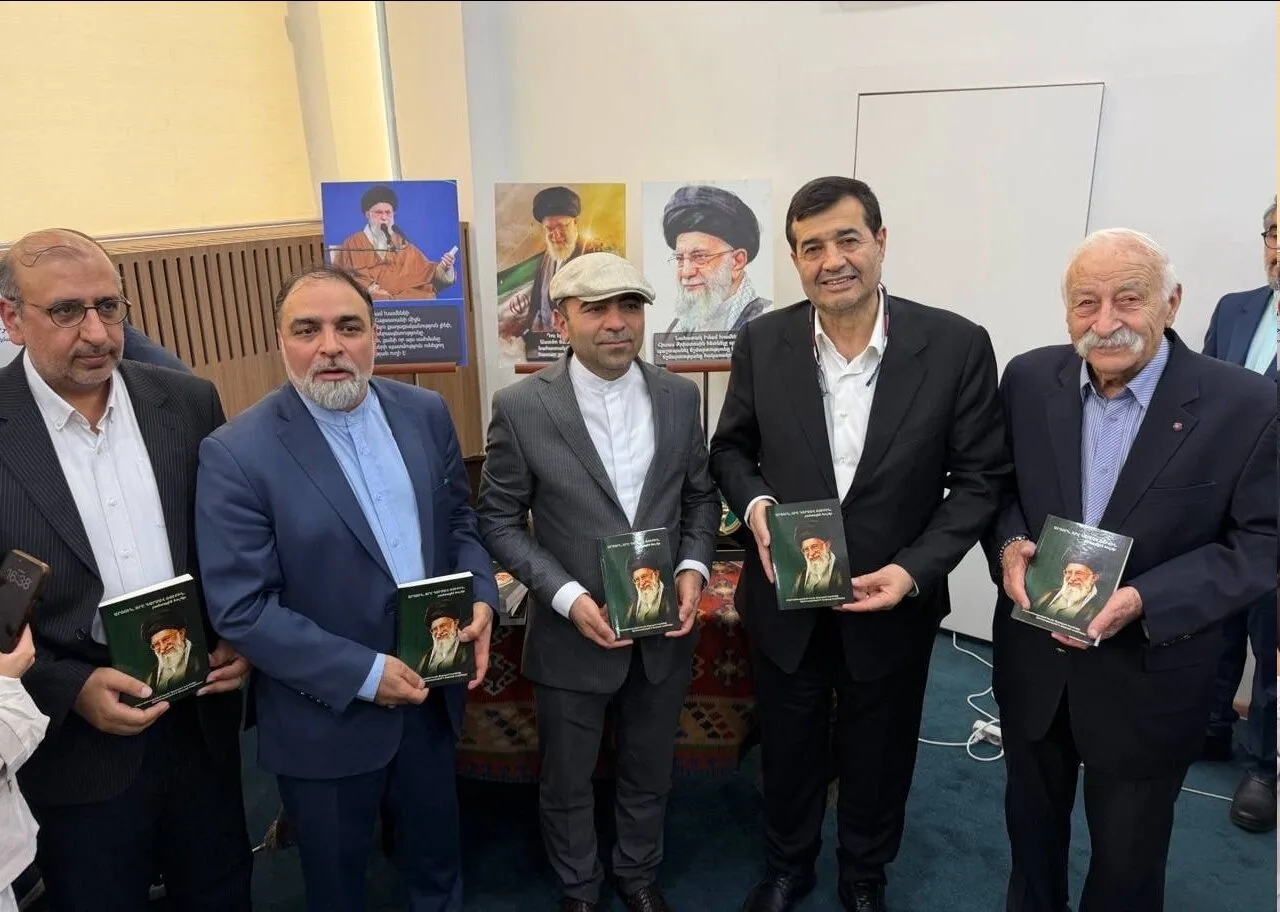
The unveiling ceremony of the Armenian translation of the book "The Heart's Blood that Turned to Ruby", which deals with the memories and narratives of the life, struggles, and imprisonment of Ayatollah Seyyed Ali Khamenei, the martyr leader of the Islamic Revolution of Iran, was held on October 9th at the Ferdowsi Hall of Yerevan State University.
Enthusiastic Presence of Enthusiasts
This event was warmly and enthusiastically welcomed by students, professors, and enthusiasts of Iranian history and literature. During this event, the translator of the book provided explanations about the translation process and its challenges, emphasizing the importance of transferring historical and cultural experiences between the two countries.
Read more: Khalid Qaddumi: The Palestinian cause is the Iranian cause
The Message of the Book and Its Impacts
The book "The Heart's Blood that Turned to Ruby" is considered an important work in the literature of the Islamic Revolution, focusing on the life and struggles of Ayatollah Seyyed Ali Khamenei and narrating the hardships he endured during his struggles. This work not only describes historical events but also serves as a voice for generations who have sacrificed their lives for the freedom and independence of the country.
The translator of the book, in his speech, pointed out the necessity for the younger generation of Armenia to become familiar with contemporary Iranian history, stating: "This book not only reminds us how history affects human lives but also carries lessons for today and the future."
During this ceremony, several speeches were delivered by cultural and social figures, each highlighting the importance of this book and the efforts made for its translation and publication. This book can play a significant role as a bridge between the two cultures and histories, strengthening cultural and political relations between Iran and Armenia.
Another interesting point in this ceremony was the presentation of opinions and analyses by Armenian students regarding the content of the book. They expressed interest in Iranian history and a deeper understanding of its key figures, discussing the importance of such works in broadening their cultural and historical horizons.
At the end of this ceremony, all attendees were invited to contribute to the expansion of cultural awareness and understanding by purchasing and reading the book. This event demonstrated the importance of literature as a cultural tool in creating empathy and mutual understanding between nations.
Read more: Passenger ship collision with a 200-year-old historical building in the Bosphorus Strait · Trump and the constant changes in his positions regarding Iran