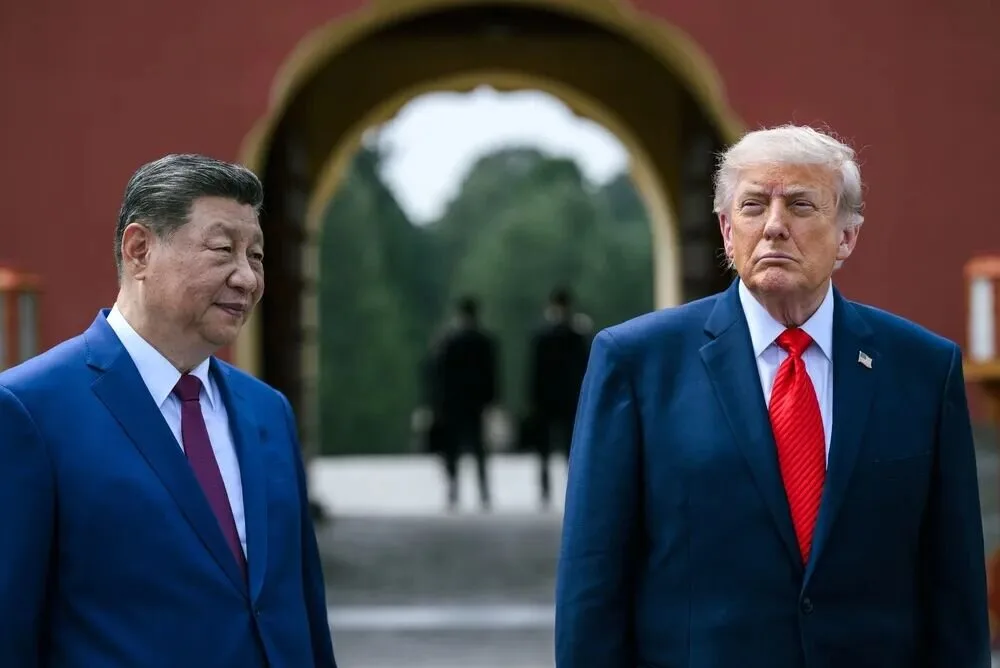
The United States and China reached an agreement to establish a bilateral communication channel following a meeting held at the White House. This initiative is designed to facilitate discussions about the risks and benefits of artificial intelligence, as well as other important issues, including trade and security matters.
Agreement on AI Management
The U.S. government has announced the establishment of a new mechanism called the "U.S.-China Dialogue on Superintelligence (SI)" to allow the two countries to share their perspectives on artificial intelligence. This agreement was signed while Donald Trump and Xi Jinping discussed various topics in Washington, although the meeting appeared to be more ceremonial than yielding practical outcomes.
Read more: The Iran War and the Republicans' Distance from Trump Ahead of the Elections
During this meeting, Trump repeatedly dismissed existing concerns about potential threats posed by artificial intelligence to humanity, while Xi Jinping emphasized the necessity of human control over the development of this technology. These positions reflect two different views on the management of advanced technologies.
Economic Agreements and Future Meetings
In addition to the agreement on artificial intelligence, the two countries also reached an agreement for China to import 10 million tons of coal from the U.S. in 2027 and 2028. These agreements could help improve trade relations between the two countries, but Beijing's immediate reaction to these announcements remains unclear.
The governments also emphasized that they would meet again at the Asia-Pacific Economic Cooperation (APEC) summit in Shenzhen, China, in November and at the Group of 20 (G20) summit in Miami in December. These meetings will provide another opportunity to discuss bilateral relations and global challenges.
Xi Jinping stressed the importance of maintaining human control over artificial intelligence and avoiding conflict and confrontation during a press conference prior to this meeting. He also called for fair treatment of Chinese companies by the U.S. government, which could lead to healthy competition and mutual trust.
Read more: Kuwait's Foreign Minister Emphasizes Support for Diplomatic Efforts for Regional Security · The Position of the Islamic Republic Leader on New York Negotiations Remains Ambiguous