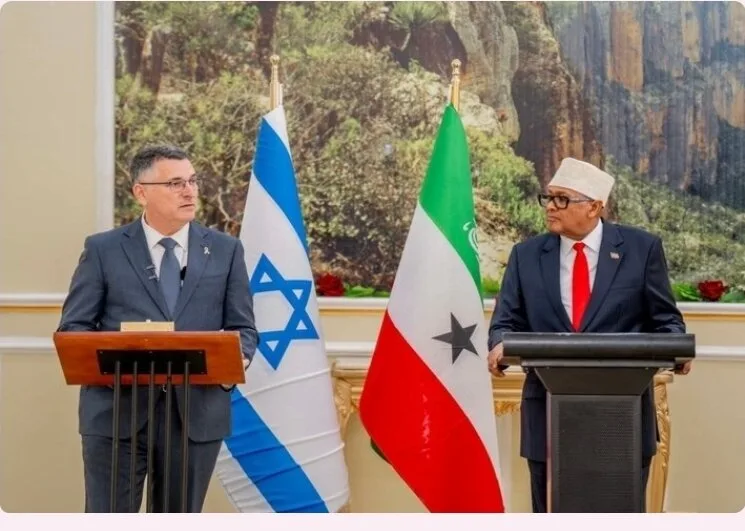
The Somali government has recently expressed strong anger over the activities of the Zionist regime in Somaliland, particularly the acceptance of the regime's ambassador's credentials and the commencement of the construction of the Tel Aviv embassy in the city of Hargeisa, condemning these actions vehemently. This reaction reflects the Somali government's deep concerns about Tel Aviv's influence in a region that has traditionally been embroiled in its own political and social issues.
Somalia's Response to Sovereignty Violations
Somali officials have deemed these actions not only a violation of national sovereignty but also a threat to the security and stability of the region. The Somali government has also emphasized that the acceptance of the Zionist regime's ambassador's credentials has no legal legitimacy and declared all potential agreements and contracts between Tel Aviv and Somaliland illegal.
Read more: The U.S. Embassy in Saudi Arabia Warns Its Citizens Again
In this regard, Somali officials issued a statement declaring that the country will seriously confront any attempts to normalize relations with the Zionist regime in order to protect its sovereignty and national interests. This statement clearly indicates the Somali government's determination to maintain its independence and territorial integrity.
Consequences of Tel Aviv's Actions
The activities of the Zionist regime in Somaliland, aimed at strengthening relations with certain autonomous regions in Africa, could have serious consequences for security stability in this area. Experts believe that these actions could lead to increased tensions and internal conflicts in Somaliland, where political and economic unrest has previously existed.
The Somali government has also warned the international community that any cooperation with the Zionist regime in this regard could exacerbate the humanitarian crisis in the country. Somalia is grappling with serious economic and social problems, and any new threat could worsen the situation.
Meanwhile, analysts believe that the Somali government's reaction to Tel Aviv's actions reflects anti-Zionist sentiments among the people of this country and deep concerns about the continuation of internal crises. This issue seems to have the potential to become a turning point in Somalia's international relations and lead to significant changes in the country's foreign policies.
Ultimately, the Somali government, emphasizing the preservation of its national identity and territorial integrity, appears determined to confront foreign influence and maintain its internal security. These developments may indicate a shift in Somalia's diplomatic approaches and a reaffirmation of national sovereignty against external threats.
Read more: The Appeals Court Revives Trump's Government Interventions in Elections · Mohsen Rezaei's Reaction to the German Chancellor with a Poem by Fazel Nazari