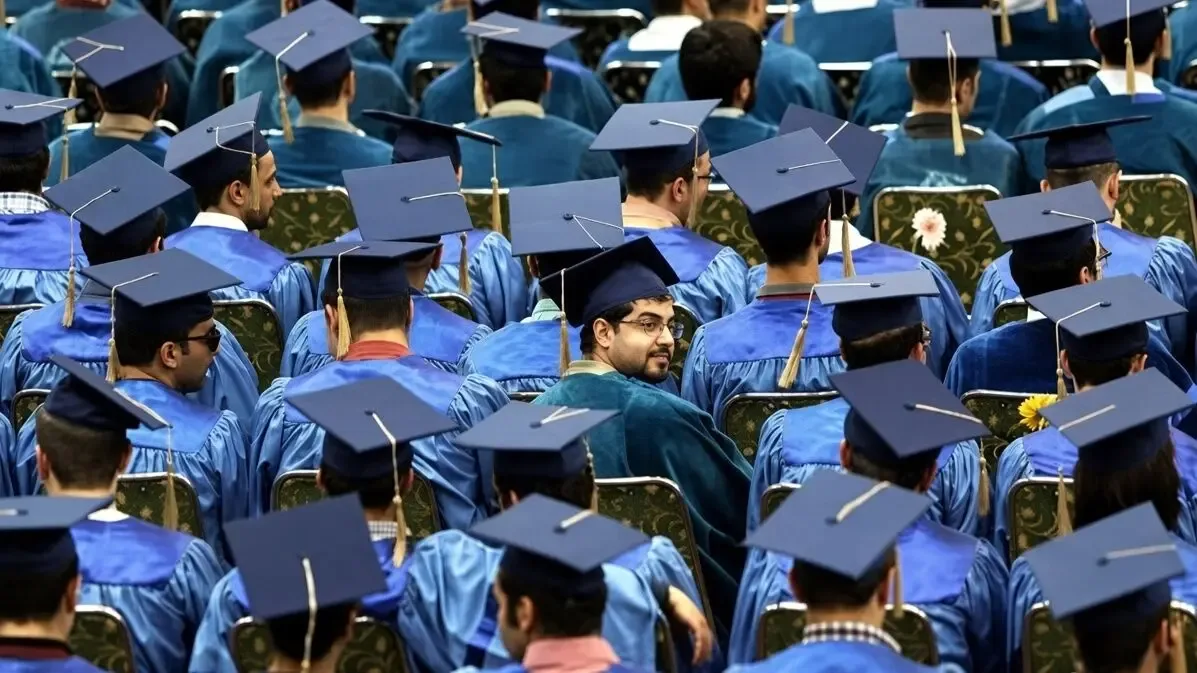
Unemployment among university graduates has become a serious issue. While universities are expected to act as a bridge for young people entering the job market, nearly 40% of the unemployed in the country are individuals with higher education. This situation raises serious questions for policymakers.
The Gap Between Education and Job Market Needs
Reports indicate that about 90% of graduates either work in jobs unrelated to their field of study or do not enter the job market at all. According to data from 2024, only 21% of graduates are employed in related jobs, while 26% are working in unrelated fields. These figures represent a significant gap between what universities teach and what the job market requires.
Read more: Mohammad Javad Zarif: CENTCOM cannot deceive the people forever
Education Costs and Job Expectations
Each university degree represents years of effort and financial costs borne by families and the students themselves. However, despite all this effort, graduates may end up in jobs that have no relation to their field of study. For this reason, a university degree sometimes becomes a "certificate of completion" that challenges the individual's real abilities rather than being a tool for increasing income and productivity.
Employment activists have repeatedly emphasized the weakness of practical skills and the gap between academic education and the real needs of businesses. The head of the Technical and Vocational Education Organization announced in 2025 that more than half of university graduates do not find related jobs. This has become a fundamental question: If universities are not supposed to prepare students for the job market, what is the philosophy behind the excessive expansion of higher education?
The problem is not limited to the universities and academic education itself. A modern economy cannot develop without universities, researchers, doctors, engineers, and specialists. However, when the number of university seats increases while the economic capacity to create specialized jobs does not grow accordingly, the result will be nothing but an accumulation of degrees and rising job expectations.
Iran should compete not over the number of universities and students but over the number of skilled, specialized, and employable workforce. Young people should enter the job market faster and generate income by taking technical and specialized courses instead of spending several years obtaining a degree in an oversaturated job market.
The fundamental question is, "How many people found marketable skills after completing their education?" If universities cannot answer this question, the increase in the number of higher education institutions and graduates is not only not an achievement but can also consume the country's financial and human resources in a direction that does not yield satisfactory outcomes for the economy and the youth.
It is now time for policymakers to value skills instead of glorifying "degrees" and to connect higher education with the real needs of the economy. Otherwise, more generations will enter society with a degree in hand and a big question: After all these years of studying, what exactly were we supposed to be prepared for?
Read more: Alaeddin Boroujerdi: Abbas Araghchi is on the front lines of the war against enemies · Hojjatoleslam Kazem Soleimani: Let students discuss in free-thinking forums