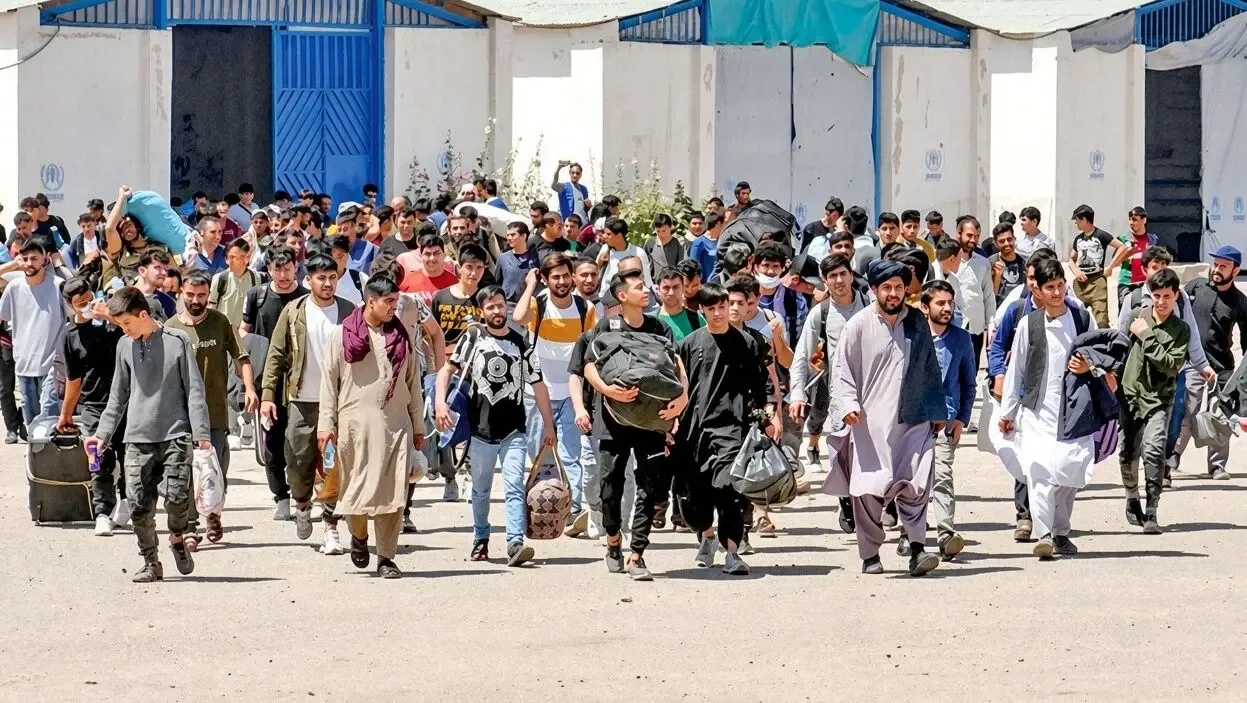
The return of Afghans to their homeland has once again come into focus. A large number of Afghan migrants have returned to their homeland in recent months, but economic problems, unemployment, and the lack of sustainable livelihood opportunities in Afghanistan could lead some of them to migrate again.
Challenges of Forced Return
The cycle that shows the return of migrants does not necessarily mean the end of population displacement raises a fundamental question for policymakers. Can the repatriation of migrants to their country of origin, without providing conditions for employment and living in that country, become a sustainable solution to the migration issue?
In recent years, Iran has been one of the most important destinations for Afghan citizens' migration. Geographical and cultural ties, the possibility of finding work in certain sectors of the Iranian economy, and the differences in economic opportunities between the two countries have been among the factors encouraging Afghan migrants to cross Iran's eastern borders.
Economic Situation and Social Challenges
However, policies regarding the presence of foreign nationals in Iran have changed in recent years, and the process of repatriating undocumented migrants has intensified. Yet, the issue of migration does not end with individuals leaving the border; the conditions that initially compelled them to leave Afghanistan may still persist after their return.
Reports indicate that from the beginning of the year until September 12, 522,200 Afghan citizens have returned from Iran to their country, of which 439,000 were expelled. This statistic shows that a significant portion of returns during this period has been forced. However, forced return does not necessarily mean permanent settlement in the country of origin.
The economy of Afghanistan faces a set of economic and humanitarian problems that make it difficult to absorb a large number of returnees. Poverty, lack of public services, and housing access issues are among the most significant barriers that migrants face upon their return.
Ultimately, the migration experience between Iran and Afghanistan shows that the return of individuals does not, by itself, end the migration crisis. As long as returning does not mean access to jobs, shelter, and the possibility of a stable life, the cycle of migration can repeat itself once again.
Read more: Taxi drivers in Tehran in limbo over 370 Ion vehicles · J.D. Vance: Our goal is Iran's commitment to not revive its nuclear program