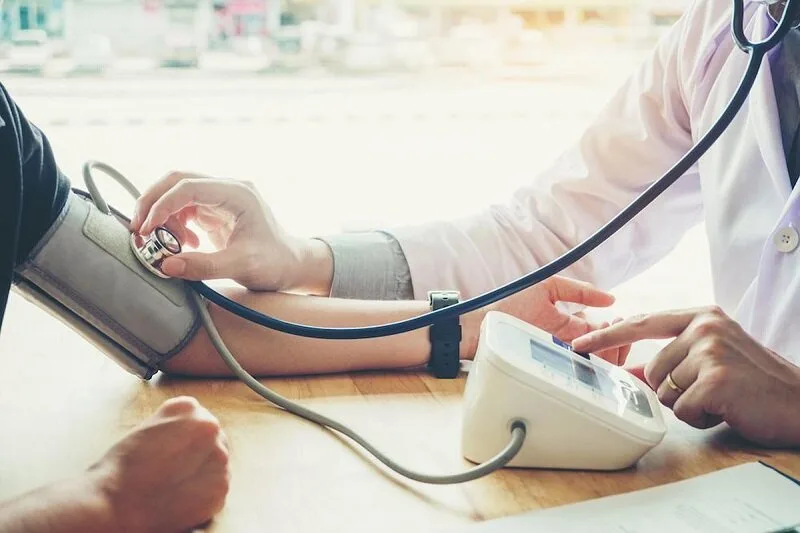
Measuring blood pressure is one of the most important actions taken during medical examinations, but incorrect methods in this area can have serious consequences. Specialists have recently published the results of a study showing that holding the arm without support during blood pressure measurement can lead to a significant increase in these measurements. This can particularly lead to a misdiagnosis of hypertension.
The Impact of Arm Position on Measurement Results
In this study, three different positions for holding the arm were examined: an arm resting on a table, an arm placed on the thighs, and an unsupported arm hanging by the side of the body. The results showed that placing the arm on the thighs can increase systolic pressure (the upper number in a blood pressure measurement) by nearly four millimeters of mercury. Meanwhile, an unsupported arm hanging by the side of the body shows this number to be nearly seven millimeters of mercury higher.
Read more: The seventh round of hospital accreditation with a new approach has begun
Clinical Guidelines for More Accurate Measurement
To enhance the accuracy of blood pressure measurement, the latest clinical guidelines from the American Heart Association recommend several actions. One of these recommendations is that the arm should be positioned so that when it is on the table, the midpoint of the adjustable cuff of the sphygmomanometer is level with the heart's center. However, researchers found that in many cases, blood pressure is measured while the patient is sitting on the examination table and their arm lacks sufficient support.
This situation can lead to inaccuracies in blood pressure measurement results and increase the risk of misdiagnosing the condition. In some cases, a member of the healthcare staff holds the patient's arm, while in others, the patient places their arm on their thighs. Experts emphasize that the position of the arm makes a "significant difference" in achieving an accurate blood pressure measurement.
The findings of this study clearly indicate that adhering to clinical recommendations for blood pressure measurement is of high importance. Given that incorrect blood pressure readings can lead to misdiagnosis, healthcare staff are urged to follow the recommended measurement methods, and others in healthcare settings and when measuring blood pressure at home should adhere to all necessary guidelines.
Finally, specialists remind that these findings may only apply to blood pressure measurements taken with automatic devices and may not necessarily be generalized to measurements taken with other types of sphygmomanometers. Therefore, accuracy in blood pressure measurement must be maintained under all conditions to prevent the risks associated with misdiagnosis.
Read more: How massage can reduce pain and what limitations it has · Dr. Arda Kiani: 5,000 lung patients treated without open surgery