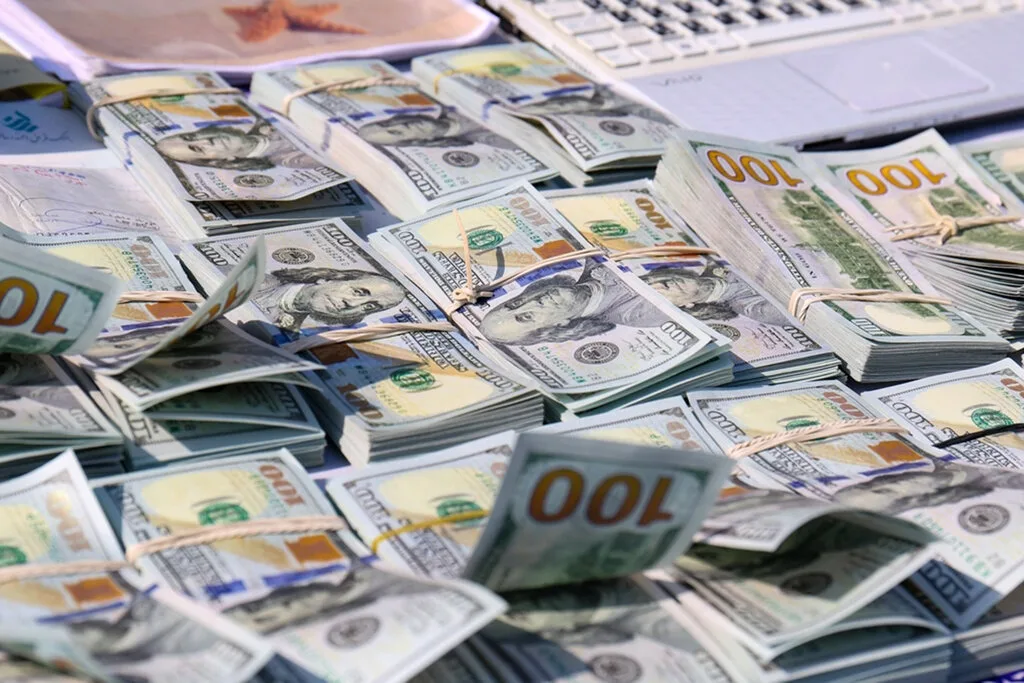
The dollar, which reached an unprecedented increase of 272,000 tomans in the first half of October, has recently retreated to 256,000 to 257,000 tomans. This decrease of about 15,000 tomans from the recorded peak may indicate a reduction in part of the market's tension.
Future challenges of the dollar price
The main question is whether this downward trend will continue or if the dollar will return to an upward trajectory? The answer to this question depends on the amount of currency supply, buyers' access to the market, and the expectations that have raised demand in recent weeks. Abdolnaser Hemmati, the Governor of the Central Bank, has emphasized the existence of currency resources and the continuation of currency sales, noting that current rates are not necessarily the market's bottom. He has also predicted that the decrease in the dollar rate will continue.
Read more: Iran's heavy oil reached $105.84 in September
If this position is accompanied by effective currency supply, it may help alleviate traders' concerns. However, what ultimately calms the market is not just the promise of supply; buyers must be able to obtain the currency they need more easily and with greater confidence.
Factors influencing the price decrease
At the beginning of October, the dollar was trading at around 233,000 tomans, and after that, due to increased demand, it approached 250,000 tomans. On October 12, this figure reached 272,000 tomans. However, after several days at these high prices, the market changed direction, and the dollar rate decreased to about 256,000 to 257,000 tomans. This decrease indicates that part of the sharp increase at the beginning of October has been retracted.
The change in buyer behavior after the price surge, the Central Bank's positions regarding currency supply, and developments in the Tether market may have played a role in this decrease. In recent weeks, restrictions such as the suspension of night trading and the establishment of a daily purchase limit in Tether transactions on cryptocurrency platforms have been implemented. This market has become a benchmark for some traders' currency expectations and usually reacts quickly to news and developments.
Limiting Tether transactions alone cannot guarantee a decrease in the dollar price. If demand is restricted from one channel, part of it may shift to other markets. Therefore, controlling transactions must be pursued alongside meeting the actual currency needs and monitoring opaque activities.
Future predictions
The Central Bank, emphasizing its possession of currency resources and the continuation of currency sales, must ensure that this policy is tangible in the market. Easy access to currency and reducing ambiguity in meeting people's legal needs can prevent hasty purchases. Additionally, regular communication about the status of supply and currency policies is very important. In a situation where contradictory news circulates rapidly in the market, the lack of clear information can increase concerns.
Monitoring opaque transactions and speculative activities should also be targeted. Broad restrictions that make it difficult for people to access currency legally do not necessarily lead to market calm. The goal should be to control violations and unproductive demand without creating barriers to meeting actual needs.
Past experiences show that a sharp price increase is not necessarily permanent, and changes in expectations can help reduce the exchange rate. However, today's economic conditions differ significantly from those of previous years. For this reason, one cannot expect a repeat of price decreases solely based on past experiences. The approximately 15,000 tomans decrease in the dollar from the October peak is significant, but it is still too early for a definitive judgment. If currency supply continues and access to it becomes easier, we may expect further decreases in the dollar price.
Read more: Gas prices in Europe crossed $1,000 for the first time · Lifting banking restrictions on three cryptocurrency exchanges: Nobitex, Bitpin, and Arzinja