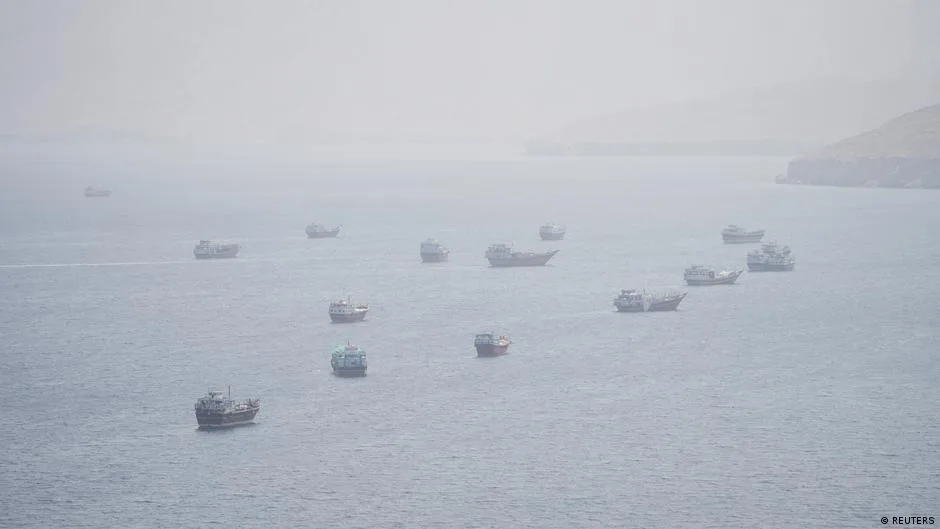
Commercial ship traffic in the Strait of Hormuz has dramatically decreased, with only four vessels passing through this vital waterway on Monday, September 14 (24 Shahrivar). This news comes as the number of passing vessels had reached 10 on Sunday.
Concerning Statistics on Ship Traffic
Of the four registered vessels on Monday, two bulk carriers exited the Strait of Hormuz, and two empty oil tankers entered this waterway. These statistics only include vessels that have kept their radar and identification systems on, and it is possible that some ships have passed through the strait without sending signals and with their systems turned off.
Read more: Martis: The War in Europe is Approaching a Critical Stage
Impact of Political Tensions on Shipping
The decrease in ship traffic in the Strait of Hormuz occurs amid tense relations between Iran and the United States, as well as the postponement of security meetings between Iran, Oman, and Gulf Arab states, which have imposed severe restrictions on shipping conditions. Before the onset of attacks by the United States and Israel on the Islamic Republic on February 28 (9 Esfand 1404), an average of about 125 commercial ships passed through the Strait of Hormuz.
Additionally, commercial ship traffic from the Bab-el-Mandeb Strait has also faced a similar decline, dropping from 28 vessels on Sunday to 21 on Monday. This situation has raised serious concerns about the negative impacts on global trade.
Meanwhile, despite the decrease in traffic, satellite images show that the daily movement of very large oil tankers in both directions of the strait continues. This indicates a change in the operational methods of shipping companies and the use of alternative methods to bypass high-risk areas.
These developments come as tensions between Iran and the United States have intensified again due to claims regarding the fate of the tanker "Alghaya." The public relations office of the Revolutionary Guards has claimed that this tanker collided with a sea mine due to passing through a prohibited area and caught fire. In contrast, the U.S. Central Command (CENTCOM) has called this claim incorrect and stated that the tanker was targeted by an Iranian missile last month and was incapacitated.
Read more: Widespread Protests Against Fuel Price Increases in Syria and Calls for the Impeachment of the Minister of Oil · Araghchi: The Agreement with Oman Does Not Mean the Opening of the Strait of Hormuz