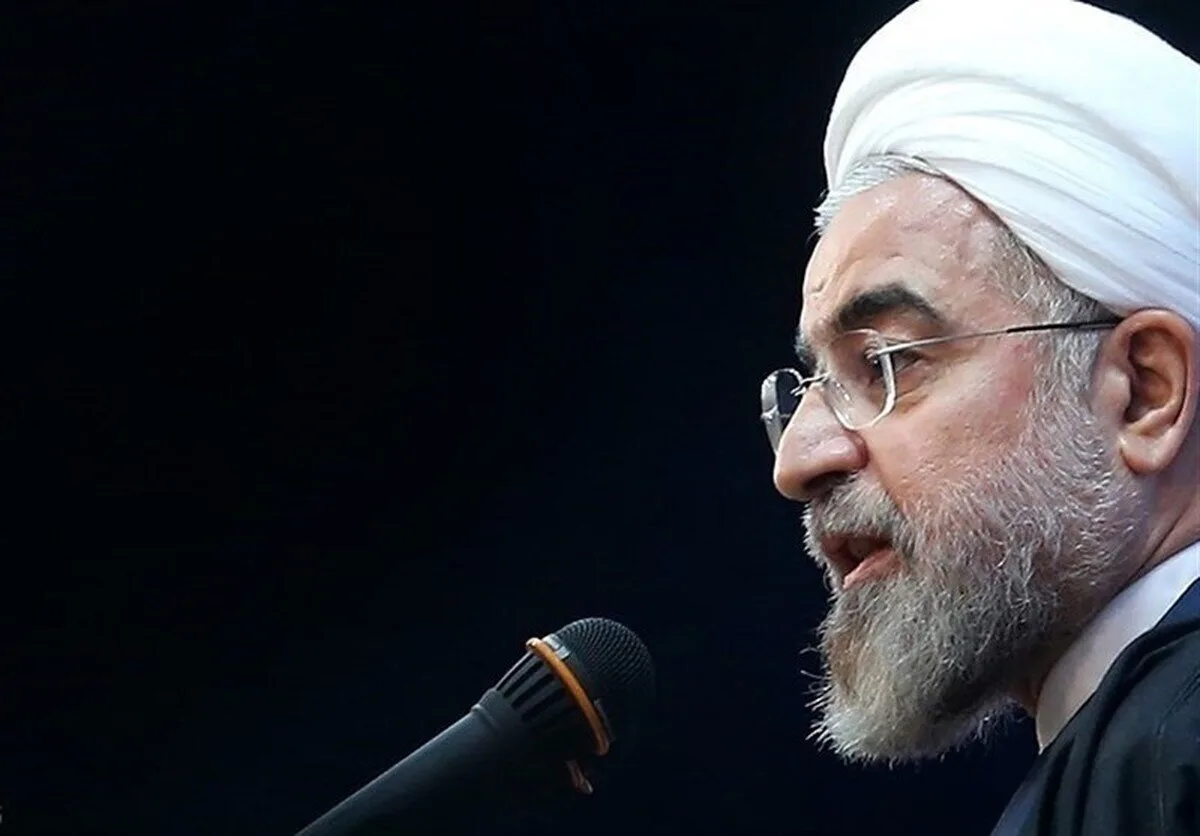
Hassan Rohani, the former president, reacted to recent criticisms of his remarks about a referendum during a meeting with a group of ambassadors, professors, and foreign policy experts. He stated that his discussion was about the need for "national goals" to have public backing and not about holding a referendum regarding defense against aggression.
Rohani's Clarifications on National Goals
Rohani clarified: "I did not use the word referendum or the word plebiscite at all." He did not consider Iran to be the initiator of the war and added: "When we are attacked, we must defend ourselves. This is one of the basic principles." He emphasized that long-term national goals for achieving power, wealth, peace, and national unity require public support.
Read more: Masoud Pezeshkian: Iran Will Adhere to Any Commitment
He reminded that his remarks were not about the ongoing war and that critics have misinterpreted his words by changing their context. Rohani emphasized: "Every country has major goals for its survival and development, which are difficult to achieve without the support of a large part of society."
National Unity and Dealing with Opponents
The former president also considered differing opinions on national issues to be natural and said: "National unity should not be confused with uniformity of views." He referred to the manner of dealing with political opponents and stated that even in times of war, insults towards the opposing side are not acceptable. Rohani emphasized the importance of honesty, trustworthiness, and good character in political behavior, citing a narration from Imam Sadiq (AS).
He also referred to the current situation in Iran and said: "Iran is still in a state of crisis, and one should not think that the issue of war has ended with the conclusion of some phases of conflict." Rohani identified one of the most significant challenges facing Iran as the manner and timing of transitioning from military conflict to stable political arrangements and emphasized that decisions in this regard should be based on national interests.
He continued: "If the conflict stops but the likelihood of renewed war remains high, sustainable security has not been achieved." Rohani pointed to the importance of diplomacy in preventing war and transitioning to political arrangements, stating that the experience of the nuclear file in 2003 demonstrates the vital role of diplomacy in reducing threats against Iran.
Rohani also mentioned the Strait of Hormuz and said: "We must examine how to turn Hormuz into a basis for mutual dependence and development for Iran." He emphasized that the stability of Hormuz is crucial for energy security and shipping, and other countries should also benefit from Iran's stability.
In conclusion, Rohani stressed that "we should never abandon one of our pillars of power," stating: "The unified presence of the people and their trust in official information is a component of national power." He pointed out that dissatisfaction or protest against actions does not necessarily mean alignment with foreign enemies, and the experience of war has shown that people will stand up for the independence and territorial integrity of their country during an attack.
Read more: Masoud Pezeshkian: Building Nuclear Weapons Based on Fatwa is Forbidden · Kuwait's Foreign Minister Emphasized Support for Diplomatic Efforts for Regional Security