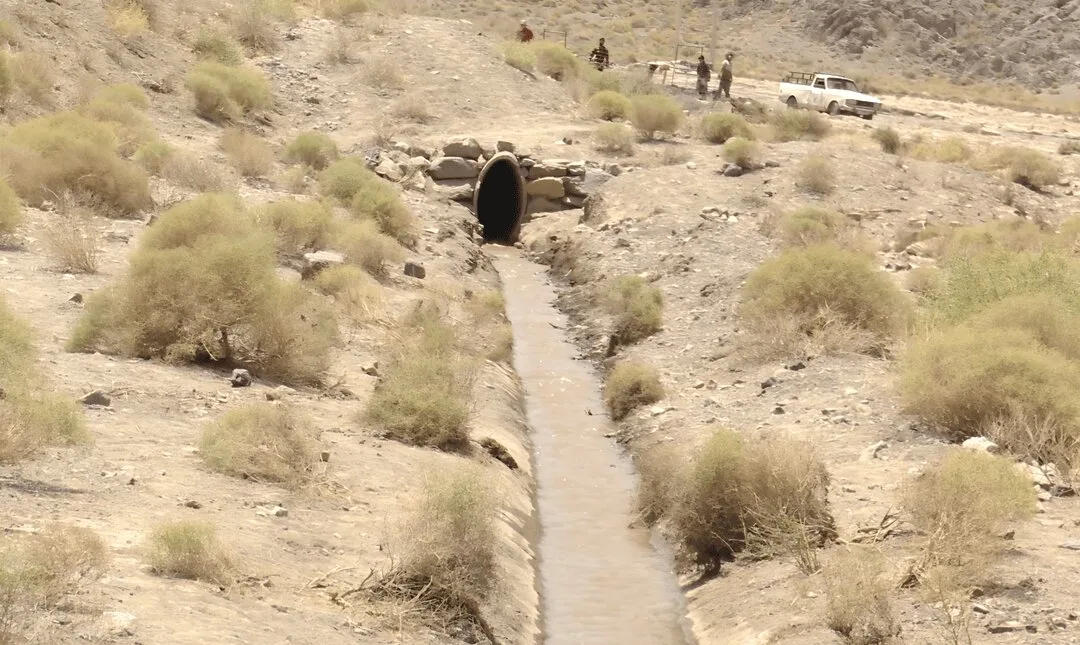
The qanat of Sarvestan village, which has an 800-year history, has come back to life after 30 years of dryness and lack of water. Thanks to the efforts of the locals, especially Haj Akbar Sarvestani, one of the qanat owners, hope for agricultural prosperity and the return of youth to the village has been revived.
A Miracle in the Heart of Dry Lands
Haj Akbar Sarvestani, referring to the qanat's condition, says: "The qanat was the lifeline of our village, but after the collapse, we stopped attending to it. Last year, we decided to start cleaning and restoring the qanat ourselves." He adds that they cleaned 140 meters of the qanat and continues: "I informed the authorities and asked them to come and see the condition of the qanat up close. They came and said: This qanat has no water; leave it. But I did not lose hope and we continued our work."
Read more: Bahman Kargar explained the programs for the Sacred Defense Week
Two weeks later, heavy rainfall began, and eventually, the qanat was filled with water again. Haj Akbar refers to this event as a miracle and says: "Now the qanat of Sarvestan village has become a blessing for the village." His share from this qanat is 7 hours every 6 days, which is very gratifying for him, having spent 73 years of his life in agriculture.
The Impact of Qanat Revival on the Lives of Villagers
The head of the Agricultural Jihad of Bam County, regarding the revival of the qanat of Sarvestan village, says: "Last year, the Agricultural Jihad allocated 100 million tomans for the revival of this qanat." The water from the qanat flows into a reservoir built by the Jihad Construction in the 1980s, and the water transfer routes have also been improved. This qanat is of special importance as a water source for 200 villagers who have water rights.
Abbas Rakhshan, the head of the Agricultural Jihad of Bam, noted that Sarvestan village has a population of about 600 people, stating that agriculture in the region is primarily based on the cultivation of pistachios, pomegranates, alfalfa, and wheat, and livestock farming is also practiced in the village. With the revival of the qanat, hope for agricultural prosperity and the return of youth to the village has increased.
Monireh Sotarzadeh, the director of the World Qanat Base of Bam, described the revival of the qanat as heartwarming and says: "A significant part of the historical life of Bam County and its villages is owed to traditional water supply networks. Qanats are the vital arteries of the global garden city of Bam." She also refers to the qanat's 800-year history and adds: "The locals say the qanat is 8 centuries old, and it is not unlikely, but to find its exact history, studies need to be conducted."
Within the UNESCO World Heritage site of Bam, there are 52 qanats, each of which, in addition to common features, has unique tourism capabilities. The qanats of Akbarabad and Qasemabad in Borvat, along with 9 other qanats, are registered in the global list as examples of different technologies and an age of over 2500 years.
Read more: General Abolfazl Mousavipour: Traffic will increase by 30% in October · Mission Produce: Record-breaking in third-quarter revenues 2026