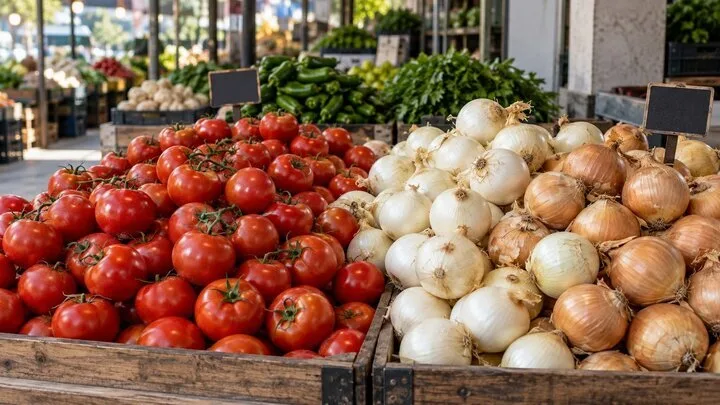
The price of tomatoes and onions in some retail stores has reached 133,000 and 145,000 tomans respectively, which is a significant difference from the rates announced in the markets. In this situation, the export of these two products has been declared as "conditionally permitted." This decision, considering the reduced supply and comments from processing industries about the shortage of tomatoes, has raised questions about the conditions for export and mechanisms to maintain balance in the domestic market.
Price Gaps and Their Impacts
The gap between the prices listed in the official rate sheet and what consumers pay in retail stores is significant in the tomato and onion market. According to the rate sheet, the price of greenhouse tomatoes and vine-ripened tomatoes is announced as 57,000 tomans, and the price of white and yellow onions is also announced as 62,000 tomans. However, in retail, the price of tomatoes starts from about 85,000 tomans and goes up to 133,650 tomans depending on the quality and type of product.
White onions are also offered in retail at prices ranging from 89,000 to 130,000 tomans, and yellow onions from 95,000 to 145,000 tomans; meaning there is a discrepancy of about 53 to 134 percent with the official rate.
Export Challenges and Domestic Market Supply
The Iran Trade Development Organization has declared the export of agricultural tomatoes and onions as "conditionally permitted." In this letter, emphasis has been placed on informing the executive customs, but the details of the conditions and mechanisms for halting exports in case of intensified domestic shortages have not been clearly specified. These conditions have raised concerns about meeting the domestic market's needs.
Masoud Bakhtiari, the head of the country's canned food industries syndicate, has reported a shortage of tomatoes needed for processing industries and stated that tomato paste production factories are facing reduced supply of this product. This shortage not only affects household consumers but also processing industries that are struggling to secure raw materials. In this situation, issuing export licenses, even conditionally, could intensify competition among the domestic market, processing industries, and exporters over the limited product.
Although exports alone are not the cause of price increases, in a situation where domestic supply has decreased and retail prices have risen to more than double the rate sheet, continuing exports without precisely determining ceilings, timelines, and operational conditions could further increase the pressure on the market.
Read more: Price drop of Tara Automatic and Dena Plus in the car market · Akbar Yavari: With the arrival of autumn products, the price of potatoes will decrease