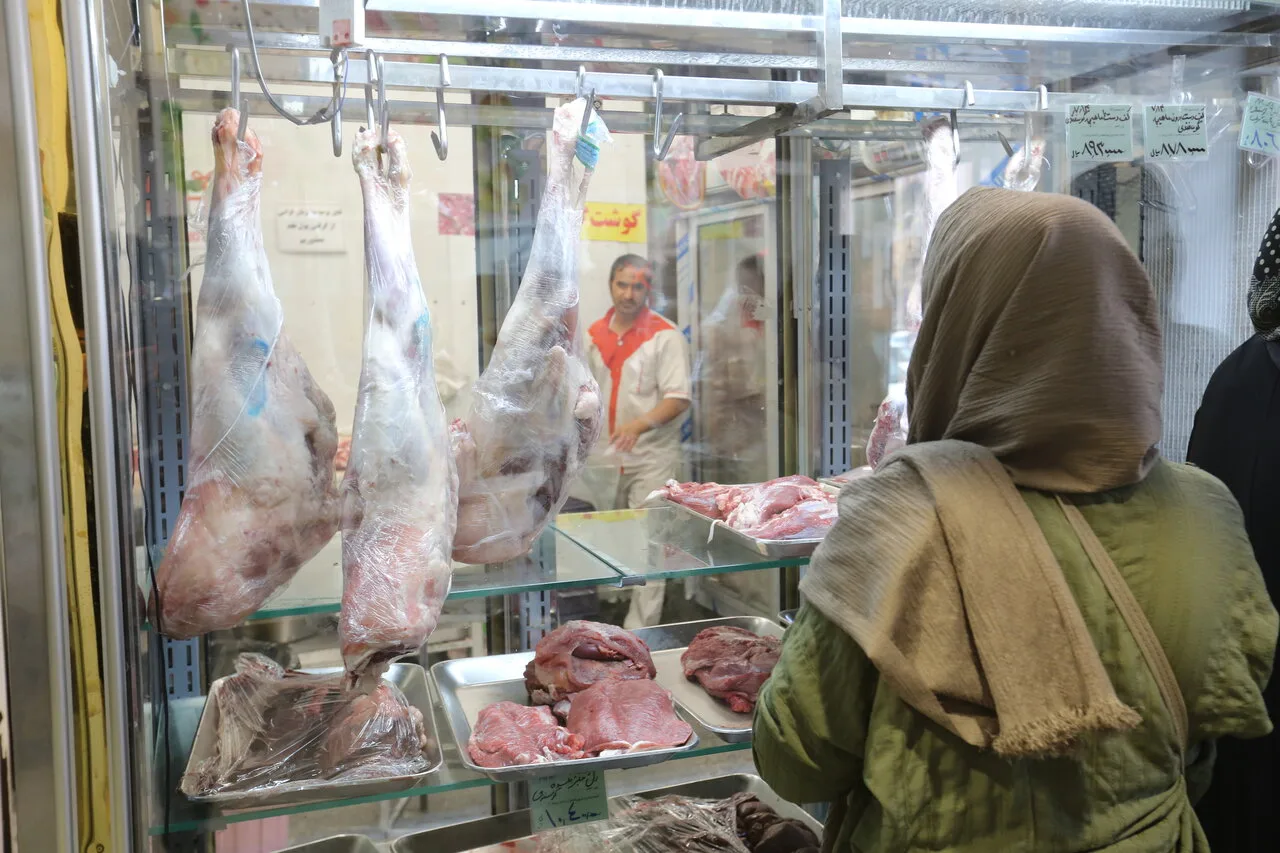
Advancements in livestock farming and the meat market in Iran continue as the price of each kilogram of live livestock in the market is around 700,000 tomans, but the price of some cuts of meat has exceeded 2.5 million tomans. This price discrepancy, alongside the improvement in the production and supply of domestic livestock, raises the question of why the improved production conditions have not yet led to a decrease in meat prices for consumers.
Different Meat Prices in the Market
Red meat, as one of the important sources of protein in the household food basket, is currently offered at varying prices in the market. Some cuts of sheep and beef have surpassed two million tomans and even reached around two million and 600 thousand tomans. Meanwhile, livestock sector activists report a relative stability in the price of live livestock and improvements in production conditions in the country.
Read more: The Renovation Headquarters Announces New Conditions for Car Delivery
According to field observations from sales centers, the price of each kilogram of sheep shank is 2 million and 150 thousand tomans, lamb loin with bone is 2 million and 250 thousand tomans, and lamb thigh is 2 million and 340 thousand tomans. In the beef section, prices vary; for instance, each kilogram of beef thigh is priced at 2 million and 600 thousand tomans, premium beef shank at 2 million and 340 thousand tomans, and premium ground beef at 1 million and 520 thousand tomans.
Challenges in the Meat and Livestock Market
Manzoor Pourian, the head of the Livestock Supply Council, stated that the current state of production, supply, and the price of live livestock shows that the livestock market has a relative stability in the autumn season, and the production conditions in both light and heavy livestock are assessed as favorable. Autumn births, especially in the light livestock sector, have had a positive trend that can help maintain and strengthen the livestock population in the country.
He added that the increase in meat prices in recent months has led to a greater willingness among livestock farmers to engage in fattening activities. Many livestock farmers have shifted towards keeping and fattening semi-meat and lightweight livestock, resulting in a significant growth in fattening activities compared to last year.
Pourian also referred to the condition of heavy livestock and emphasized that the fattening conditions for calves have improved, with notable growth recorded in foreign breeds such as Holstein and Simmental, as well as crossbred and native calves. He highlighted the increased attention of producers to buffalo breeding, introducing this livestock as a suitable option for farmers.
Maintaining the population of breeding livestock, whether in the light or heavy livestock sector, is of great importance; as the continuity of production and the increase in supply capacity in the future depend on this population. The livestock market faced some limited and temporary price increases in various regions last week, but these fluctuations were not widespread.
The head of the Livestock Supply Council also commented on the state of livestock slaughtering in the country, stating that this autumn, the amount of slaughtering and meat supply is at an appropriate level, and the change in the composition of slaughtered livestock compared to last year is significant. A larger portion of the livestock offered for slaughter consists of fattened and heavy-weight animals, which means an increase in the amount of meat extracted and an improvement in the supply capacity of the market.
Read more: Saudi Arabia is Protecting Oil Exports by Renting Tanks in Singapore · Democratic and Muslim Candidate in America: Trump's Policies Force People to Fast