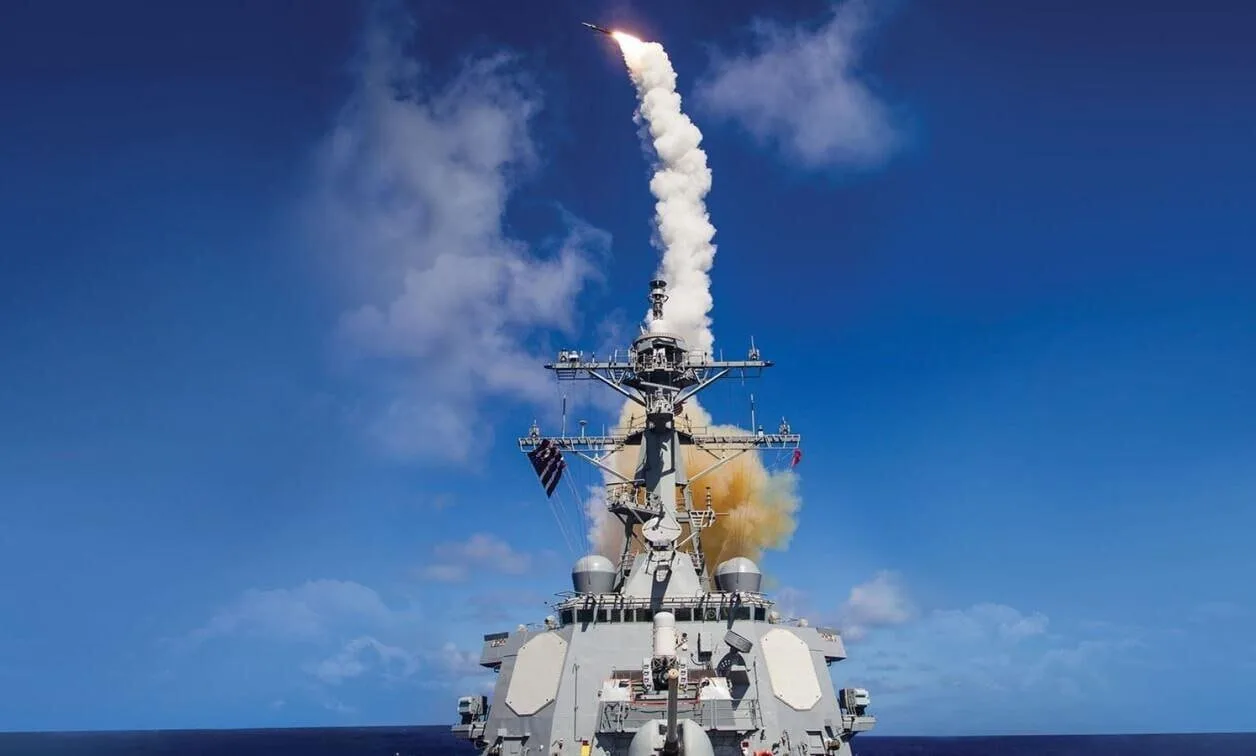
The Pentagon announced yesterday that it has signed a $24.4 billion contract with Raytheon to accelerate the production of Standard Missile-6 (SM-6). This decision comes in response to a severe shortage of U.S. missile stocks and an urgent need to enhance defensive capabilities against various threats.
Importance of SM-6 Missiles
SM-6 missiles are considered one of the important and key systems of the U.S. in the field of air defense as well as in countering surface and maritime targets. These missiles serve as a strategic tool capable of providing security and protecting national interests against external threats. Given recent developments in the global arena and increasing tensions in various regions, this contract represents the United States' efforts to strengthen its military capabilities.
Read more: Jeffrey Sachs examines the possibility of renewed attacks on Iran before the U.S. elections
Analysis of Missile Stockpiles
The Center for Strategic and International Studies in the U.S. has highlighted the extensive use of SM-6 missiles during the war with Iran, stating that between 190 and 370 of these missiles were employed in that conflict. This level of usage indicates pressure on U.S. missile stockpiles, which were estimated to be around 1,160 before the war began. In light of this analysis, the recent contract could be seen as an effective step in rebuilding and strengthening these reserves.
Producing SM-6 missiles not only helps enhance U.S. military capabilities but can also act as a deterrent against potential threats from countries seeking to increase their military power. This is particularly significant in a context where tensions in the Middle East and other regions have sharply increased.
Overall, this contract can be viewed as a sign of the United States' determination to strengthen its national and military security. Given recent developments in the international arena, it appears that the U.S. is seeking to bolster its military and defensive capabilities to be prepared for any threats that may arise in the future.
Read more: Friedrich Merz: Germany prepares for hybrid attacks from Russia · Iran targets U.S. 5,000-kilometer radars