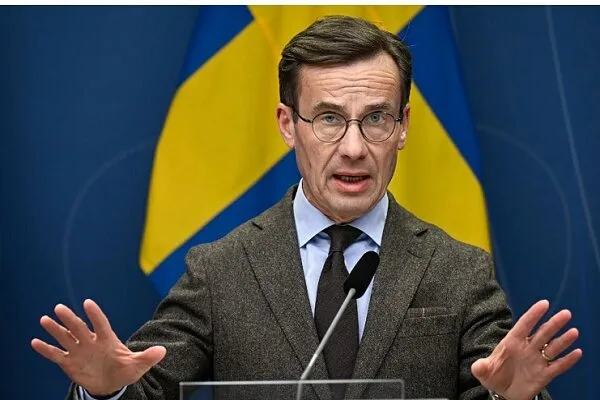
Olof Kristersson, the Prime Minister of Sweden, resigned today, Thursday, after the announcement of the preliminary results of the parliamentary elections, which indicated the defeat of his right-wing coalition. This election, seen as a crucial test for Kristersson's policies, ended with a victory for the center-left opposition.
Election Results and Political Changes
The preliminary election results showed that the opposition coalition managed to secure 49.6% of the votes and 176 seats out of 349 in parliament. In contrast, Kristersson's right-wing coalition came in second with 48.8% of the votes and 173 seats. These changes in the power structure could have profound effects on Sweden's domestic and foreign policies.
Read more: Iraqi talks with the Turkish Foreign Minister and the Commander of the Pakistani Army
Consequences of Resignation and Formation of a New Government
In a statement published on the social media platform "X", Kristersson emphasized that he is stepping down to facilitate the process of forming a new government. He stated that the Speaker of Parliament will be responsible for guiding the next steps in the formation of the government. These developments signify a political earthquake in Sweden that may lead to fundamental changes in the country's policies.
Given that Sweden is currently facing serious challenges, including economic and security issues, this election and its results could lead to changes in policy approaches and improvements in the living conditions of the people. Additionally, it seems that these changes may impact Sweden's international relations with other countries.
Read more: Abdulaziz Hossu and the Crisis of Refugee Family Reunification in Germany · Delay in Decision-Making Regarding the Jackdaw Gas Field in Favor of the Election Campaign