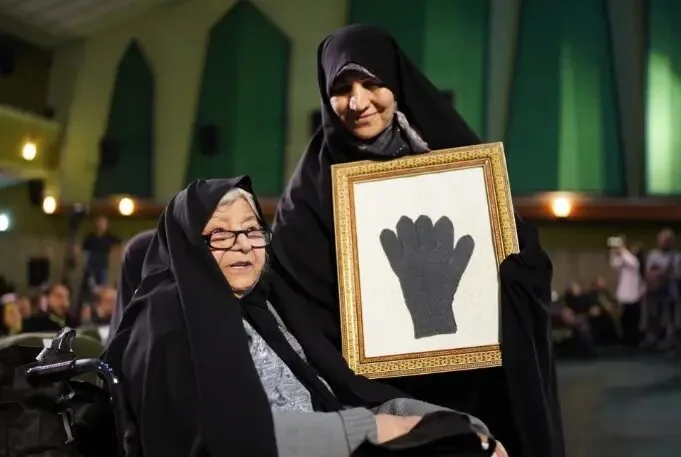
Fatemeh Falakian, known as Mother Esmat, has passed away, leaving the world of resistance and popular jihad. As one of the enduring figures in contemporary Iranian history, she left a lasting name by knitting gloves for the combatants of the imposed war and border guards. From the early years of the imposed war until today, Mother Esmat, with her strong hands, not only helped the combatants but also kept the spirit and hope alive in their hearts.
Symbolic Gloves and Social Impact
Mother Esmat turned glove knitting into an art and a symbol. Her gloves, as a sign of selflessness and sacrifice, were impactful not only on the battlefields but also among ordinary people. These gloves were, in fact, messengers of love that reached the combatants from the heart of a strong-willed woman. She knew well that every glove she knitted could bring warmth to a combatant's heart and assist them on their path.
Read more: Selection of new Iranian ambassadors in five countries and details
Mother Esmat Award and Continuing the Path
Due to Mother Esmat's profound impact on society, a special award named "Mother Esmat's Glove" is presented to the winners at the Ammar Festival. This award not only honors her efforts but also serves as a reminder of the people's struggles and jihad that have remained in Iran's history. Mother Esmat, as a symbol, has been influential not only in the realm of war but also in culture and art, and she will forever remain a representation of honesty and selflessness in people's hearts.
With her hands, she wove stories of love and sacrifice and passed them on to future generations. Her memory will be cherished and her message will remain eternal. With her passing, we have not only lost an individual but also closed a chapter in history. She will always be remembered as a mother to the combatants and a role model for future generations.
Read more: The Americans' proposal for negotiation is under consideration · Maryam Ardabili: Women's narratives of war should be turned into a national asset