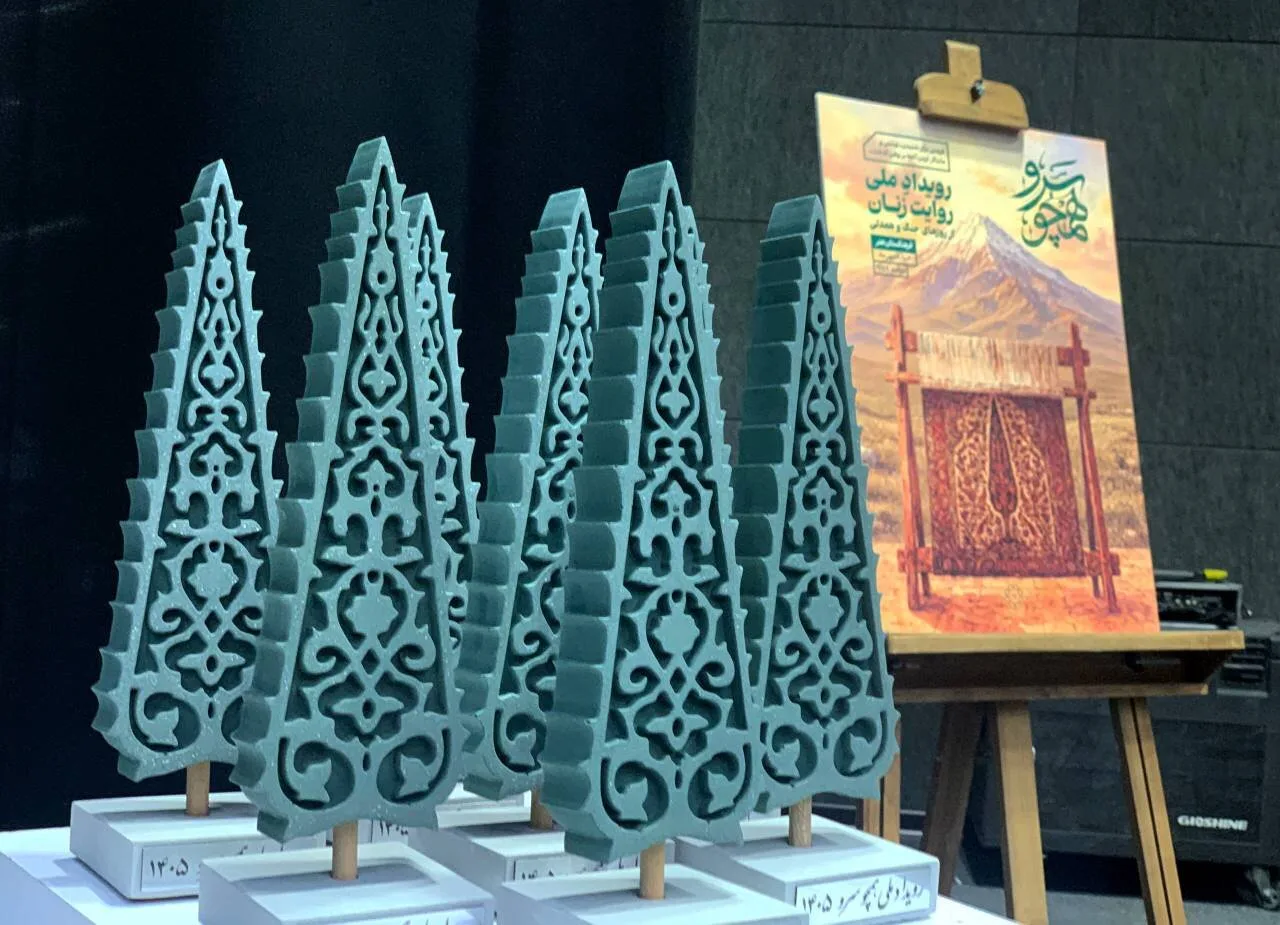
Maryam Ardabili, at the closing ceremony of the national event 'Like a Cypress', emphasized the pivotal role of women's narratives in historical processes, stating: 'The path that the Iranian nation has traveled together has today provided an opportunity for women's narratives to become more prominent.' She added: 'Women's narratives have their own unique strengths, and because women see the dimensions and aspects of phenomena from a different perspective, they hold special significance.'
The Importance of Women's Narratives in the Modern World
Ardabili pointed out that in the modern world, women's narratives have gradually been sidelined, giving way to grand narratives and powerful media that operate unilaterally. She emphasized: 'This semantic void has once again revealed the value and meaning of these smaller narratives.' The advisor for women and family of the Mayor of Tehran also referred to the specific characteristics of the imposed war of Ramadan, stating: 'In all wars and disasters, women are usually introduced as a vulnerable and victimized group, but in the recent war, women did not present themselves as victims, but as effective actors within this process.'
Read more: Velayati: Your problem is not with the Islamic Revolution, but with strong Iranian civilization
Enduring Narratives from the Mothers of War
Ardabili continued by referencing the experiences of mothers who, during the 12-day war, despite numerous worries and fears, tried to narrate events for their children. She said: 'These mothers even composed songs and poems for unknown sounds so that the children would not feel that their world had collapsed.' She also mentioned women who formed women's groups in neighborhoods, mosques, and bases to continue the flow of life despite all fears and to keep the neighborhoods alive and standing.
Ardabili emphasized the public nature of storytelling, stating: 'Narrating what has happened is not only the job of elites and specialists; rather, a public narrative must be formed to showcase this greatness.' She added: 'We must transform these memories from something implicit to explicit, from the past to a possibility for the future, and from a personal and familial possession to a national asset; this is the art of such events.' Maryam Ardabili concluded by noting the good reception of the event 'Like a Cypress', mentioning that nearly a thousand works were submitted to the event's secretariat, and 75 works reached the final stage. She emphasized: 'All these works are valuable and enduring, and we should not leave out even one narrative, as part of that greatness would be lost.'
Read more: Ismail Baqai: Iran has never sought nuclear weapons · Khavar Khanum and the women climbers of the Shamsir village in the heart of the Oraman mountains