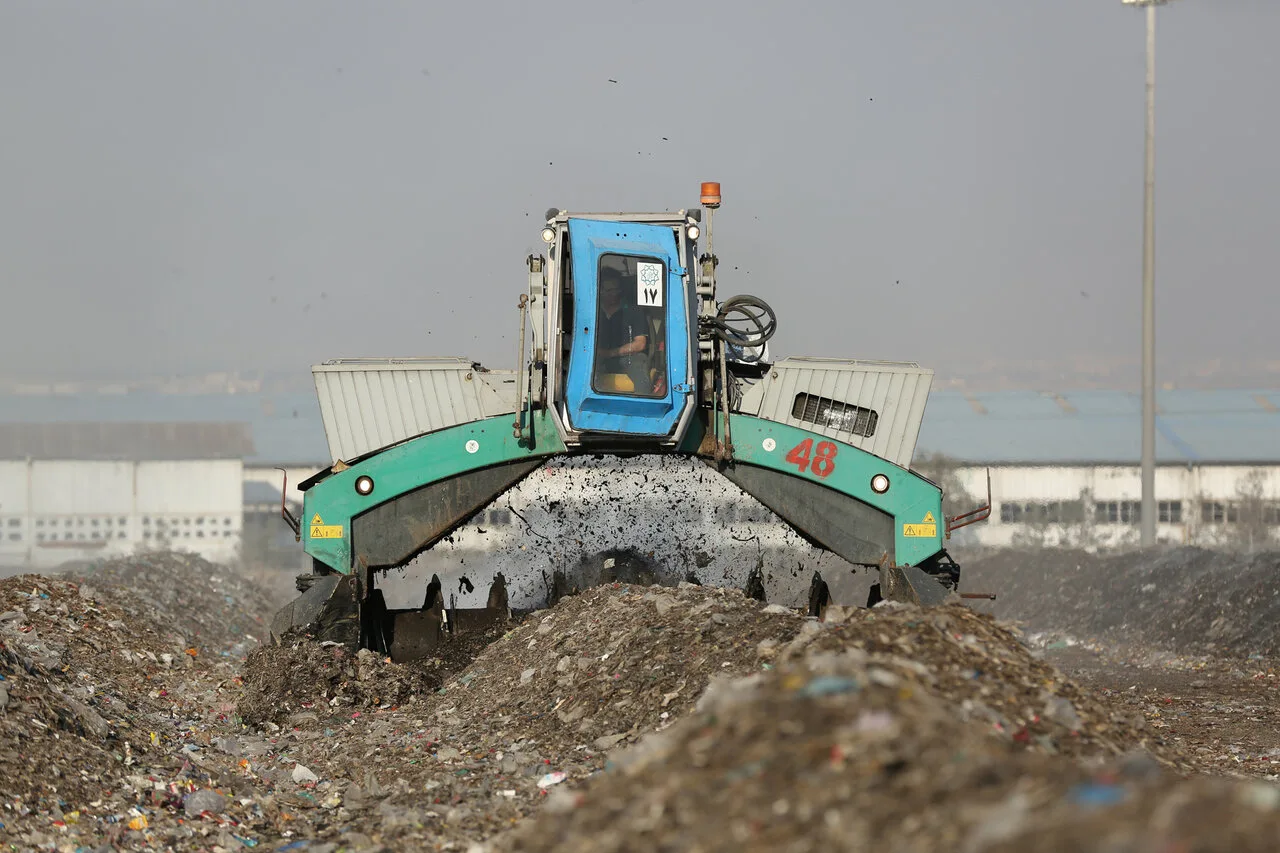
Mohammad Saber Baghkhani Pour, the Director General of Environment and Sustainable Development of Tehran Municipality, announced that direct waste burial in Aradkuh has dropped to less than 5%. He added that the main challenge of waste management in Tehran is no longer just the burial site, but there must be special attention to reducing waste production and effective source separation.
Challenges of Source Separation
Baghkhani Pour referred to the existing obstacles in implementing source separation and said: "This issue faces challenges from two operational aspects. First, the improper design of 1100-liter containers on the streets facilitates access for informal waste collectors and removes valuable waste from the integrated urban management cycle."
Read more: Water Struggle in Chitgar Park and Efforts to Revive Green Space in Tehran
He also pointed to the method of waste collection and stated: "Solutions such as relocating containers inside homes and collecting at the door or eliminating street containers have previously been studied and even implemented in pilot projects in some areas, but due to challenges such as high urban density and lack of logistical integration, they have not yet become widespread practices."
Environmental Consequences of Waste Burial
The Director General of Environment and Sustainable Development of Tehran Municipality also referred to the environmental consequences of waste burial in Aradkuh and said: "Aradkuh has been the final destination for a significant portion of Tehran's waste for years, and this has consequences such as leachate production, odor emission, methane gas release, and risks to soil and groundwater."
He emphasized that a sustainable solution is not merely relocating the burial site but must focus on reducing the amount of waste entering the burial section from the outset. To this end, Baghkhani Pour stressed the development of source separation, increasing capacity and efficiency of processing lines, recycling, and organic waste management.
He referred to the statistics announced by the Waste Management Organization of Tehran Municipality in September 2026, stating that direct waste burial without processing in Aradkuh has dropped to less than 5%. This statistic indicates a movement towards reducing direct burial, but Baghkhani Pour warned that this does not mean a complete resolution of the issue.
The Director General of Environment and Sustainable Development discussed the timeline for reducing the capital's dependence on traditional waste burial, saying: "Achieving a serious reduction in dependence on burial relies on several infrastructures and cannot be accomplished merely by executing one project."
Baghkhani Pour noted that the goal should be to gradually reduce the share of final waste requiring burial in the coming years by completing separation and processing infrastructures, developing recycling, and energy recovery. He emphasized: "The goal is not to replace one burial site with another, but to reduce the act of burial itself. From an environmental perspective, as the amount of waste entering the burial site decreases, monitoring and controlling leachate, methane gas, and their potential impacts on soil and groundwater must continue."
Read more: World Universities Turn to Smart Microgrids to Combat Energy Shortages · Discovery of Gold and Unexploded Bomb in Zafaraniyeh, Tehran During Debris Removal