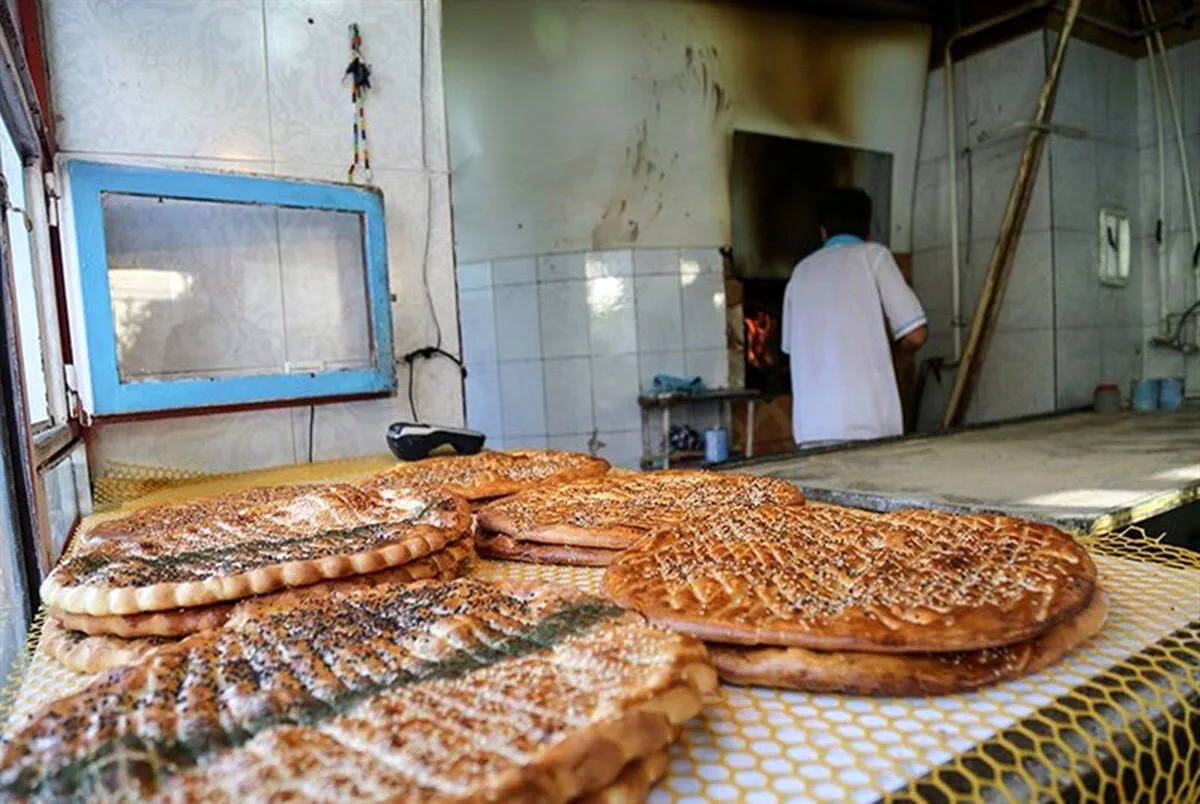
The Ministry of Industry, Mine and Trade has issued a letter to the general managers of grain and trade services in the provinces, determining the bran removal percentage for the flour used in four main types of bread in the country. This action is in line with the resolutions of the 1048th Principle Commission of the Islamic Consultative Assembly and based on a letter from the Deputy for Monitoring the Implementation of Standards of the National Standard Organization of Iran.
Determination of Bran Removal Percentage for Breads
In a letter signed by Mohammad Ali Sahabi, the Director General of Coordination and Monitoring of Flour and Bread, National Standard No. 10408 titled "Amendment 2" has been revised and will come into effect from 2026/10/24. Based on the decisions of the national working group for the organization of wheat, flour, and bread in the country, the bran removal percentage for the flour used in Sangak and Barbari bread has been set at 12 percent, and for Taftoon and Lavash bread at 10 percent.
Read more: Tehran Stock Exchange Approaches 7.5 Million Units with a Growth of 189 Thousand Units
Executive Actions of Institutions
The letter specifies that after the announcement of rates by the Organization for the Protection of Consumers and Producers, these percentages will subsequently be uploaded to the "Sima" system. Additionally, provincial general managers have been requested to inform flour mills about this matter so that necessary actions can be taken to implement the new standard and to print the bran removal percentages on flour bags.
Two other important points are emphasized in this letter: First, the use of existing bags in factory warehouses for bagging flour, while observing the type of flour and the new bran removal percentages, is permissible; however, adherence to the aforementioned bran removal percentages is essential for flours contained in previous bags. Second, the flour consumed by nomadic and rural households (raw flour for home baking) has been defined in the system with a presumption of 5 and 10 percent.
Read more: Mahdi Asadi: The Ban on Importing Flagships Drives the Market Towards Informal Paths