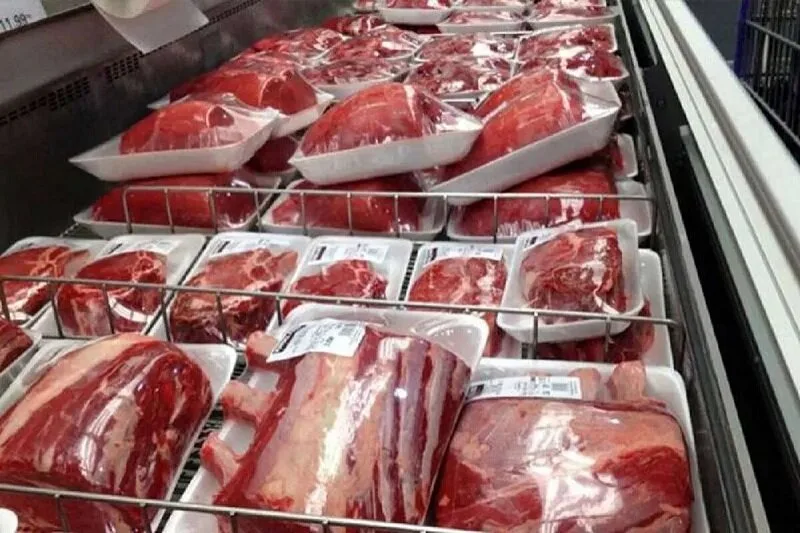
Mansour Pourian, head of the Livestock Supply Council, stated regarding the status of red meat imports and its impact on regulating the domestic market that despite the wartime conditions, meat imports continue, with 14,000 tons of frozen meat having been imported into the country during this time.
How is meat imported?
Pourian further clarified that in the past, the largest volume of frozen meat imports came from countries such as Brazil and India, and sheep meat was supplied from Mongolia. Contrary to common perceptions, a significant portion of these imports is conducted via land routes, with the share of maritime borders being very minimal.
Read more: Zahra Alipour: The fate of those left behind in the Justice Shares has been determined
According to Pourian, although red meat imports are currently ongoing, the volume of imports has decreased compared to the past due to existing prices and domestic production. Meanwhile, orders for meat from Mongolia are still being registered, and the government is trying to control market psychological fluctuations through imports.
Meat prices and market situation
The head of the Livestock Supply Council continued by examining the amount of meat consumption in the country, saying: "According to statistics, the annual meat consumption in the country is estimated to be between one million and one million and 100 thousand tons. Despite a decrease in household consumption, there are still many high consumers in the meat industry and alongside them, the cooks, who constitute a significant portion of the market."
Pourian also referred to the current prices of live livestock, stating: "Currently, the price of each kilogram of live male lamb is about 680,000 tomans, each kilogram of live calf is in the range of 575,000 tomans, and the price of buffalo is around 550,000 tomans." He also mentioned price fluctuations and added: "It is expected that the market will find the necessary stability in the future."
Considering the impacts of the war on the global meat market, Pourian reminded that the increase in fuel prices and logistics costs has caused meat imports from countries such as India and Brazil to face severe stoppages or reductions. A significant portion of the meat purchased by countries remains in these countries.
He also discussed the lack of competitiveness of imported products under current conditions, saying: "The increase in transportation costs has caused the prices of imported meats to exceed their actual and competitive prices in the domestic market." For this reason, many past orders have not been fulfilled due to economic unfeasibility and heavy costs, and they cannot be offered in the market.
Finally, Pourian pointed to the domestic market regulation plan, stating that the set prices for sheep meat are 1,500,000 tomans, for calf meat between 1,350,000 to 1,400,000 tomans, and for buffalo meat a rate between 1,200,000 to 1,250,000 tomans. According to him, the price of imported meat is not competitive with domestically produced meat.
He noted that currently, red meat is only imported in frozen form, with the price of each kilogram of imported beef being 1,300,000 tomans and sheep meat 1,100,000 tomans. This situation, due to changes in global demand patterns and the impacts of war, has affected the market situation.
Pourian concluded by saying: "The return to normal import trends and reasonable prices in the market is solely dependent on the reduction of fuel and transportation costs at the global level."
Read more: The initial offering of 9% of the shares of Colored Metal Foundry will begin in the over-the-counter market · Stability of chicken meat prices in the market: How much did the breast and thigh cost per kilogram?