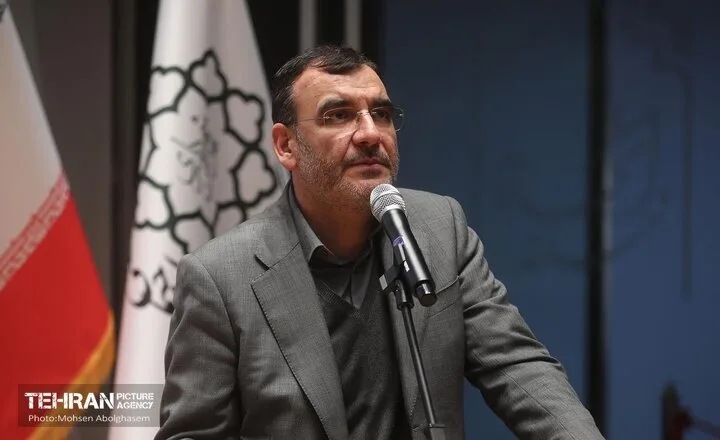
Majid Bagheri, during the 441st session of the Islamic City Council of Tehran, made remarks in response to the cancellation of his meeting in District One, highlighting the challenges of interaction between council members and the mayor of Tehran. In this session, he criticized Ms. Najafi, a member of the council's board, stating: "I do not understand the reason for Ms. Najafi's anger. The mayor of Tehran has ordered that we have high interaction with all members."
Details of the Meeting Cancellation and the Mayor's Role
Bagheri further explained that throughout the council's term, 52,000 correspondences have been made with council members. He pointed out that Districts One, Four, Eleven, and Twelve have sent letters indicating the mayor of Tehran's planning for presence in these areas. He explained that in this planning, the mayor is supposed to hold a meeting with heads of medical centers, clinics, and pharmacies from 8:45 AM to 12 PM, and then at 1 PM, have a meeting to present reports from district managers.
Read more: Ghalibaf: The Iranian nation will not surrender to America's threats
Respect for Council Members and the Conditions of Mayors
Bagheri, emphasizing respect for all council members, especially Ms. Soleimani and Najafi, who are children of martyrs, stated: "Every time the city council president goes to the districts, he has a secretary who insists on the presence of the district mayor." He also explained that the meeting halls of the district municipalities are made available to council members and urged them to consider the conditions of district mayors as well.
In response to these criticisms, Mehdi Chamran, the president of the Tehran City Council, stated that he does not believe the deputy mayor ordered the cancellation of the meeting and emphasized that the issue should not be escalated into a confrontation. Chamran also said: "If we go to a district, it is our own home, and it does not matter whether the mayor comes or not." He stressed the need to pay attention to the dignity and status of council members and added that there have been guidelines in the past that helped regulate the movements of members to the districts.
Challenges of Salary Payments and Their Impact on the Municipality
The deputy mayor of Tehran also referred to issues related to the payment of employees' salaries during this session, stating: "Salaries were paid on the twenty-fifth of each month, which were delayed due to salary adjustments." He also mentioned the non-payment of salaries to workers at waste booths by a contractor, stating: "This contractor has legal issues and considers the non-payment of salaries to several personnel as leverage against the municipality."
In conclusion, Chamran emphasized that a framework must be established to regulate the movements of council members to the districts to prevent similar problems from arising. This issue highlights the challenges facing the Tehran City Council and the necessity of interaction and coordination between council members and the mayor.
Read more: Winning 2 international awards by urban research in Tehran · Parviz Sarouri: Retreating under current conditions is a document of Iran's destruction