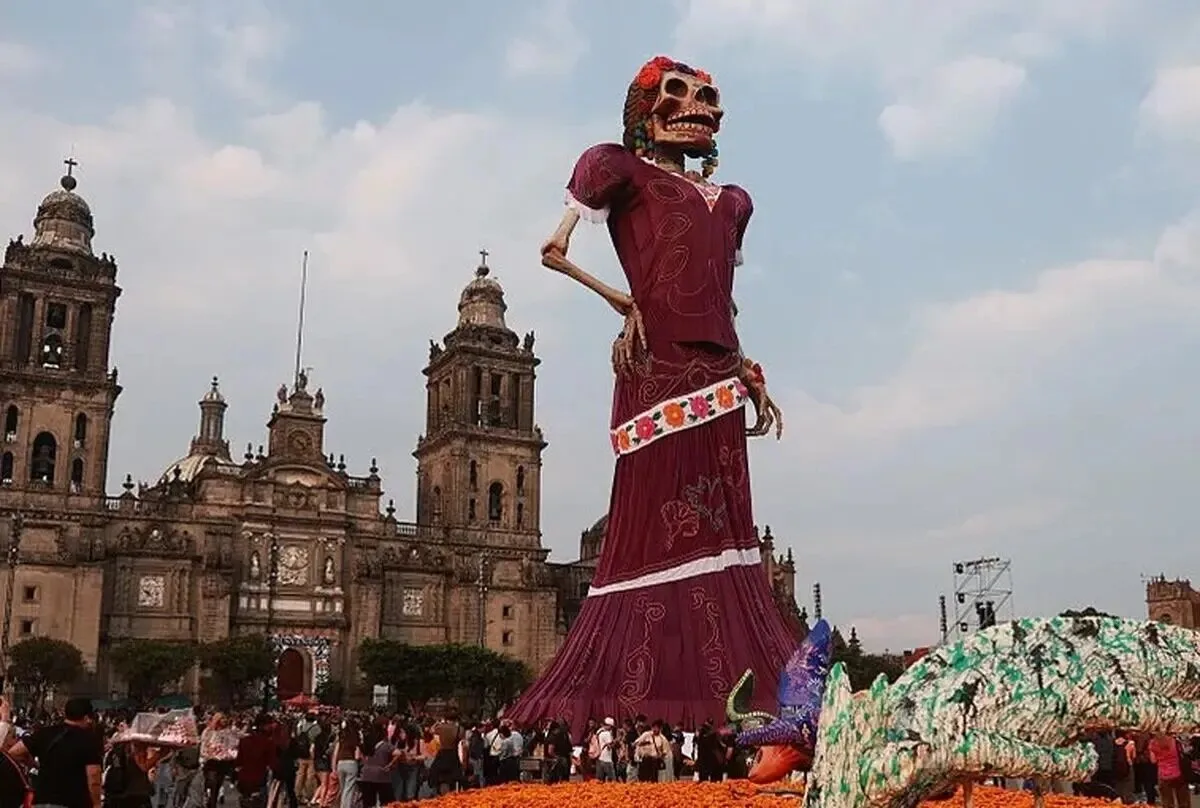
The massive statue of a skeleton-like woman in a long purple dress was unveiled at the annual Day of the Dead celebration in Mexico City, breaking the record for the tallest Catrina statue in the world. This colorful structure, over 33 meters tall, is nearly the height of an 11-story building and is located in the city's main square.
Details of Construction and Design
The La Catrina statue, made of steel, fiberglass, and papier-mâché, is the result of the efforts of over 140 artists from the Shibalpa art workshop, led by Carlos Camilo Baez. The skirt of this statue, measuring 27 meters in length, is beautifully and stunningly designed, and around it, a memorial altar has been erected with about 70,000 marigold plants cultivated in the Xochimilco area of Mexico City.
Read more: Johnny Depp Sets Conditions for Return to Pirates
Day of the Dead Ceremony and the Symbol of La Catrina
The height of this statue surpassed the previous record, which belonged to a 28-meter structure in Puerto Vallarta in 2023. It was originally intended for this work to be displayed only until November 2, but the mayor of Mexico City announced that visits would continue until November 11. The Day of the Dead is one of the important ceremonies in Mexico and parts of Latin America; a celebration to honor the deceased and remind of the connection between the living and the dead. Families set up altars with photos of their loved ones, candles, marigolds, and their favorite foods to show, according to traditional belief, the way for the spirits to return home. Many also visit cemeteries, clean the graves, and decorate them with flowers and memorials. This ceremony was inscribed on the UNESCO Intangible Cultural Heritage list in 2008 and is a blend of indigenous Central American traditions and Catholic beliefs that spread after the Spanish conquest of Mexico.
The character of La Catrina has also become one of the main symbols of this celebration. Its creator, José Guadalupe Posada, a Mexican artist and cartoonist, published a humorous image of a female skeleton in 1912. This character was initially named "La Calavera Garbancera" and referred to indigenous women who sold chickpeas but dressed in French clothing and adorned their faces to resemble the wealthy classes. Posada, by creating this well-dressed skeleton, mocked part of society's obsession with European customs and appearances.
La Catrina had not yet reached its current fame during Posada's lifetime, and decades later, with the recognition of his works by artists like Diego Rivera, it became a widespread symbol. Today, this stylish skeleton not only reminds us of Posada's humor and art but has also become a symbol of the unique perspective of Mexican culture on death; a view that does not see death as the absolute end of life but as part of a continuous cycle between the living and the deceased.
Read more: Ramez Javan Enters the Arena with the 'Duet' Competition