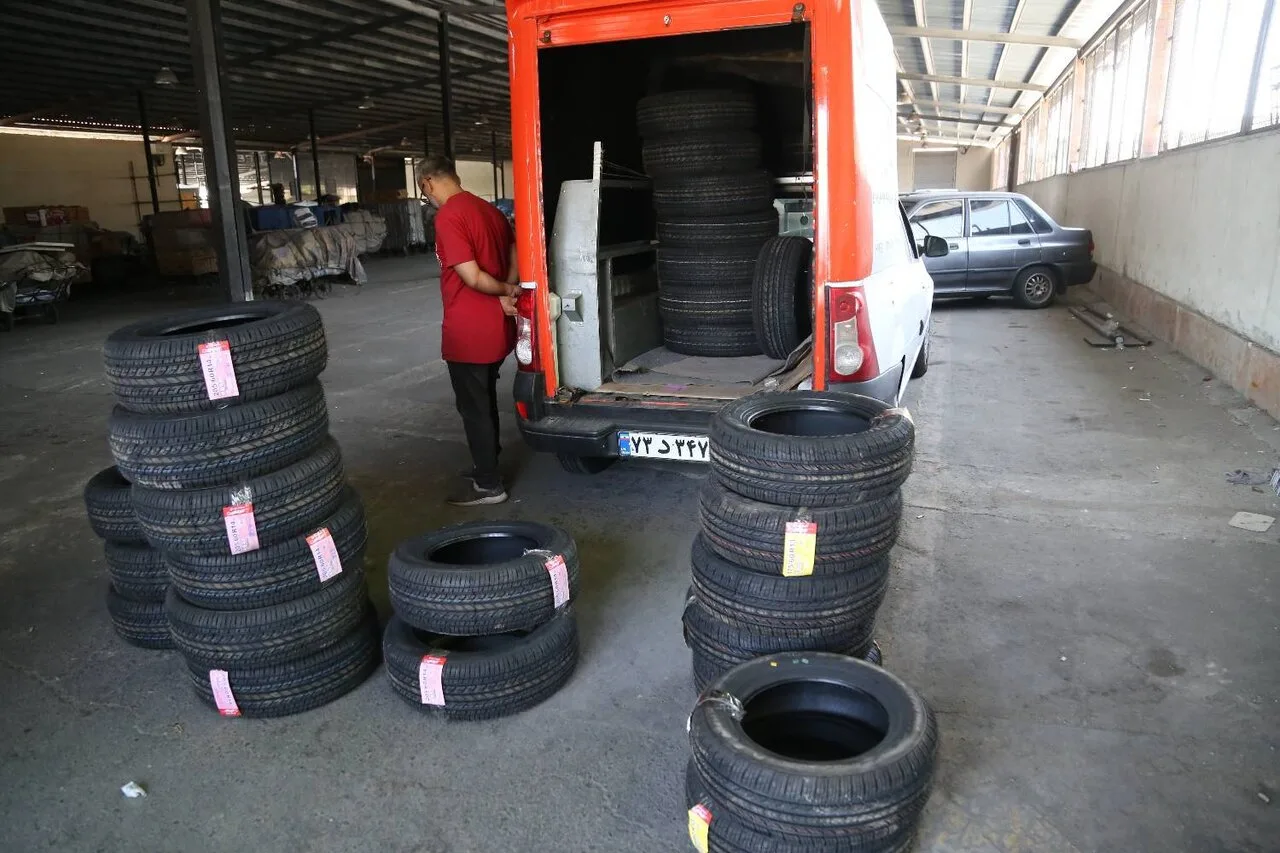
Jamal Mirzaei, the head of the Tire Industry Association of Iran, explained the reasons for the increase in tire prices in the country, pointing to issues such as rising production costs, the depreciation of the rial, and the increase in global raw material prices. He explained that these factors have severely impacted the tire industry and made production conditions more difficult.
Production Challenges and Logistics Costs
Mirzaei stated in an interview with a television program, "The conditions for tire production have become more difficult compared to the past, and producers are facing significant cost increases to maintain production capacity." He added that the cost of raw materials has increased both in the global market and in rial terms, and transportation problems have also put considerable pressure on the tire industry.
Read more: The summer heat wave of 2026 will cost the European economy 113 billion euros
Regarding the cost of importing raw materials, he mentioned that there is about one dollar in logistics costs for each kilogram of raw materials. Meanwhile, the value of the rial has decreased, resulting in an increase in the total production cost.
Producers' Goal: Maintain Production and Market Balance
Mirzaei emphasized that tire producers are not seeking unreasonable profits, stating, "Their main goal is to maintain production." Estimates indicate that a profit margin of about 15 percent is essential for the continued operation of the tire industry.
The head of the Tire Industry Association of Iran responded to criticisms regarding the high price of tires, adding, "To evaluate tire prices, one must also consider the cost and lifespan of the tire." He explained that a pair of tires is used under a vehicle for several years and does not constitute a large share compared to other vehicle costs.
Mirzaei further pointed out the price of gasoline, saying, "If we compare the price of gasoline at a reasonable rate, the price of a pair of tires is about the cost of two to three tanks of gasoline." Additionally, the share of tire prices from the value of vehicles in Iran is about 2 to 3 percent, while this share is calculated at about 3.5 to 4 percent in many countries around the world.
He also discussed economic vehicles, stating, "Vehicles that use 13, 14, and 15-inch tires fall into the category of economic vehicles, and their tires are also priced lower." Currently, the factory price of a pair of tires for Iranian vehicles is less than 10 million tomans.
Mirzaei explained the gap between factory and market prices, stating, "For example, the factory price of a pair of tires for the Quick is about 7 million tomans, and producers expect this figure to reach about 10 million tomans to move production out of loss.
He emphasized that increasing domestic production could help stabilize prices in the free market and show its effects in the coming weeks and months. Additionally, rationalizing factory selling prices is essential for increasing production. If the selling price reaches a level where the producer can exit loss, the possibility of increasing production capacity will be provided.
In conclusion, Mirzaei pointed out the importance of tire maintenance, stating, "Under-inflated tires, issues with wheel balancing, rim problems, and front-end defects can reduce tire lifespan and pose risks." He also warned about pickup trucks, adding that each tire is designed to carry a specific weight, and if a vehicle is overloaded beyond its standard capacity, it will put excessive pressure on the tire. Adhering to load capacity, speed limits, and regularly checking tire conditions can prevent accidents.
Read more: Increase in electricity production with coal in Europe due to high gas prices · Ambiguity in transferring gasoline quotas to bank cards in the seventh development plan