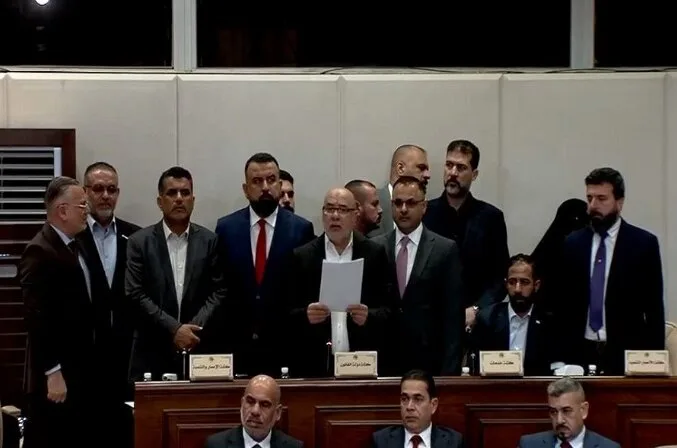
Today, Thursday, Iraq's Badr Bloc issued a statement calling for immediate intervention to reopen the Shib border crossing and end the restrictions imposed on the Shalamcheh border. This request comes amid serious concerns about the negative impacts on the movement of pilgrims and traders between Iran and Iraq, especially during peak pilgrimage times.
Background of the Border Situation
For a long time, the Shalamcheh border has been recognized as a key point for the movement of Iranian pilgrims to holy sites in Iraq. However, with the imposition of restrictions, this crossing has faced many challenges. The Badr Bloc, considered one of the major political parties in Iraq, is concerned about the social and economic repercussions of these restrictions as a representative of the people.
Read more: Gholamhossein Mozaffari's Invitation to Tajik Universities for Student Exchange
Social and Economic Impacts
Border restrictions have not only complicated the movement of pilgrims to holy sites but have also negatively affected border trade. Traders and merchants in border areas are facing a severe decline in income and customers. Therefore, the Badr Bloc is raising this issue to draw the attention of government officials to the current situation and to resolve these problems.
In this context, members of the Badr Bloc emphasized that facilitating border movement will not only benefit pilgrims and traders but could also improve relations between the two countries. Creating a suitable environment for travel and trade can help strengthen economic and cultural cooperation between Iran and Iraq.
On the other hand, given the proximity of the Arbaeen pilgrimage, this request has gained even more significance. Millions of Iranian pilgrims travel to Iraq each year to participate in this event, and border restrictions could impact their planning and travels.
The Badr Bloc has also stressed the need for international coordination and cooperation between the officials of both countries to facilitate matters and has called for greater interaction in various fields, especially in economic and pilgrimage areas.
Ultimately, it is expected that, in light of this request, the relevant authorities will take necessary measures as soon as possible to lift the restrictions and reopen the border crossings so that pilgrims and traders can easily utilize the services of these routes.
Read more: The Collection of Illegal Bookstores on Enghelab Street Has Begun by Order of Ahmad Moazami Goudarzi · The Schedule for Hajj Flights in 1406 and the Reopening of Air Travel from Najaf Airport Has Been Announced