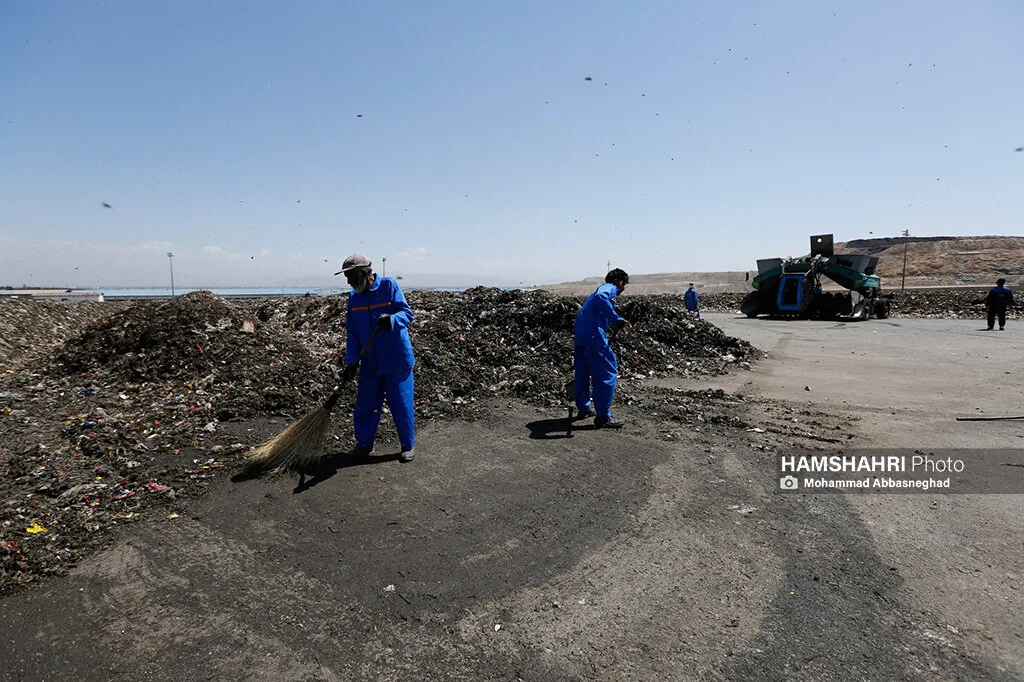
The green space workers of Aradkuh complex, who have been part of urban services for years, are now facing fundamental changes in their livelihood and working conditions. The Waste Management Organization of Tehran Municipality has recently announced new measures to improve the situation of these workers.
Increase in Salary Cap and Performance Bonuses
According to the organization's announcement, the current net income of these workers is 26 million tomans, which has been increased to 38 million tomans by the order of the Mayor of Tehran and through follow-ups, and will be applied from the new payment period. This salary increase, in addition to improving the livelihood of workers, reflects the urban management's attention to their needs.
Read more: The bravery of the fighters in the midst of attacks created an enduring epic
Additionally, a quarterly performance bonus has been planned for the eligible workers. This measure not only acts as an incentive for the workers but also ensures the improvement of the quality of services provided.
Reduction of Working Hours and Structural Changes
Another significant change mentioned by the Waste Management Organization is the reduction of working hours for Aradkuh workers. Previously, workers worked from 8 AM to about 4:30 or 5 PM, but now their working hours have been reduced to 8 AM to 2 PM. This decision was made to reduce continuous exposure to specific environmental conditions, pay attention to the health of workers, and improve their quality of work life.
The organization also intends to review the number of workers stationed at Aradkuh complex and utilize their capacity in other areas of Tehran. This approach does not mean the adjustment or dismissal of workers, but rather a procedure for organizing and relocating these workers to less hazardous areas.
Challenges of Direct Employment and Workers' Salaries
The green space workers of Aradkuh operate under contractor agreements, and their employment relationship is with the contracting company. In the contracting structure, the responsibility for providing services and managing human resources lies with the contractor, while the municipality supervises the proper execution of the contract and the legal rights of the workers.
Changing the status and direct employment of these workers is not possible without legal permits and through hiring procedures. This issue is not limited to Aradkuh workers and includes about 12,000 other green space workers in the Tehran municipality as well.
The urban management emphasizes that the contractual nature of the employment relationship does not mean neglecting the rights of workers. Supervision over timely payment of salaries and benefits, adherence to insurance regulations, and improving working conditions are among the responsibilities that must be continuously pursued.
The increase in salary cap, the provision of quarterly performance bonuses, and the reduction of daily working hours are part of the measures taken to support the green space workers of Aradkuh. Supporting the livelihood, health, and dignity of workers alongside adherence to employment laws and regulations is the urban management's approach to addressing the demands of these workers.
Read more: A family in search of a missing father: days of anxiety and despair · Reviving the trees of Vali Asr Street and renovating Tajrish Square in Tehran