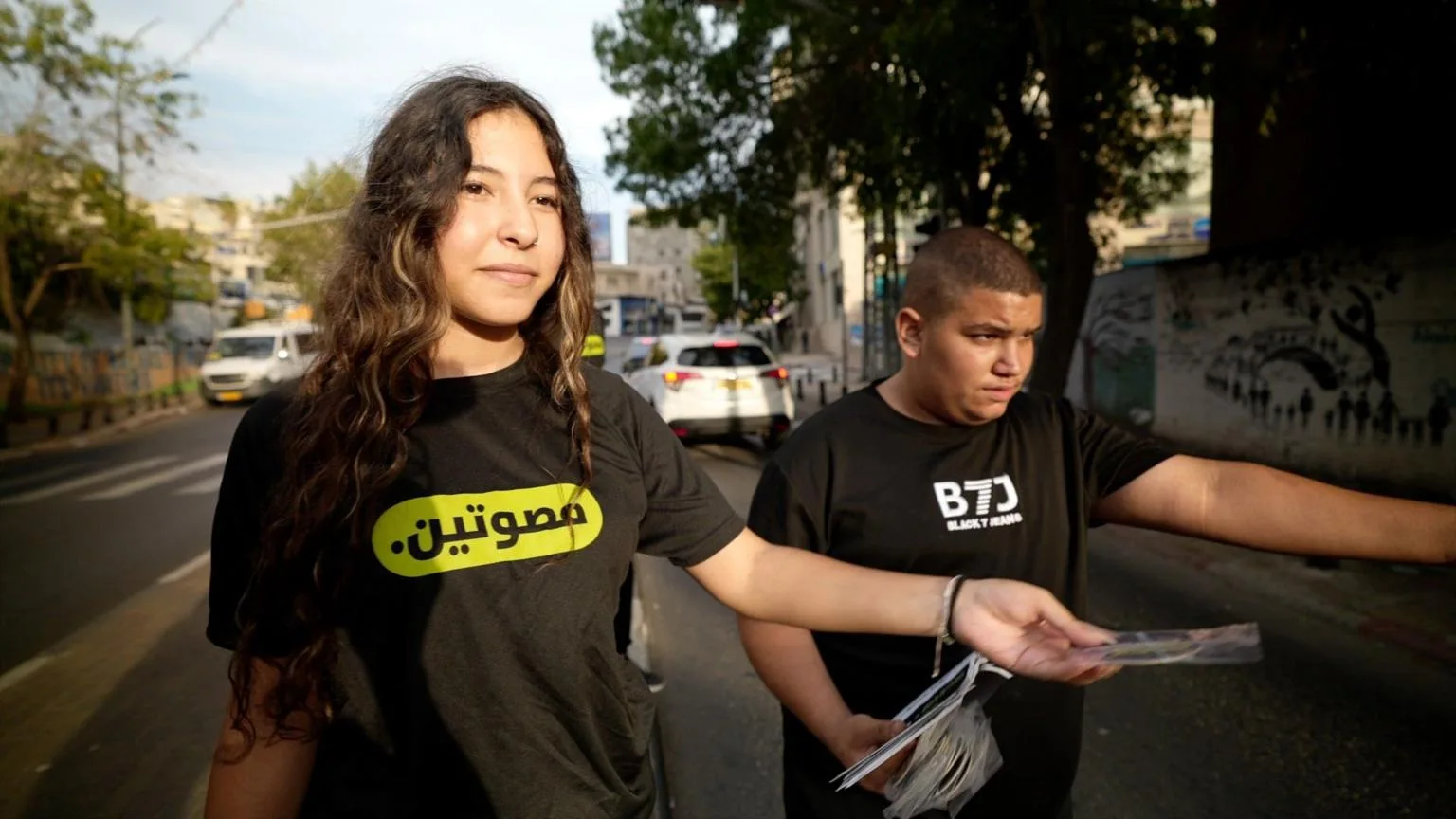
Arab parties may find themselves in a position to play a decisive role in the balance of power in the upcoming Israeli elections. During the busy traffic hours in Nazareth, the largest Arab city in Israel, students are distributing brochures and urging drivers to participate in the competitive nationwide elections. Polls indicate that Arab parties may significantly influence the outcome of these elections.
Frustration and Hope
Political frustration in the past has often led to decreased participation of Arab Israelis in elections; a group that makes up about one-fifth of the country's population, many of whom consider themselves Palestinian citizens of Israel. However, in this election, there is a broad effort to unseat the most right-wing ruling coalition in Israel's history. Arkan Badran, 23, says, "I see it as my duty to help overthrow this extremist government. They treat us like second-class citizens."
Read more: The Yemeni army rescued 14 Indian nationals from a boat targeted by Saudi Arabia
Political Challenges
Most polls indicate that neither Benjamin Netanyahu and his allies nor the "Change Coalition" led by Gadi Eisenkot, the former chief of staff of the Israel Defense Forces, have a clear path to achieving a parliamentary majority. If these polls are accurate, Netanyahu's opposition parties, which are seeking to form a coalition government after the elections, will either have to backtrack on their promise not to cooperate with the Prime Minister or reach an agreement with Israel's predominantly Arab parties. Eisenkot has so far rejected forming a government with support from Arab parties, citing a lack of common values.
Israeli politics and society have changed following Hamas's deadly and unprecedented attack on the country on October 7, 2023, and the subsequent war in Gaza. Suhayl Salman Moussa, a representative of the Equality Center in Nazareth, says, "After October 7, we were treated as if we were the enemy of this country."
Despite these challenges, some Arab parties are looking for opportunities to collaborate and make an impact in this election. Mansour Abbas, the leader of the "United Arab List," has recently made an unexpected move by giving the second spot on his electoral list to Yoav Segalovitz, a former police official and a centrist member of the Israeli parliament. Abbas believes that Eisenkot and other political leaders will be more willing to cooperate with his party after the elections.
Read more: Tunisian police clashed with protesters in the capital · Netanyahu seeks to solidify his political position at the UN