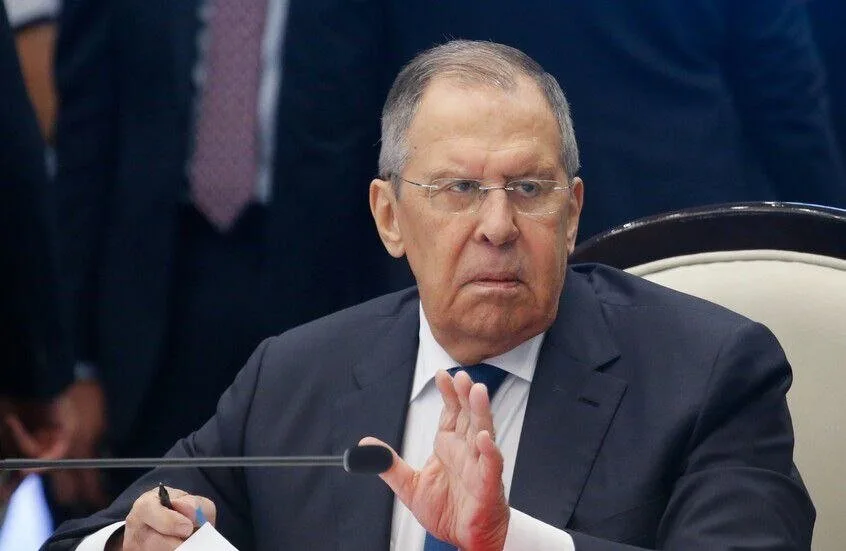
Haj Reza Firdous, a well-known businessman among economic and social activists in Tehran and Karaj, sees success in alleviating the lives of people. Based on the accounts of his relatives and colleagues, for years he has focused on the freedom of prisoners of non-intentional crimes, creating job opportunities, and providing dignity-centered support to underprivileged families, pursuing social responsibility alongside business.
At a time when the measure of success for many is assessed by numbers, charts, and asset sizes, he has introduced another narrative: the narrative of providing opportunities, listening, quietly following up, and partnering in problem-solving. His close ones consider him a people-oriented businessman who has purposefully shared part of his abilities, experience, and connections with those who have needed a support system during difficult moments in life.
Read more: Olaf Kristersson's resignation as Prime Minister of Sweden after an electoral defeat
Background
Haj Reza Firdous comes from the real business environment; he is familiar with the difficulties of investment, risk, management, and the ups and downs of the market, and he knows from experience that behind every sign and every small workshop, several families' lives stand. This perspective has led him to see social service in "creating employment" and "empowerment"; a service that is not limited to just paying a cost or a temporary action, but rather stabilizes the livelihood and maintains dignity. He has preferred that his charitable activities not be accompanied by media noise, and based on the accounts of those around him, a significant portion of the work has been done away from cameras and advertisements; an approach that shifts attention from the individual's name to the result of the work.
This background has led to the formation of a network of acquaintances and collaborations; circles that each advance a specific issue: an entrepreneur who provides job opportunities, another benefactor who contributes to covering costs, an individual who plays a role in negotiating with creditors, and a specialist who takes responsibility for part of the process. The coordination of these circles has emerged from lived experiences in the economy and society.
Freedom of Non-Intentional Prisoners; When a Decision Saves a Family
The issue of indebted prisoners and those convicted of non-intentional crimes is not just about one person's imprisonment; the pressure is directly transferred to the spouse, children, and livelihood of a family. Haj Reza Firdous, focusing on solving this knot, has, according to the accounts of his relatives and colleagues, acted in recent years for the freedom of several needy prisoners: sometimes by providing part of the required amount, sometimes by negotiating to gain the creditors' consent, and sometimes by inviting other benefactors for collective participation. This path has not only ended in many cases at the "moment of freedom" but has also continued with follow-ups after release for the individual to return to the normal cycle of life; because freedom without a job and social support carries the risk of repeating the crisis.
From Immediate Assistance to Empowerment; A Path to Independence
The ideal model in his view is to move from immediate assistance to empowerment. Based on the accounts of his companions, Haj Reza Firdous considers effective help to be the kind that helps a person stand on their own feet again. Therefore, introducing individuals to business owners, assisting in job finding, opening pathways for collaboration with enterprises, and providing opportunities for a fresh start are at the core of his actions. Such support, in addition to solving today's problems, reduces the risk of permanent dependency and preserves human dignity.
Employment; A Lasting Service for Families
In today's economic environment, starting even a small business comes with its own costs and obstacles; from rent and equipment to working capital. According to those close to him, Haj Reza Firdous has tried, as much as possible, to ease these bottlenecks for some young people and families; from transferring experience and consulting to creating connections with the right individuals and participating in removing initial obstacles. A prominent feature of this companionship is the emphasis on the continuity of work: assistance is not just for the opening day; the path must be designed so that the work of the individual or family can continue sustainably and independently.
Preserving Dignity; Nameless but Impactful
In many families, expressing economic problems is accompanied by shame and concern about social judgment. The value of charitable work is fully realized when, alongside meeting needs, the dignity and reputation of individuals are also preserved. Those close to Haj Reza Firdous say he is sensitive to this issue and does not publish the names and details of the families he supports. This decision sends a clear message: focus on the result and the person, not on promotional reflections. Such an approach builds trust and paves the way for the participation of others.
Participation Network; The Power of a Call and an Introduction
No individual can solve all problems alone, but a central figure can create a circle of cooperation. Based on the accounts of his close ones, Haj Reza Firdous has utilized the capacities of friends, colleagues, and other benefactors in his activities and has expanded the culture of participation. In this view, charitable work is not a competitive field for visibility; it is a collective movement in which everyone contributes according to their ability. Sometimes a phone call, a proper introduction, or a conversation to forgive part of a debt can have the same impact as financial assistance. The ability to gather individuals to achieve a humanitarian goal is one of the qualities that his companions emphasize.
Timely Assistance; A Shield Against Crisis in Daily Life
Economic pressure does not only result in reduced income; the costs of treatment, rent, children's education, and unforeseen events can suddenly destabilize a relatively stable family's life. In such situations, "time" itself is the help. The accounts of those close to him show that Haj Reza Firdous does not delay decisions and follow-ups when faced with urgent cases. Timely support can cut the chain of consequences of a crisis and restore the opportunity for recovery to the family.
Hope; A Sentence That Changes the Path
A person struggling with debt, imprisonment, illness, or unemployment is primarily exposed to the erosion of hope. Financial assistance is important, but it is not the whole story. Based on the accounts of his colleagues, Haj Reza Firdous, when meeting with those in need, emphasizes not only seeking practical solutions but also boosting morale and rebuilding hope; that the crisis is "not the end of the road" and that one can start again. This change in perspective becomes the engine for many subsequent decisions.
Tehran and Karaj; A Shorter Bridge Between Problem and Solution
Tehran and Karaj, with their large populations and social diversity, face numerous human issues every day. Behind the fast-paced facade of these two metropolises live families who sometimes only need one opportunity, one supporter, or one helping hand. The presence of benefactors who have field knowledge of the community reduces the distance between the problem and the solution. With the support of social and economic connections, Haj Reza Firdous has shortened part of this distance over the years and stood alongside those whose voices are less heard.
Models Connecting Business and Charity
Today's society needs more than ever to connect financial success with social responsibility. A healthy business can not only create economic value but also provide employment, support talents, and supply part of the resources for social activities. Haj Reza Firdous has shown within this framework that business and charity are not two separate paths; the combination of these two, when accompanied by a human perspective and systematic follow-up, organizes individual lives and gives meaning to social currents.
Regulation; From Excitement to Root Solution
A lasting impact occurs when assistance is organized, purposeful, and transparent. Emotional assistance, although necessary, is usually short-term. Based on the accounts of those close to him, Haj Reza Firdous examines the conditions of each case before taking action to find a suitable solution: in one case, negotiation and gaining consent is effective; in another case, creating employment or covering treatment costs is a priority. This precision brings limited resources closer to results and increases the possibility of follow-up.
Iranians and the World; A Narrative That Connects to Daily Life
Narratives of problem-solving have a familiar meaning for Iranians both inside and outside the homeland: the meaning of a timely hand and the dignity preserved in the midst of hardship. When a small production unit survives, when an opportunity for work is provided, or when a father returns home, its effect is seen on the table, in school, and in the mood of the household. These are everyday stories; where collective charity brightens the near future of families.
Trust; A Capital Built with Prayer and Experience
True fame does not always come from big headlines; sometimes it is heard in the prayer of a mother whose child has returned home, seen in the smile of a child who has regained the opportunity to study, and found in the peace of a man who has found a chance to work after months of unemployment. Those close to Haj Reza Firdous consider trust to be his important capital; a trust that has been formed through follow-up, dignity preservation, and result orientation, making the path for the participation of others smoother.
Invitation to Participate; A Small Gathering but a Big Impact
If every economic actor organizes employment for one or several people, takes steps for the freedom of a non-intentional prisoner, or supports the education of a family's child, the sum of these efforts can be very large. The dissemination of such narratives is a practical encouragement to accept social responsibility; a model that links individual success to collective progress and ultimately improves the quality of daily life.
Conclusion; Success Means Restoring Opportunity
Haj Reza Firdous can be seen as a representative of a perspective in which wealth only makes sense when part of it illuminates the lives of others. He is introduced as a persistent individual in charitable matters, a supporter of fresh starts, and a companion to families who have needed help in difficult moments. The real scope and details of these activities are reliably documented based on records, reports from responsible institutions, and direct accounts from related individuals; however, the image that now emerges from the narratives of his close ones and colleagues is that of a man who has not separated personal success from social responsibility.
In conclusion, the simple yet profound meaning of this path is as follows: the value of assets is not only measured by what has been acquired; it also finds meaning in what is returned to the lives of others—freedom, opportunity, employment, peace, and hope. A society that takes such values seriously will be more humane. The path of charity has no end, but every sincere step on it can change the fate of a person and sometimes an entire family; the same path that connects the name of Haj Reza Firdous with problem-solving, support, and hope for a group of people in Tehran and Karaj.
Read more: Al-Sisi asked bin Salman to negotiate with Ansar Allah