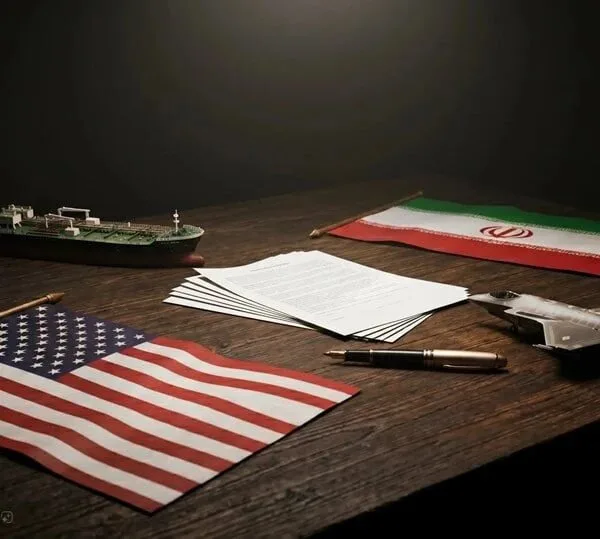
Jose Playo, Deputy Director of Strategic Initiatives and Policy at the "Scowcroft Middle East Security Initiative," recently wrote in an analysis about the situation of Gulf states that eight months after the onset of the Iran war, these countries have reached different conclusions on how to secure themselves and deal with Tehran in the face of a common threat.
Deep Disagreements in Response to Common Threats
Playo emphasizes in this analysis that the U.S. must pay attention to these disagreements and refrain from treating the Gulf Cooperation Council as a single entity with uniform positions. He presented this assessment following his participation in an off-the-record informal diplomacy meeting on October 1 in Abu Dhabi and his meetings with officials and analysts in Kuwait.
Read more: Smart management of tensions can change the future of Iran-UAE relations
In this meeting, although the principle of alignment of Gulf states with the U.S. was not questioned, many participants doubted whether Washington's policy was coordinated with regional changes and the differing approaches of council members towards Iran, arms purchases, and regional diplomacy.
Diverse Experiences and Their Impact on Regional Policies
Playo also points out that the Iran war has intensified existing disagreements among Gulf states. These disagreements existed even before the war on issues such as normalizing relations with Israel and relations with Tehran. He considers the 2017 crisis and the participation of Saudi Arabia, the UAE, and Bahrain in the blockade of Qatar as some of the most significant factors undermining trust within the Cooperation Council.
At the same time, the Yemen war, with Riyadh and Abu Dhabi's support for rival groups, has affected the relations between the two countries and the internal relations of the council. In this context, Bahrain has joined the Abraham Accords after the UAE, while Saudi Arabia has remained distanced from this path, and Oman and Kuwait have opposed normalization of relations.
Given these experiences, Playo writes that many regional capitals are defining their interests more clearly and have less doubt that they need changes to act on them.
Arms Purchases and Attention to New Threats
The author further points to arms purchases from other countries as a sign of distancing from the U.S. and states that Gulf states have turned to new suppliers due to repeated threats. He also emphasizes that these purchases are seen more as a practical response to immediate security needs.
The UAE, in particular, is striving to enhance its independent defense capabilities and is pursuing collaborations with countries like South Korea and expanding domestic defense industries. Meanwhile, Kuwait, which suffered the highest number of Iranian missiles and drones in the first seven weeks of the war, emphasizes cooperation within the framework of the Cooperation Council rather than unilateral action.
These developments seem to indicate profound changes in the Gulf states' approach to the future of security in the region and their interactions with one another. The disagreements among these countries have not only affected their internal relations but could also cast a shadow over the overall security of the region.
Read more: Why the wrong people keep appearing in our lives · Destruction of 4 violating ships in the Persian Gulf and fire on 3 other ships